

Power Outages in Adverse Situations: How to Manage
After a year marked by a water crisis, 2016 began with heavy rains, raising reservoir levels, especially in the South and Southeast regions of the country. The rains improved power generation conditions, minimizing the risks of an energy crisis, but they do not eliminate the risks of isolated outages. Keeping a power generator on standby and creating an emergency plan are essential measures for businesses, hospitals, and other establishments that cannot afford interruptions in power supply.
The role of the Independent Power Producer in areas not connected to the SIN
The concept of the Independent Power Producer (IPP) was established in 1995 by law 9.074. The IPP is defined as a “legal entity or companies in consortium that receive a concession or authorization from the granting authority to produce electricity intended for the commercial sale of all or part of the energy produced, at their own risk.” In practice, the IPP is responsible for supplying energy to areas.
What are the differences between a synchronous and asynchronous generator?
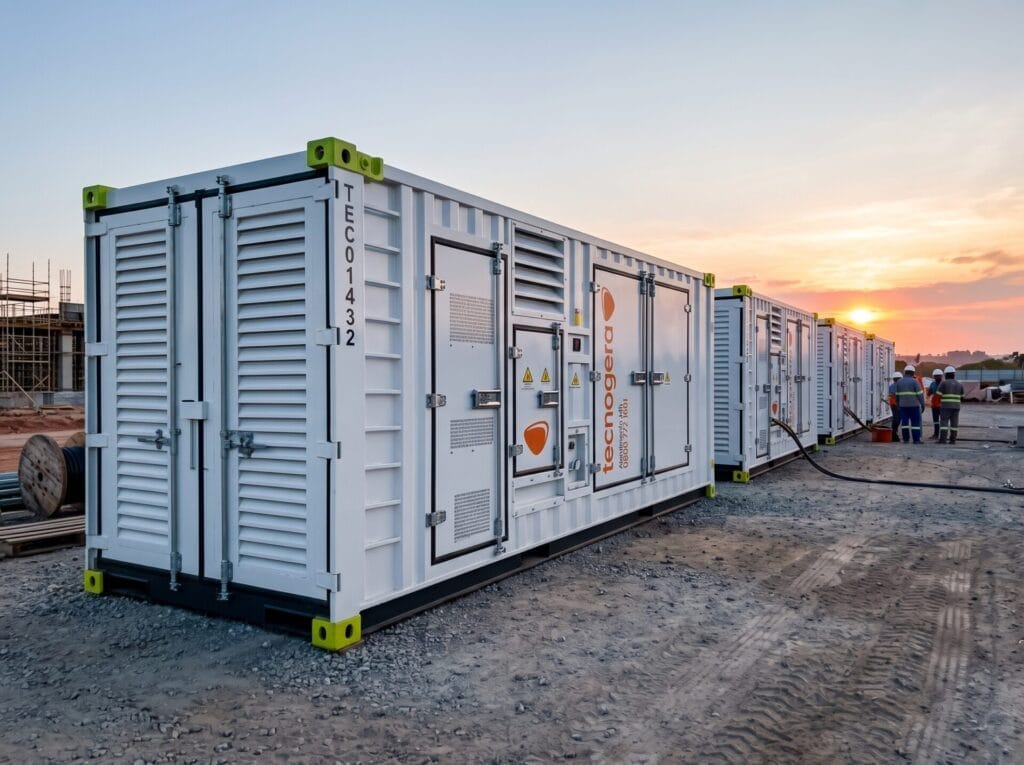
Power generators are classified as synchronous and asynchronous according to their operation. The synchronous generator maintains frequency synchronized with motor rotation, offers fixed frequency regardless of load, and is used in hydroelectric plants, but requires direct current and maintenance of mechanical contacts. The asynchronous generator has a simpler and more robust construction, without mechanical contacts in the rotor, used in wind turbines, but requires reactive power and stops if the load exceeds capacity. Both convert mechanical energy into electrical energy for hospitals, industries, and events.
What do you need to know about tariff flags?
In June 2015, Aneel implemented the tariff flag system with colors indicating power generation conditions. Green means favorable conditions with no extra charge, yellow adds R$ 0.015 per kWh, red level 1 charges R$ 0.030, and level 2 adds R$ 0.045. The system aims to pass on production costs based on reservoir levels and the use of thermal power plants. During 2015, the red flag predominated due to the water crisis, but in 2016, there was variation among the colors depending on rainfall and power generation conditions.
The role of temporary power in meeting Amazonas’ demands
Amazonas faces significant energy challenges, with 57 out of 62 municipalities relying on isolated power generation systems. In March 2016, 159 power generators were delivered to 91 locations, adding 124.8 MW to the existing 380 MW, with an investment of R$ 160 million. The government plans to invest R$ 6 billion by 2018 in improvements including new thermal power plants, integration into the SIN, and network expansion, creating opportunities for the temporary power sector.
Brazil still needs thermal energy
Brazil relies on 75% hydroelectric, 10% thermal, and 3% wind energy. Despite the environmental drawbacks of thermal power, it remains crucial for the country due to its ease of construction and proximity to consumption centers. It’s vital for isolated projects in remote areas without transmission networks. The solution to environmental impacts is to invest in more efficient technologies that generate more energy with less fuel.
Independent Power Producer: ANEEL’s Alternative to Improve the Electric Sector
The Independent Power Producer (IPP) aims to enhance efficiency in supply for isolated regions at lower costs. Created by Law 9.074/1995, which unbundled the Brazilian electric sector and led to the formation of ANEEL, ONS, and MAE. IPPs are private companies that generate power independently, striving for maximum efficiency. Modern equipment can reduce fuel consumption by up to 20%, resulting in savings for public funds and greater operational efficiency.
Peak Hours and On-Site Power Generation
In 2015, energy bills increased by 51% according to IPCA, with São Paulo leading at a 70.57% rise. Peak hours (5 PM-10 PM) pose the greatest challenge for companies due to maximum pricing. On-site power generation through generator rental has become a natural solution for various sectors, potentially reducing costs by 30% during peak hours, while also serving as a backup during supply interruptions.
The off-grid power systems market
Brazil faces the challenge of providing electricity to remote locations, especially in the northern states. Utilities are seeking partners to meet demand in hard-to-reach areas where thermal power generation prevails. ANEEL’s Independent Power Producer (PIE) model aims for maximum efficiency with modern technologies, reducing fuel costs, environmental impacts, and prices for the end consumer, benefiting states like Acre, Amazonas, Pará, Rondônia, Roraima, Amapá, and Fernando de Noronha.
What are wind turbine rotors and what types are there?
The wind turbine rotor is an essential component of turbines that convert the wind’s kinetic energy into electricity. Comprising blades, a hub, and control mechanisms, it can have a vertical or horizontal axis. Vertical types include Savonius (efficient in low winds) and Darrieus. Horizontal types are more efficient, with three-blade models offering the best cost-effectiveness, achieving 45% efficiency in strong winds and generating up to 5…