

After the rainy season, reservoir levels remain a concern
Following the wet season (January-March), hydroelectric reservoirs are still at low levels according to ONS. The Southeast/Central-West reached 50%, the South exceeded 90%, and the Northeast is at only 30%. ANEEL has changed the tariff flag to green due to the rains. Despite the 12.8 GW surplus reducing the risk of blackouts, companies are seeking power generators to cut peak-hour costs (5 PM-10 PM) by up to 30%.
Technology for more efficient engines and power generators
Technological advancements in Brazil’s energy sector have enabled the development of more efficient and compact engines. The national industry has invested in research to create technologies that consume less fossil fuel while maintaining the same power generation capacity. These pieces of equipment have become lighter and more compact, enhancing logistics and boosting the competitiveness of the national industry.
The Advantages of Temporary Power in Brazil
In 2015, the water crisis and tariff flags increased energy costs, making temporary power through generator rental essential for businesses. Benefits include up to a 30% reduction in peak hour expenses and transferring maintenance responsibility to rental companies. According to ABIMAQ, inquiries about generators increased by 40% and sales by 12%. Demand remains high even with improvements in the water scenario.
What is a three-pole contactor and what is it used for?
The three-pole contactor is a crucial safety device in power generators, serving as an electromechanical solution for controlling loads in multi-phase power circuits. It consists of three power terminals, a control coil, auxiliary contacts, and a core…
Brazil still needs thermal energy
Brazil relies on 75% hydroelectric, 10% thermal, and 3% wind energy. Despite the environmental drawbacks of thermal power, it remains crucial for the country due to its ease of construction and proximity to consumption centers. It’s vital for isolated projects in remote areas without transmission networks. The solution to environmental impacts is to invest in more efficient technologies that generate more energy with less fuel.
Peak Hours and On-Site Power Generation
In 2015, energy bills increased by 51% according to IPCA, with São Paulo leading at a 70.57% rise. Peak hours (5 PM-10 PM) pose the greatest challenge for companies due to maximum pricing. On-site power generation through generator rental has become a natural solution for various sectors, potentially reducing costs by 30% during peak hours, while also serving as a backup during supply interruptions.
Energy Demand and Supply for 2016
The energy sector in 2016 was impacted by the economic slowdown, with estimated consumption growing only 1% according to ONS/EPE. Demand remained below 2014 levels. In the North region, thermal power generation prevails with a focus on greater efficiency and a shift to the Independent Power Producer (IPP) model to reduce costs and emissions. The…
What is Amperage: Understand Its Importance!
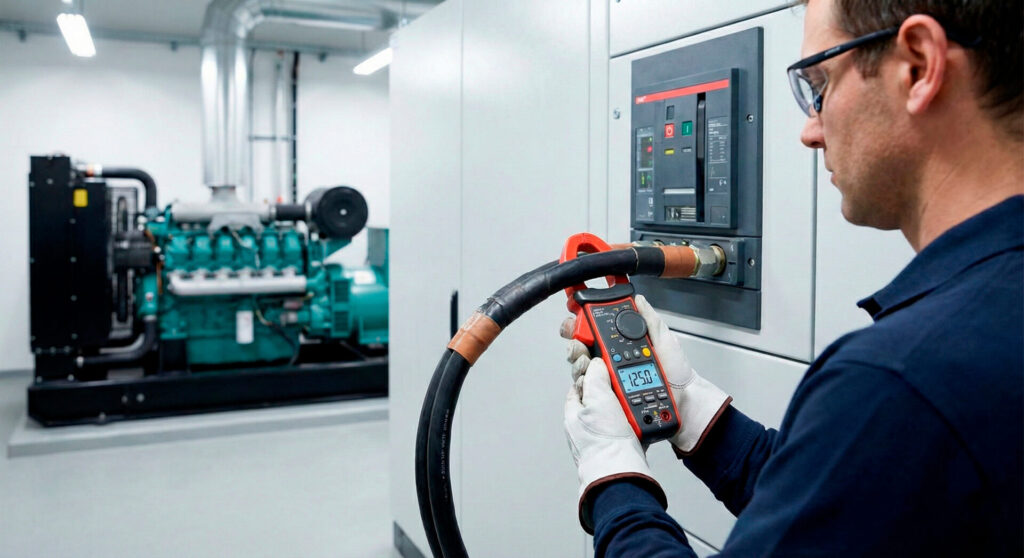
The ampere is the fundamental unit in the International System that measures the amount of electrical charge. Amperage is crucial for the energy efficiency of household devices and equipment like generators. It determines the suitability of electricity for the equipment’s needs and prevents overheating and short circuits through breakers and fuses. Higher amperage also means higher energy consumption, which is important for cost control.
The off-grid power systems market
Brazil faces the challenge of providing electricity to remote locations, especially in the northern states. Utilities are seeking partners to meet demand in hard-to-reach areas where thermal power generation prevails. ANEEL’s Independent Power Producer (PIE) model aims for maximum efficiency with modern technologies, reducing fuel costs, environmental impacts, and prices for the end consumer, benefiting states like Acre, Amazonas, Pará, Rondônia, Roraima, Amapá, and Fernando de Noronha.
What are wind turbine rotors and what types are there?
The wind turbine rotor is an essential component of turbines that convert the wind’s kinetic energy into electricity. Comprising blades, a hub, and control mechanisms, it can have a vertical or horizontal axis. Vertical types include Savonius (efficient in low winds) and Darrieus. Horizontal types are more efficient, with three-blade models offering the best cost-effectiveness, achieving 45% efficiency in strong winds and generating up to 5…