A power surge is an abrupt and temporary increase in electrical voltage, capable of compromising the integrity of sensitive components.
These sudden variations result from external or internal factors, leading to immediate damage or accelerated wear of machines and electrical infrastructures.
Meaning of power surge and why it threatens your operation
A power surge is a phenomenon also called an electrical surge, which occurs when the voltage significantly exceeds the network’s nominal level for milliseconds.
This fluctuation threatens the operation because it forces components beyond their insulating capacity, potentially causing failures in electronic equipment and motors.
In addition to technical causes, peak hours (or rush hours) require extra attention from industries due to high demand.
During this period, the network operates close to its limit, which can facilitate the occurrence of harmful overvoltage transients and instabilities.
Is it correct to say power surge?
Although it is a popular term, the more precise technical expression to describe this rapid variation is “power surge” or “transient”.
In everyday industrial use, the term is accepted to describe any sudden increase that deviates from the stability standard provided by the grid.
Understanding this terminology helps in the search for energy security, facilitating communication with technicians and protection suppliers.
What happens when an electrical surge occurs?
When an electrical surge hits the grid, the excess voltage seeks a path to discharge, passing through fragile circuits.
This generates instant excessive heat, potentially melting internal wiring and destroying semiconductors, which halts processes and causes significant financial losses.
Frequent voltage spike events, even if low, degrade wire insulators and reduce the lifespan of devices. In severe cases, the formed electrical arc can cause panel explosions and fires in the company’s facilities.
What causes a power spike in the grid?
Various factors can trigger this instability, from intense weather phenomena to operational failures within the industrial plant itself.
The causes are divided between external origins, related to distribution, and internal ones, related to the use of heavy machinery.
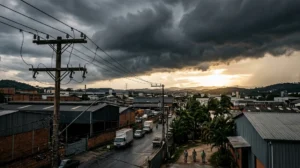
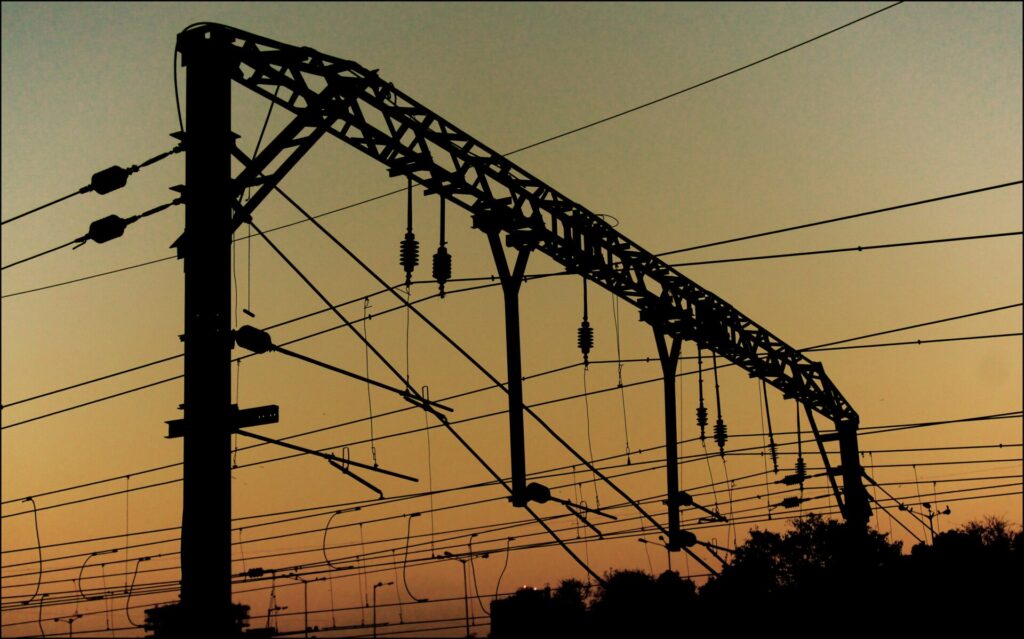
- Atmospheric discharges: are lightning strikes that directly hit the transmission grid or areas near electrical installations.
- Utility company maneuvers: are those carried out for load redistribution or service restoration after scheduled maintenance on the grid.
- Activation or shutdown of electric motors: is the action that shuts down large engines that require a high starting current.
- Short circuits: is the malfunction in control panels or failures in the insulation of old cables within the company’s own infrastructure.
Risks and consequences of power surges
Ignoring surge protection exposes the company, regardless of size and industry, to vulnerabilities that affect both hardware and intellectual capital and data. In any situation, the loss is inevitable.
The lack of a containment system turns any storm or network failure into an imminent risk of productive losses and reputation.
- Instant burning of circuit boards, power supplies and sensitive automation systems such as PLCs.
- Drastic reduction in the lifespan of lighting systems,industrial motors and air conditioning equipment.
- Data corruption on servers and unexpected interruption of automated processes that require complex rebooting.
- Fire risks in electrical panels caused by overheating of components during a transient overvoltage.
How to protect your electrical infrastructure against power surges
Effective protection requires a layered approach, combining physical devices, inspection routines, and alternative sources of stabilized energy.
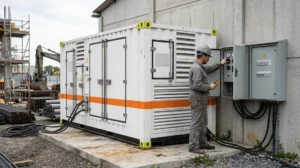
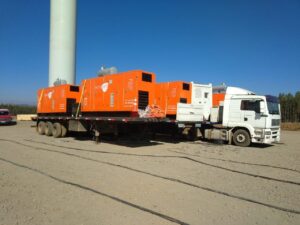
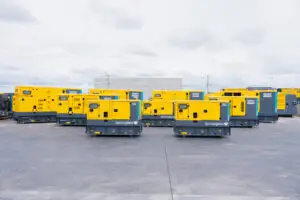
Many companies opt for generator rental and/or Battery Energy Storage System to ensure stability and prevent external fluctuations from halting production.
Create an electrical safety policy
Establish clear standards for equipment use and guidelines for constant monitoring of energy quality at the facility.
A structured policy guides the team on how to act preventively in the face of signs of instability in the external utility network.
Perform preventive maintenance
The generator preventive maintenance plan and the substation is essential to identify loose connections and worn components before failures occur.
Well-maintained circuits offer less resistance, minimizing the side effects of small power surges and preventing interruptions.
Invest in protective equipment
Install Surge Protection Devices (SPD) and use double conversion UPS to filter impurities from the power grid.
The use of a load bank for periodic testing ensures that emergency systems will withstand real demand under stress.
Rely on specialized technical support
Qualified and specialized teams in the energy market demands can conduct selectivity studies and size the appropriate protectors for each point of the electrical installation.
Specialized consulting avoids expenses with inefficient protections, ensuring the total protection of assets against unexpected electrical surges.
Contact our team of specialists and learn more about our services and customized projects.
Train your team for critical situations
Constantly training employees to recognize fluctuations and operate switching devices safely prevents human errors that cause spikes.
The continuous training ensures that everyone knows how to isolate affected areas quickly, preserving the integrity of the main equipment and people.
How to calculate the total electric current at peak?
The calculation involves adding the nominal power of all active devices, dividing the result by the voltage and the power factor of the installation (when applicable):
I = Ptotal / V x PF
Where:
- I = total electric current (A);
- Ptotal= sum of the powers of the equipment connected simultaneously (W);
- V = mains voltage (V);
- PF = power factor (dimensionless, applicable in alternating current circuits).
In motors, the starting current must be considered, which can be up to seven times higher than the nominal, generating the energy peak.
It is essential that the sizing of circuit breakers and cables supports this temporary maximum value without causing undue tripping or heating.
Using real-time measurement tools helps identify these consumption peaks and adjust the electrical infrastructure preventively.
Rely on Tecnogera’s expertise
With 20 years of experience, we are a reference in solutions for power generation and high-performance temporary systems for the most diverse projects and sectors.
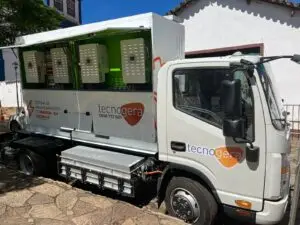
We offer everything from generator rentals to mobile substations, serving thousands of clients throughout Latin America.
Our advanced technologies provide total protection against power surges, preserving your assets and optimizing electrical consumption.
We develop customized projects that integrate energy security and high technical efficiency for your operation.
Avoid operational losses by relying on those who understand electrical infrastructure for large industries and events.
Discover our solutions and ensure your company never stops due to external failures.
Frequently asked questions about power surges
Is it a power surge or spike?
The technically correct term is power surge, referring to the sudden increase in voltage. “Spike” is a commonly used colloquial expression.
How long does a power surge last?
A power surge or spike lasts fractions of a second, usually micro or milliseconds, but long enough to damage electronic components.
Is a power surge the same as peak hours?
No. A power surge is an unexpected voltage spike, while peak hours refer to the period of highest demand.
What are the peak hours for energy?
They generally occur between 6 PM and 9 PM, a period when simultaneous consumption overloads the utility company’s distribution system.
How do I know if my company experienced a power surge?
Look for sudden shutdowns of machines, lights flickering intensely, or burning of power supplies and sensitive components without an apparent cause.
What is the difference between a power surge and a power outage?
A surge is a sudden increase in voltage or overvoltage, while an outage is the interruption or sudden drop in voltage in the network.
How to prevent power surges?
Install surge protectors, use proper grounding, perform preventive maintenance, and adopt generators or uninterruptible power supplies to stabilize your company’s electrical supply.
What types of power surges does a surge protector guard against?
A surge protector guards against surges caused by lightning, utility company network maneuvers, and the activation of large machines within the industry.