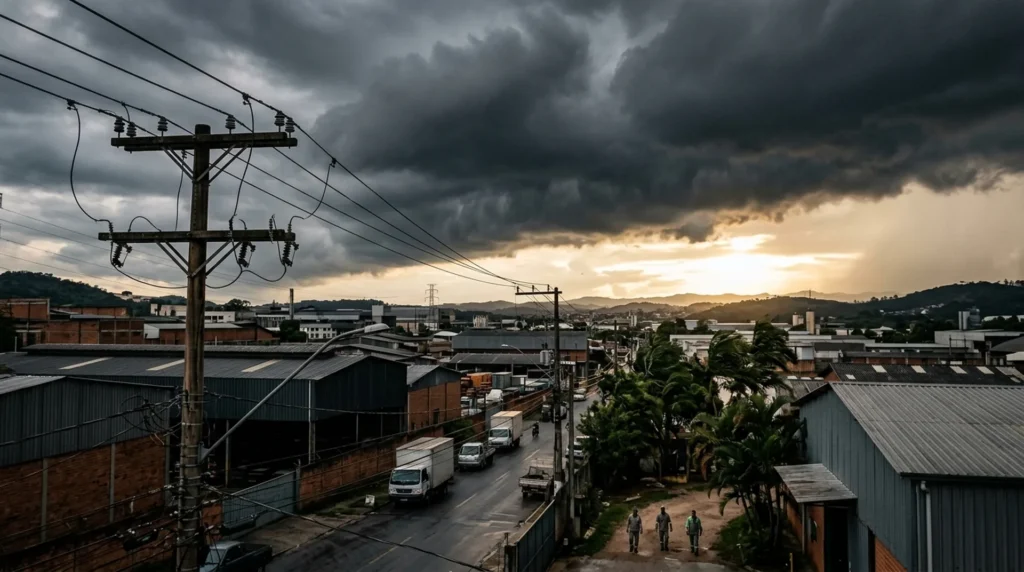
Every year the same scene repeats. A thirty-minute storm knocks out power to entire neighborhoods, and businesses that depended on that network stop without warning. Some return in two hours. Others take two days.
What separates one case from the other is rarely the intensity of the storm, but rather what each operation prepared beforehand. Follow along to see why storm power outages happen so frequently and what can be done to avoid relying on luck.
Why storms frequently cause power outages
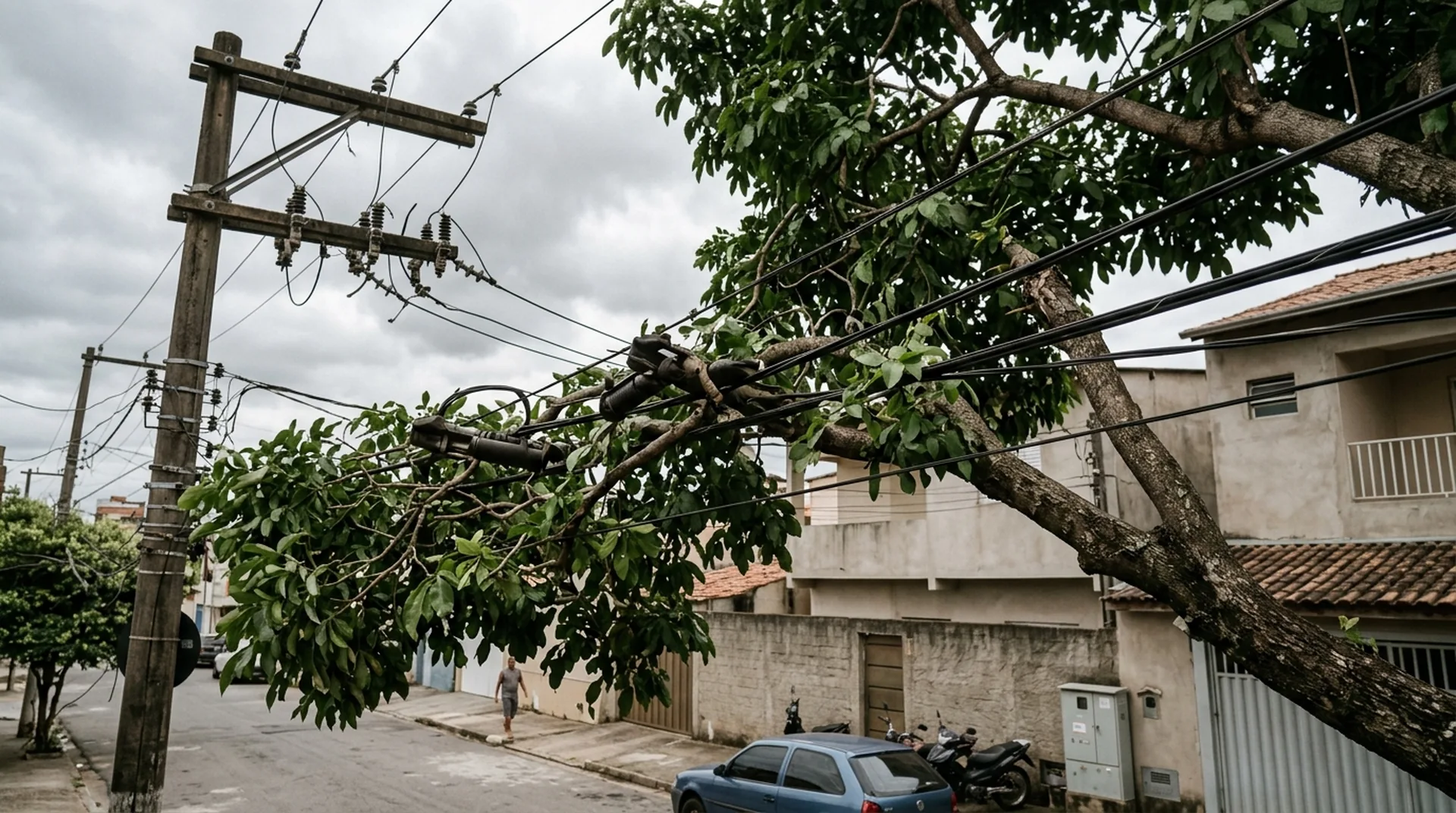
A large part of the energy distribution in Brazil is done by overhead power lines. These are cables supported on poles, along the streets, exposed to everything that passes nearby. It is cheaper to build and maintain than the underground network. It is also more fragile.
Four situations account for most occurrences:
- Power outage due to gale, when strong wind knocks a branch or tree onto the network
- Lightning strike hitting the network or distribution equipment
- Flooding of substation, underground chamber, or power entrance
- Damaged structure, such as a fallen pole or broken cable
The first two account for most cases. The gale acts by mechanical force, tearing down cables and poles. The lightning strike acts by voltage, burning equipment without touching the structure. They are different causes and require different protections.
The reconnection time also changes depending on the cause. A trip due to protection returns quickly. A broken cable requires a field team, and the service queue gets long precisely when the storm hits many points at the same time.
What happens to operations when the power goes out
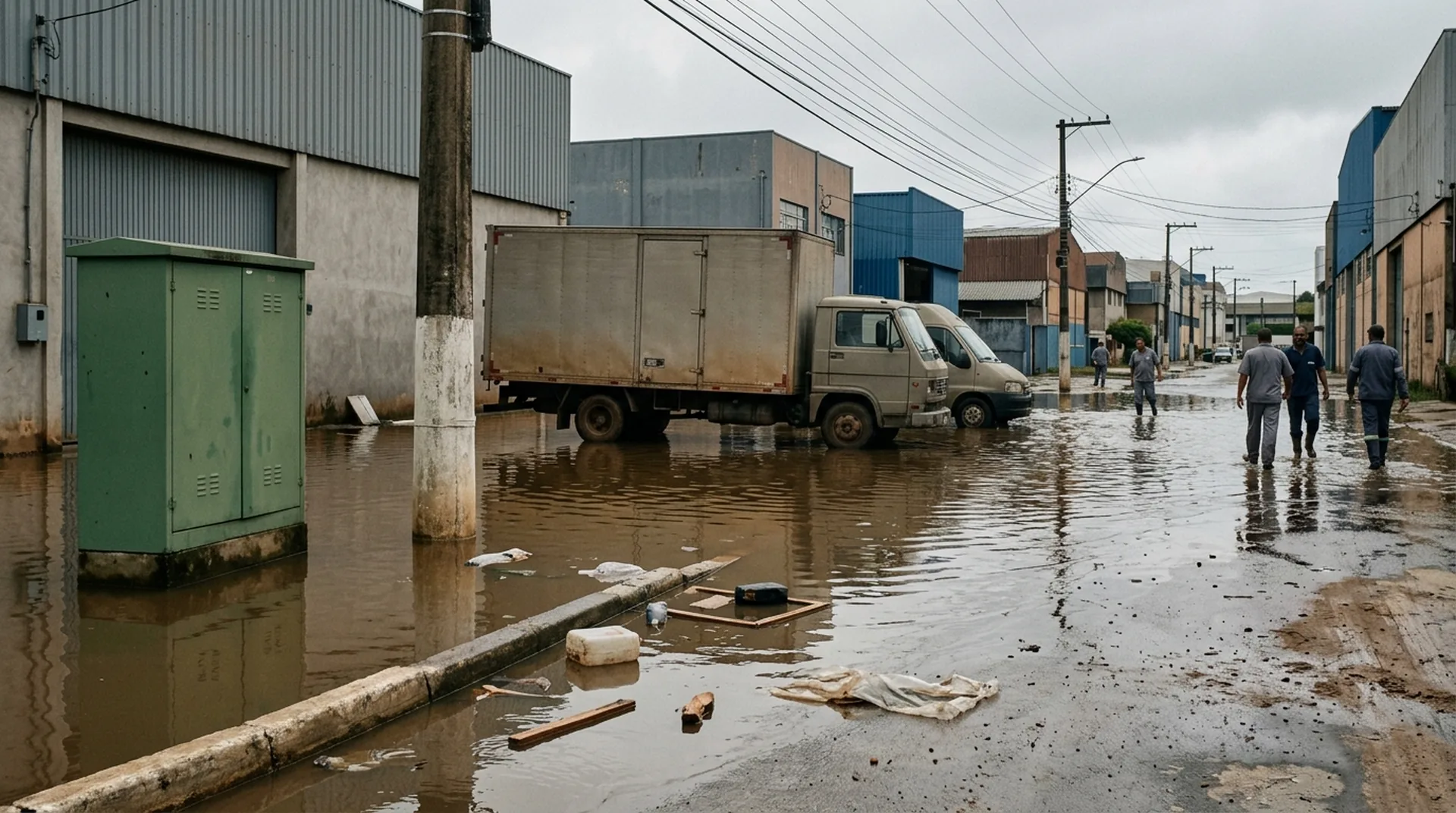
The power outage ends when the network returns. The damage does not.
Unscheduled shutdown
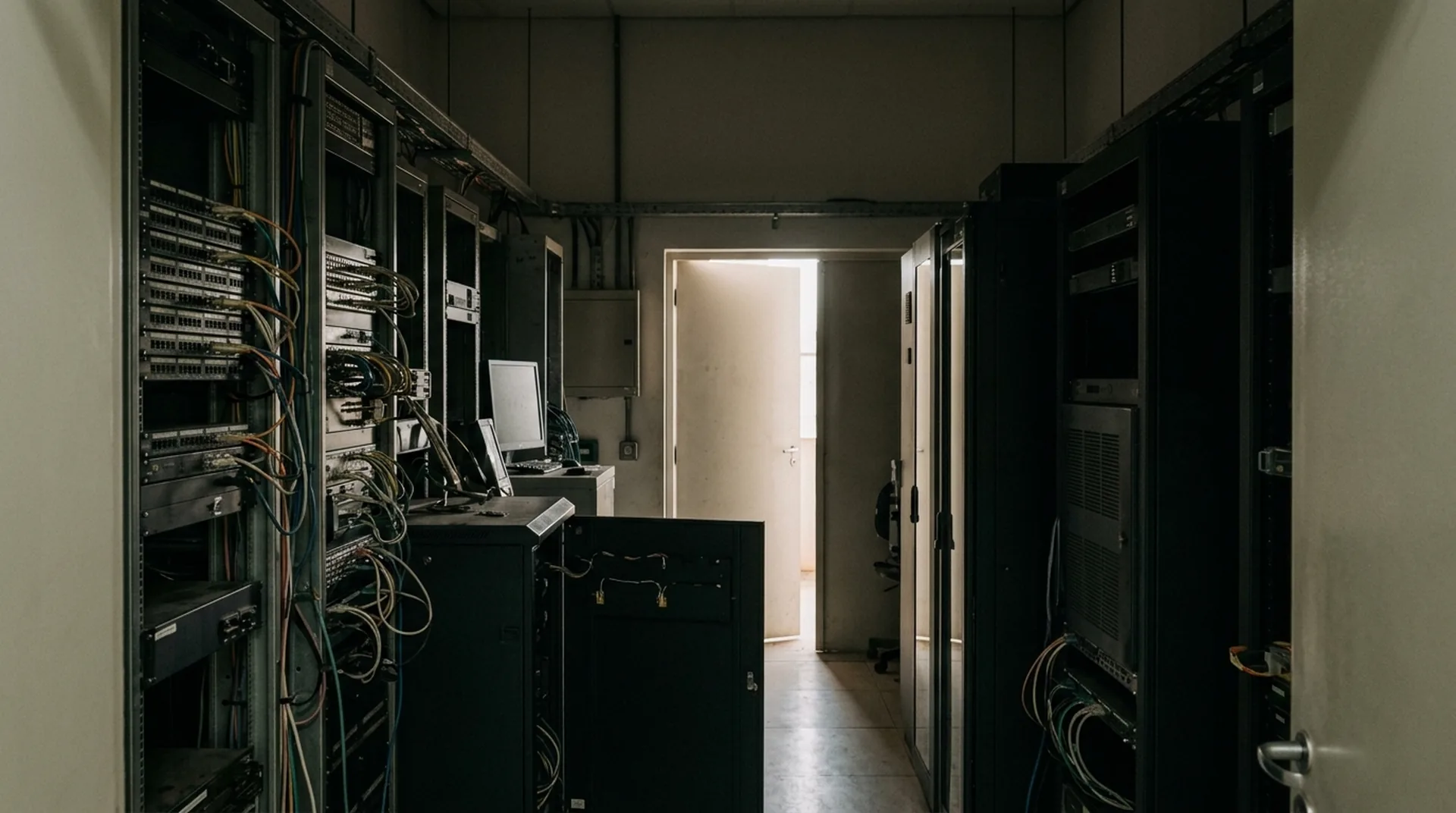
A process interrupted halfway rarely resumes from where it left off. Depending on what the company produces, there is material that goes to waste, a batch that needs to be revalidated, and an entire shift to reschedule. The restart itself is the quick part.
Damage from electrical surge
The outage is accompanied by voltage spikes. At the time of the failure and again upon return. These spikes damage boards, inverters, motors, and control systems, and the defect almost never appears on the same day.
Loss of data and systems
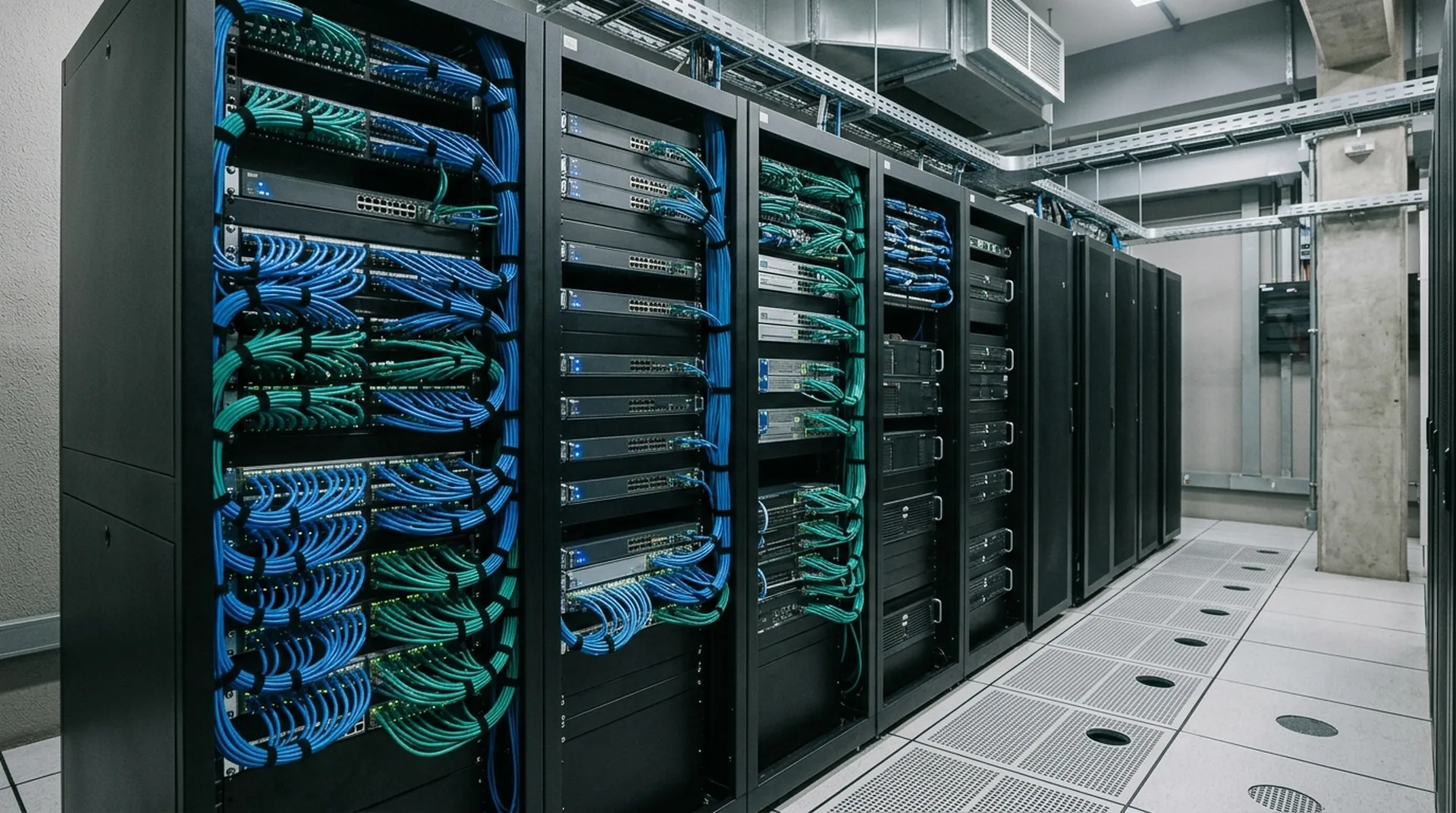
Shutting down a server abruptly can corrupt data. This applies to the management system and the process controller as well. Recovery usually takes longer than the power outage that caused it.
Safety risk
Emergency lighting, fire fighting, access control, and pumping depend on power. With people circulating in the operation, this is no longer a conversation about productivity.
Slow recovery
Returning is not just flipping the switch. Equipment needs to be checked beforehand, the process restarted in the correct order, and the environment stabilized. Those working with refrigeration also add the time it takes for the temperature to drop again, and this time counts towards the downtime.
How to protect the operation before the next occurrence
No one can prevent a storm. But it’s possible to prevent a power outage from turning into an operational shutdown, which is a different matter.
Separate what is critical from what can wait
Not everything needs to keep running during an outage. When a company maps out what is truly essential, it almost always discovers that the load to cover is smaller than expected, and the solution is cheaper than trying to maintain the entire operation.
Have backup power ready to take over
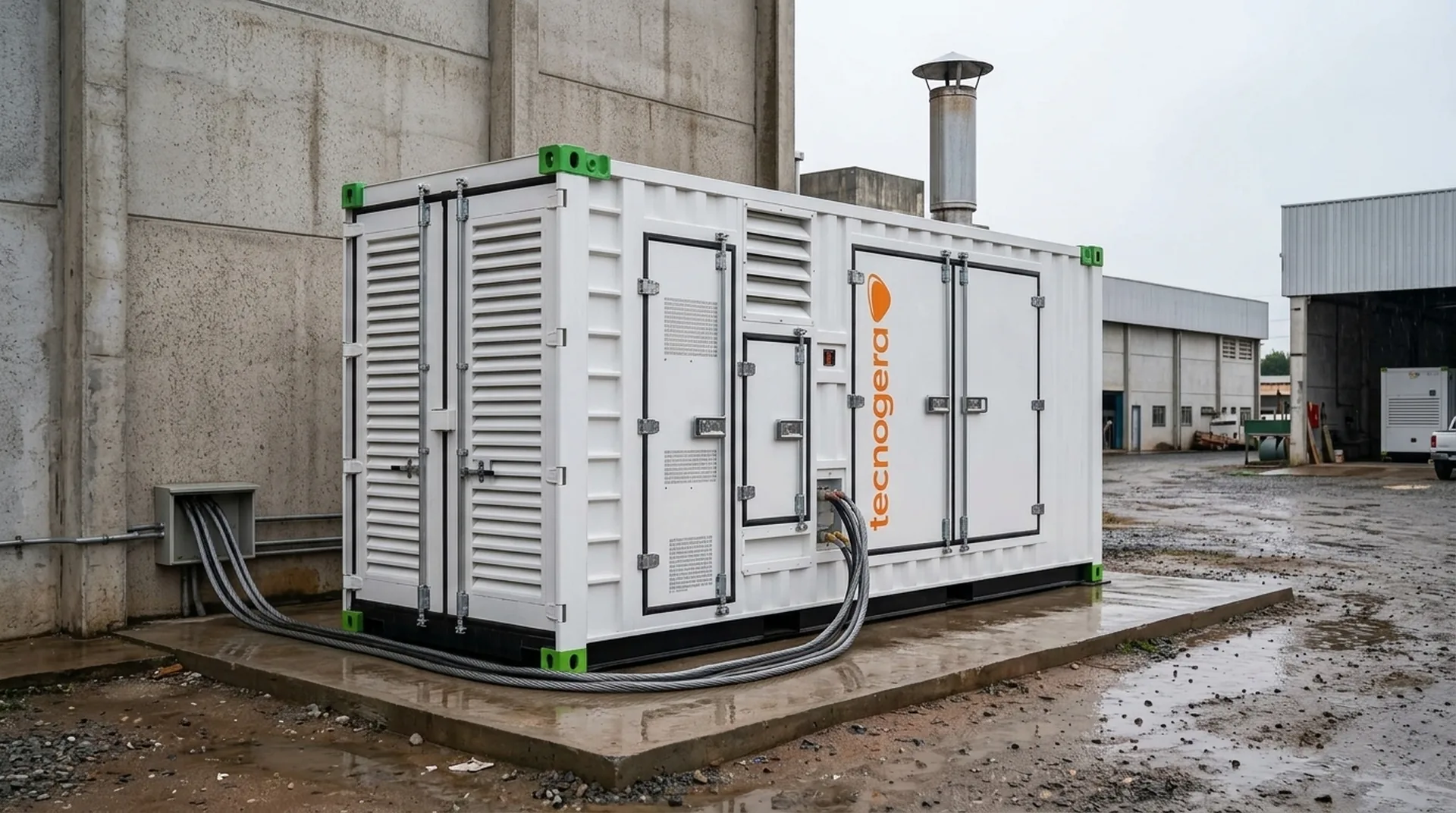
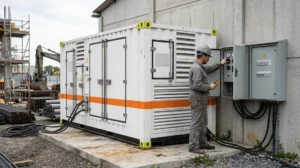
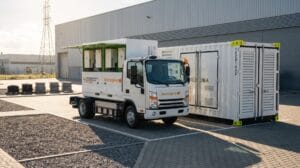
The emergency generator kicks in when the grid goes down and supports the load until it returns. Proper sizing and up-to-date maintenance determine if it fulfills its role when needed. Without these two, it’s an expensive piece of equipment sitting idle in the yard.
Systems that combine a generator with battery storage respond faster to short fluctuations and reduce fuel consumption. They make sense in operations that suffer more from instability than from long outages.
Protect against power surges, not just outages
What damages equipment is the voltage spike, and a generator does nothing against that. Surge protection is another layer, solves another problem, and the two things add up. Those who only install the generator keep replacing boards after every storm.
Write the plan before you need it
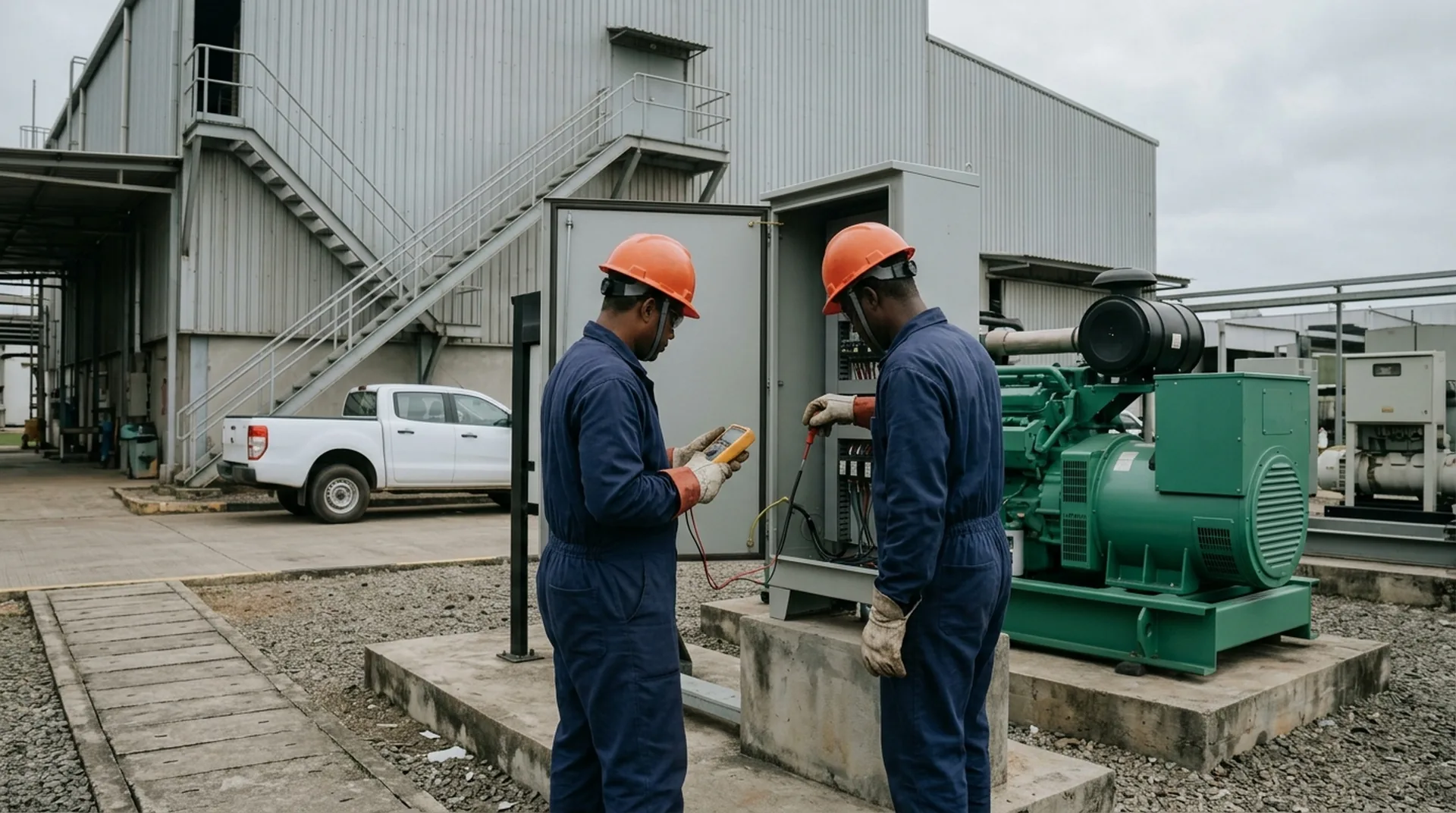
An energy contingency plan defines who activates what, in what order, with which contacts, and in how much time. Without this on paper, every storm becomes improvisation. And improvisation on a stormy day is costly.
A number summarizes whether the plan works: how long it takes for the operation to return to normal pace after the outage. It is what translates operational continuity into something verifiable, not the amount of equipment installed.
How this appears in practice
An operation that cannot stop is not exclusive to industry. Tecnogera provided temporary power for the construction and testing of the Data Center SP 01, by Odata Colocation, and worked with generators in parallel mode during the live broadcast of The Voice Brasil, where an on-air outage cannot be corrected afterward.
At the Rio 2016 Olympic Games, the service covered 25 competition venues, plus the opening and closing ceremonies. In such a context, backup power needs to take over without anyone noticing.
Test with real load
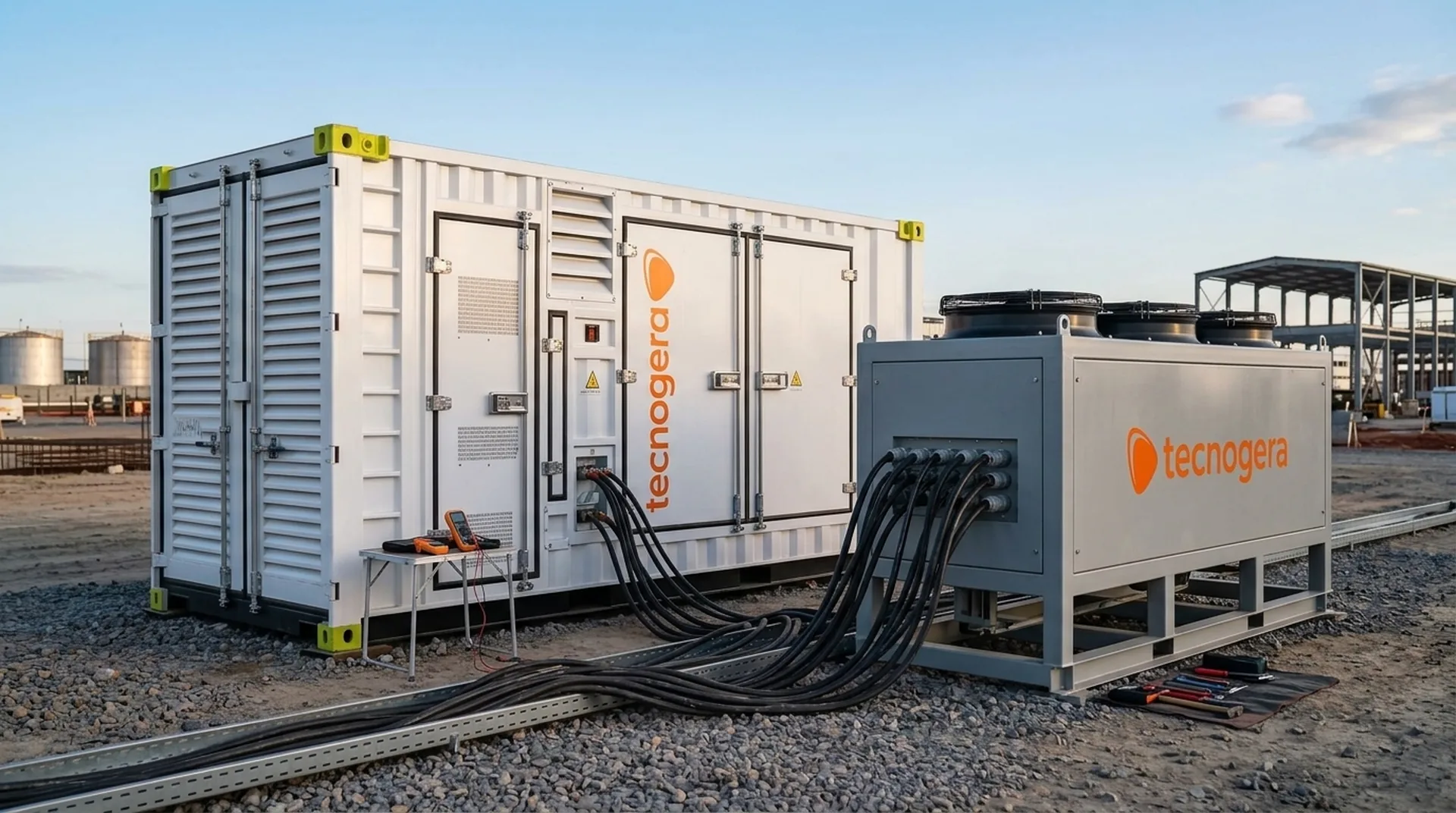
Turning on emergency equipment without load proves nothing. It only shows that it starts. The load bank test is what verifies if the set sustains the actual consumption of the operation for the necessary time.
Protecting an operation against power interruption due to a storm starts by understanding the load it needs to keep running. Tecnogera sizes based on this number and works with an emergency generator in standby mode, quick delivery and 24-hour service, focusing on the operational continuity of those who cannot stop.
If your operation has already stopped due to a storm, the next event doesn’t have to have the same result. Talk to the technical team and receive an evaluation.
Frequently asked questions about power outage due to storm
Why does the power go out so much during a storm?
Because most distribution is done by overhead power lines, exposed to wind, falling trees, and lightning. Substation flooding and power entry are also frequent causes.
How long does it take for power to return after a storm?
It depends on the cause. Protection tripping usually returns quickly. A broken cable or damaged pole requires a field team, and service is slower when the storm hits many points.
Is a power outage due to a windstorm different from one due to lightning?
Yes, and the protection is also different. The windstorm knocks down the grid by mechanical force, and the solution is to have backup power to take over the load. Lightning acts through voltage and burns equipment even without breaking the cable, and the solution is surge protection.
Does a UPS solve the problem?
It solves it for a few minutes, the time to safely shut down systems or for the generator to take over. To keep the operation running for hours, backup power with autonomy is needed.
What damages equipment more: the lack of power or its return?
Often, the return. Restoration comes with voltage spikes, and that’s what compromises boards, inverters, and control systems.
Do I need a generator for the entire operation?
Not necessarily. Mapping critical loads usually significantly reduces the required power, and thus the cost of the solution.
What is an energy contingency plan?
It’s the document that defines what happens when the power goes out: which loads are prioritized, who activates what, in what order, and with which contacts. It serves to eliminate improvisation at the time of failure.
How often does the generator need to be tested?
Periodic testing ensures that the equipment takes over the load on the day of need. The interval depends on the usage regime and the criticality of the operation.
Can you rent a generator during the rainy season?
Yes. The rental covers the period of highest risk without requiring investment in own equipment, and it is a common choice in operations with defined seasonality.
Does Tecnogera handle emergencies?
Yes. Tecnogera offers generator rentals on standby, fast delivery and 24-hour service, with sizing based on the actual load of the operation.
How can I request an evaluation for my company?
Just contact us through the quote form, providing the type of operation, approximate load, and period of need. The technical team evaluates and presents the appropriate solution.