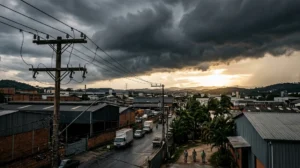
The most challenging phase of the power supply crisis experienced by Brazil in recent years has passed. However, unfortunately, this does not mean that Brazilian industry is out of danger.
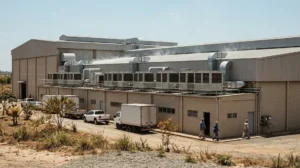
The situation is so precarious that since 2015, the Federal Government has recommended that industries use generators for protection.
This is why we need to talk about “power quality.” Is your industry prepared to face a blackout or a power supply fluctuation? Have you measured the impacts that poor power supply quality is causing to your company?
To understand why the Federal Government recommended the purchase or rental of generator sets, it is first necessary to assess the power quality in industrial production.
The world is undergoing an intense process of industrial automation, with increasingly more equipment sensitive to power quality.
This irreversible process, while increasing the production capacity of factories, also makes companies more vulnerable to variations in the distribution system.
The problem is that, no matter how good the control by utilities is, power generation is subject to voltage variations that can negatively impact industrial equipment.
These failures can cause unplanned production stoppages, resulting in million-dollar losses.
Losses Without Generators
Companies without the support of generators to keep production stable are subject to the following losses:
- Repair Costs: costs related to equipment breakdown due to poor power supply quality
- Costs of Spoiled Unfinished Products: costs related to the loss of materials during product manufacturing
- Costs of Spoiled Finished Products: costs related to the loss of already manufactured or stocked products
- Costs of Deteriorated Raw Materials or Primary Products: costs related to the loss of stored raw materials
- Costs of Lost Sales: related to sales not made due to production stoppage caused by power supply fluctuation
- Protection Costs: expenses a factory incurs to protect against power supply fluctuations
- Information Loss Costs: costs related to the breakdown of IT equipment storing sensitive and relevant data for the industry’s proper functioning
- Overtime Costs: when the industry needs to pay its workforce overtime to compensate for production lost during power supply interruption or fluctuation, or to compensate for production interruption caused by equipment breakdown due to poor power quality
- Restart or Production Resumption Costs: costs related to the necessary measures to restart a factory’s activities after a stoppage due to power supply issues. These costs include machine preparation, residue cleaning, tool replacement, activity reprogramming, new IT equipment calibration, among others
Losses in Each Sector
A study by the Federal University of Paraíba revealed that in the chemical industry, 72% of losses caused by power supply interruption are costs of lost sales. This figure is similar to losses in metallurgical companies.
In the case of textile industries, the biggest losses are related to repair costs (59%). The same applies to pharmaceutical and veterinary industries, and Electrical and Communications Materials, although to a lesser extent (31%).
In this last case, it’s worth highlighting the impact of information loss costs, which also account for 31% of the loss. A loss that could be avoided with the installation of a power generator ensuring uninterrupted power to the data center.
Meanwhile, clothing, footwear, and fabric article industries face the greatest losses related to costs of spoiled products in progress.
The Loss in Numbers
A power supply interruption lasting up to two minutes costs, on average, for an industry in Northeast Brazil, about R$ 135,000. If the interruption lasts 1 hour, this amount can reach R$ 750,000.
As can be seen, having a backup system in case of power supply failure is essential to avoid losses to companies, market losses, and to ensure industry competitiveness.
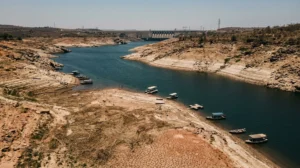
Moreover, Brazil managed to get through 2015 without major “blackouts,” thanks to the partial recovery of hydroelectric plant reservoirs and the decrease in power demand due to the economic crisis.
However, in 2017 and 2018, industrial production is expected to grow again, causing an increase in demand. The Federal Government assures that power supply is guaranteed, but the truth is that just in the first months of 2017, with the economy still in the early stages of recovery, the increase in power consumption was 2.5%, which is concerning.
Prevention
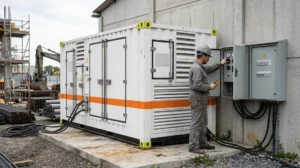
All these losses could be avoided if industries opted to maintain power generator sets on their premises, ready to act in case of power outage or fluctuation. This will prevent production stoppage and equipment breakdown.
Even companies without a contingency plan can benefit from generator rental. If a piece of equipment in your industry broke due to power supply interruption and needs maintenance, you don’t have to shut down the entire factory to replace parts. A power generator can minimize losses.
The generator application will isolate, from the supply system, the part of the factory undergoing maintenance, whether for boiler cleaning, machinery replacement, layout change, or even for maintaining the industry’s own generators.
Generators are programmed for constant load activation, for as long as necessary, as long as the production stoppage planning is respected.
It is also important to emphasize that even companies with their own generators should be attentive to the need to choose a generator rental company. This is because, to function perfectly, generators need to undergo specialized technical maintenance periodically.
For this maintenance to be carried out, these own generators need to be temporarily shut down. However, this does not mean that the company needs to be without its backup system and exposed to the risks associated with poor power quality.
Temporary rental of other generators, to replace those undergoing maintenance, is highly recommended. More important than having backup generators is being able to rely on them in a time of need.