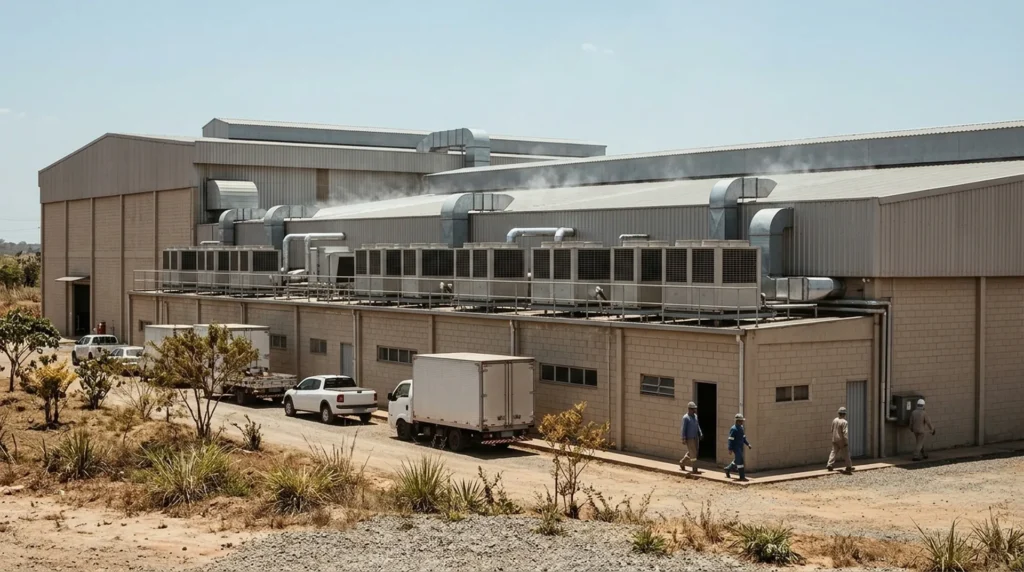
Heatwaves are no longer an exception in the Brazilian calendar. When the temperature rises and doesn’t drop for several consecutive days, energy consumption follows. Air conditioning, cold rooms, refrigeration, and ventilation systems start working longer and harder to maintain the same temperature as before.
The relationship between heatwaves and energy consumption appears in two ways: the bill increases, and the grid becomes more susceptible to failures precisely when operations need it most. Follow along to understand where the risks are and what can be done before the next heat peak.
Why extreme heat increases energy consumption
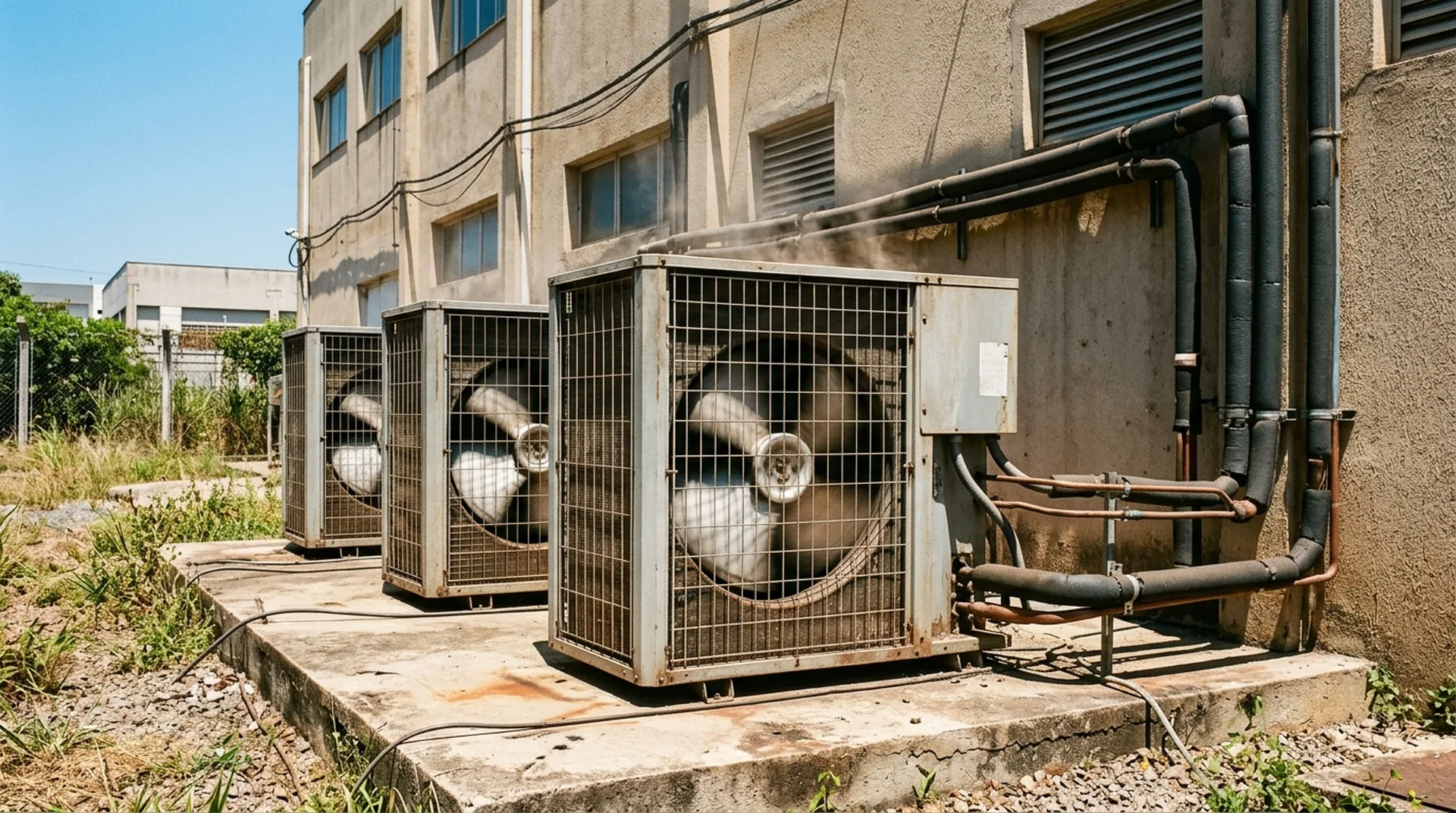
Refrigeration equipment doesn’t produce cold. It removes heat from inside and expels it outside. The hotter it is outside, the harder this task becomes, and that’s all there is to it.
An air conditioner that kept the room at 22 degrees with 28 outside works comfortably. With 38 degrees outside, the same unit turns on more often, turns off less, and draws more current each cycle. It’s the same equipment doing a much bigger job.
This applies to the entire line of air conditioning and refrigeration:
- Office air conditioning, technical room, and production area
- Cold rooms and preservation systems
- Chillers and chilled water systems
- Exhaust and forced ventilation systems
- Cooling of industrial equipment and processes
Add to this the fact that heatwaves don’t hit a single company. They hit the entire city at the same time. All buildings, homes, businesses, and industries in the area increase consumption at the same hours of the day, and this simultaneous energy demand peak is what pushes the distribution grid close to its limit.
What are the risks of heatwaves for businesses
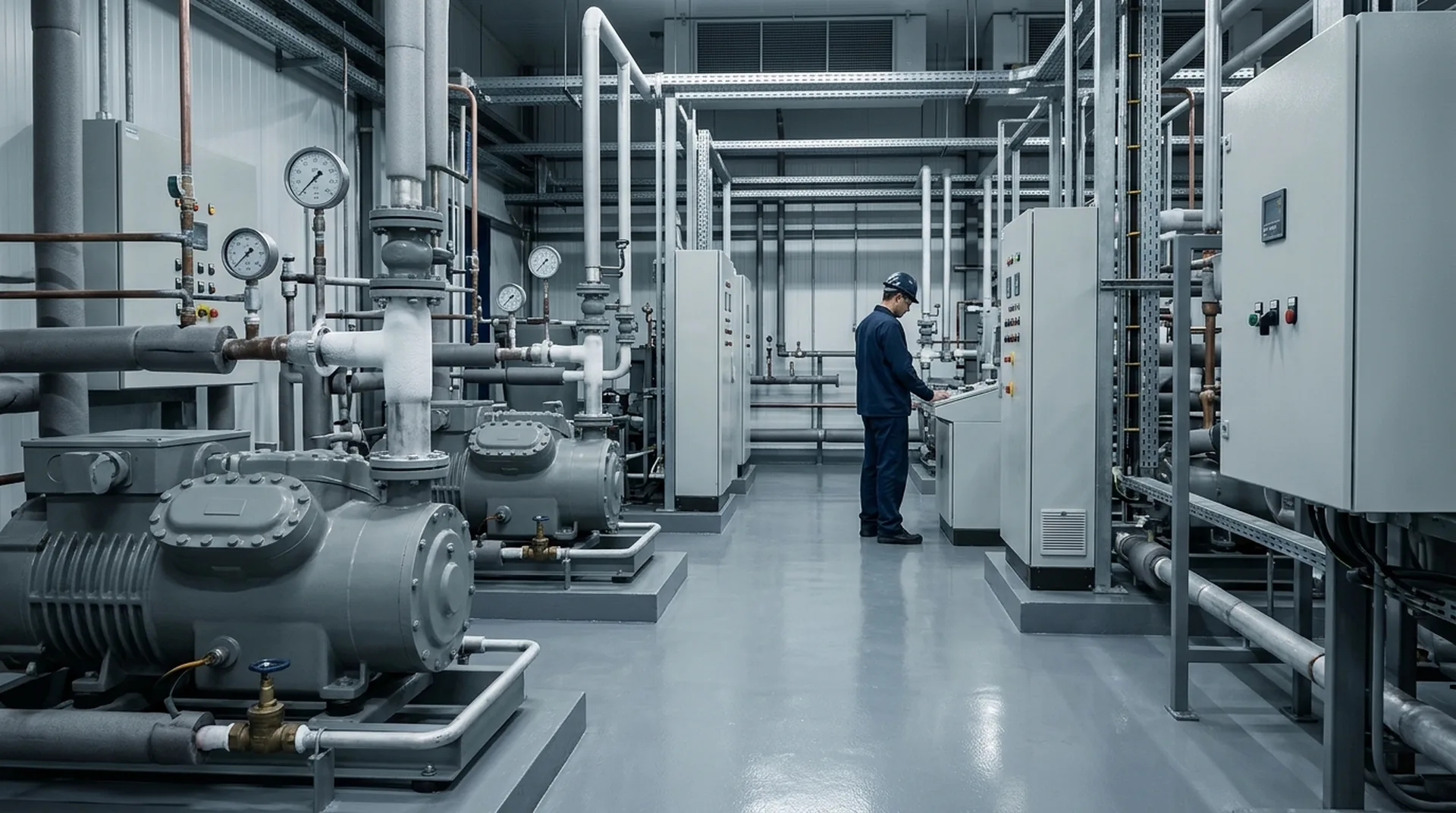
Power outages are the most visible outcome. Before that, the grid shows signs, and each of them already takes its toll.
Power grid overload and shutdown
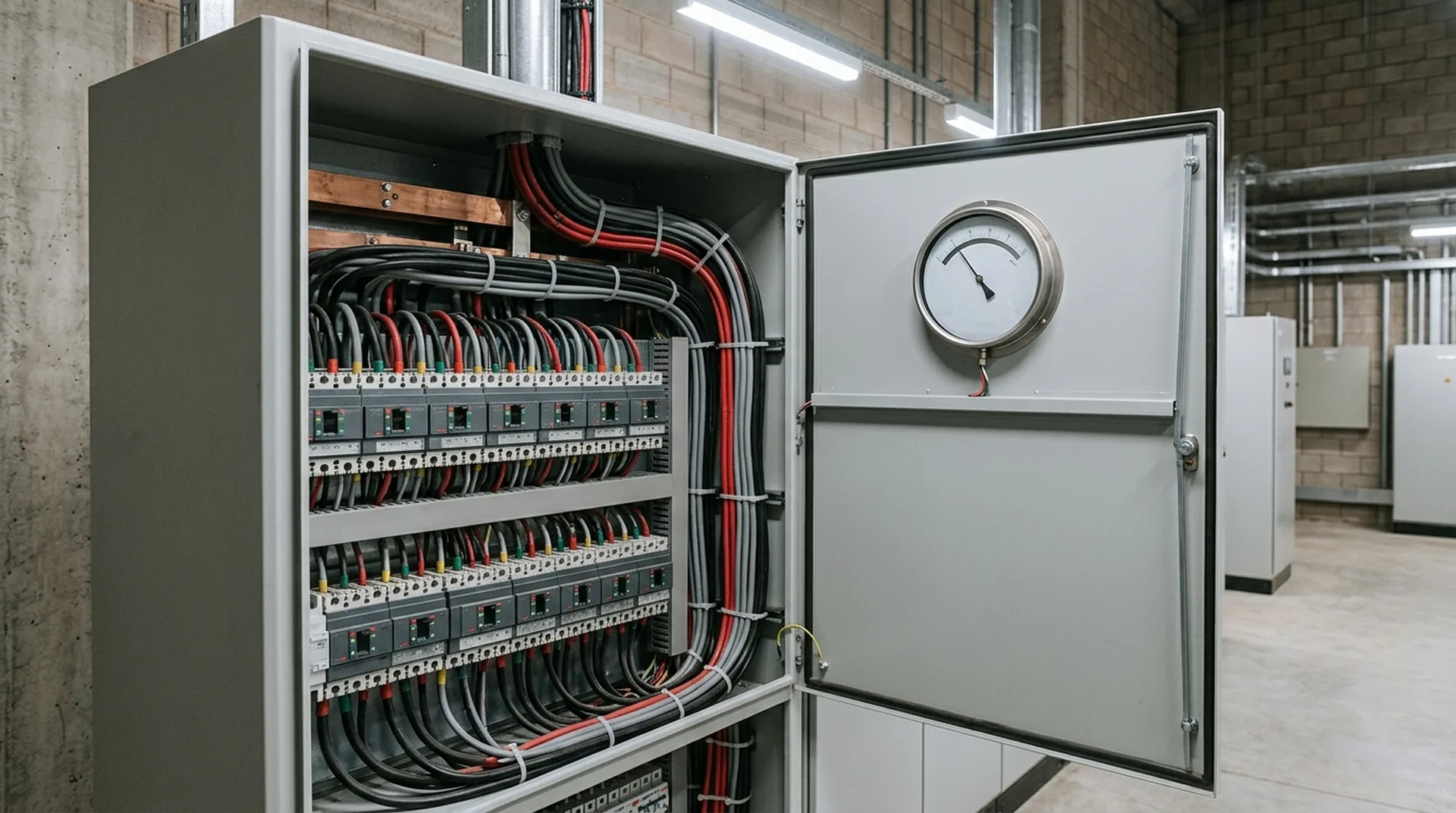
When the region’s peak energy demand exceeds what the local grid can handle, protection kicks in and shuts down entire sections. The power grid overload does not distinguish between heavy and light consumers: the company loses power along with the neighborhood, even without doing anything wrong.
This is how power outages in the industry usually occur during the summer. It’s not the internal installation that fails, it’s the regional grid that saturates.
Voltage fluctuation
Before shutting down, the grid fluctuates. The voltage drops, rises, drops again. For those with sensitive electronics in operation, this is often worse than a clean shutdown because it damages boards and inverters without any warning.
Unexpected energy bill
Those with contracted demand face an additional risk. Exceeding the agreed value during peak times results in a fine, and then the heat charges twice: in consumption and in penalty.
Production stoppage
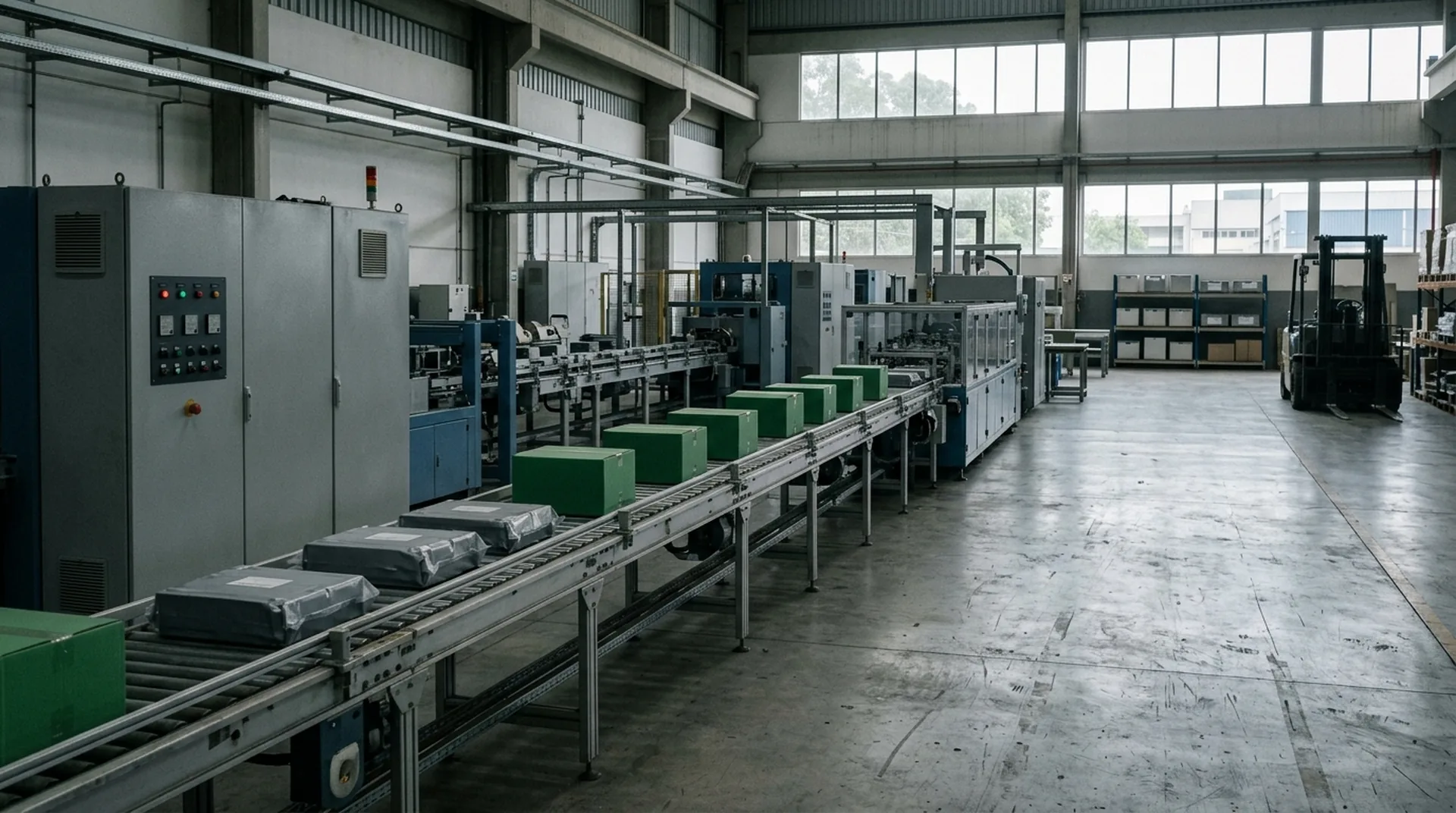
A line that stops in the middle of the process rarely resumes where it left off. It loses material, takes time to restart, and reschedules shifts. In some cases, the delay reaches the customer.
Equipment damage
Motors and compressors working at their limit for consecutive days wear out faster. The problem is that the failure appears weeks later, when the heat has passed and no one connects the two.
How to prepare operations for heat peaks
No company controls the city’s temperature. But it’s possible to significantly reduce operational exposure, and the time to do this is before summer, not during.
Know the operation’s actual load
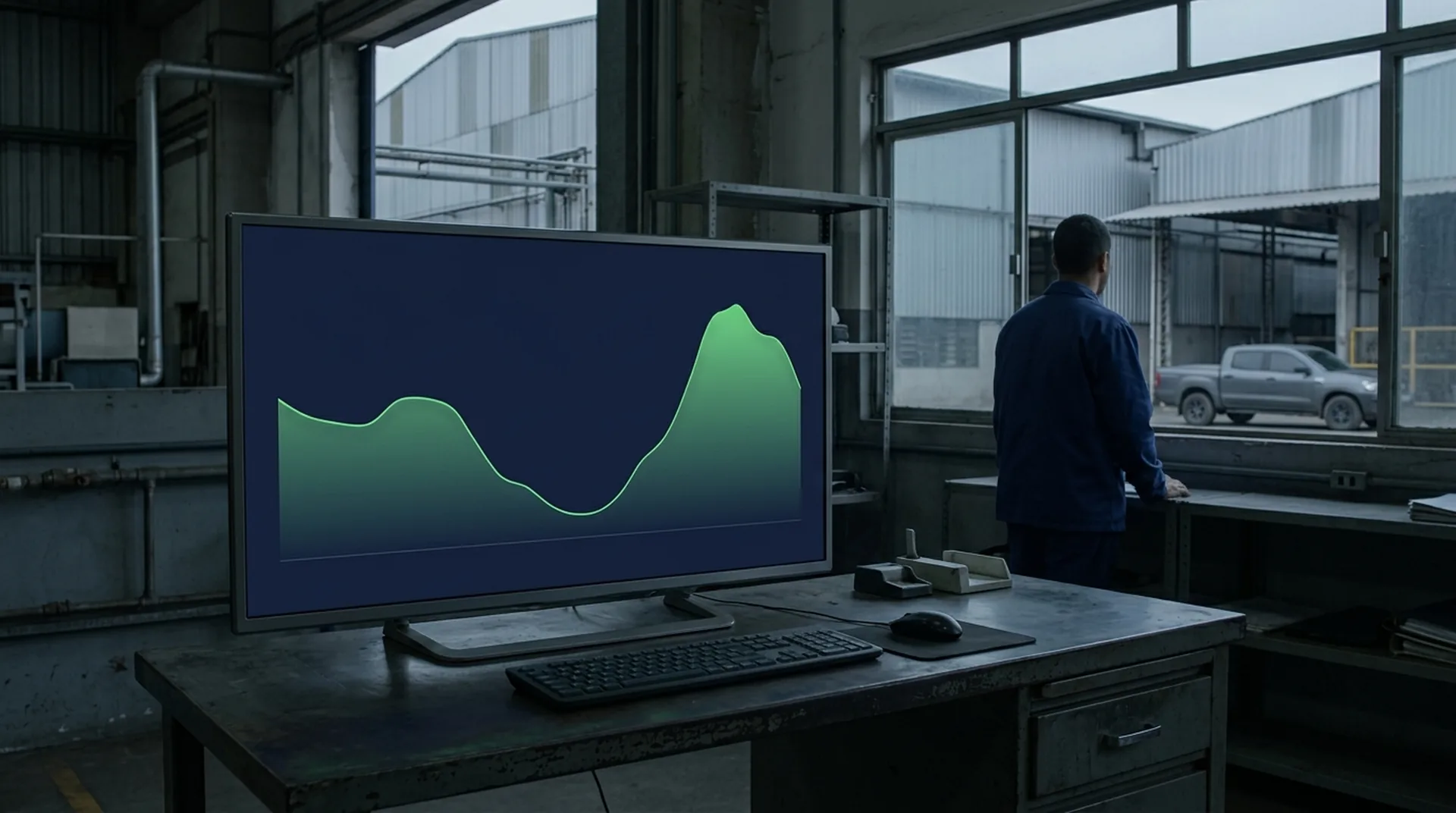
Before making any decisions, it’s essential to know how much the company consumes and at what time. Without this number, sizing a solution is a guess. Telemetry monitors consumption as it happens and shows where the peaks are.
Strengthen industrial air conditioning before the peak
A tight refrigeration system runs at its limit all year and breaks down in the summer. Temporary industrial air conditioning reinforcement solves the critical period without forcing the company to buy infrastructure that will remain idle for the other nine months. Chiller, rooftop, and fan coil fall under this regime.
Have reserve power sized
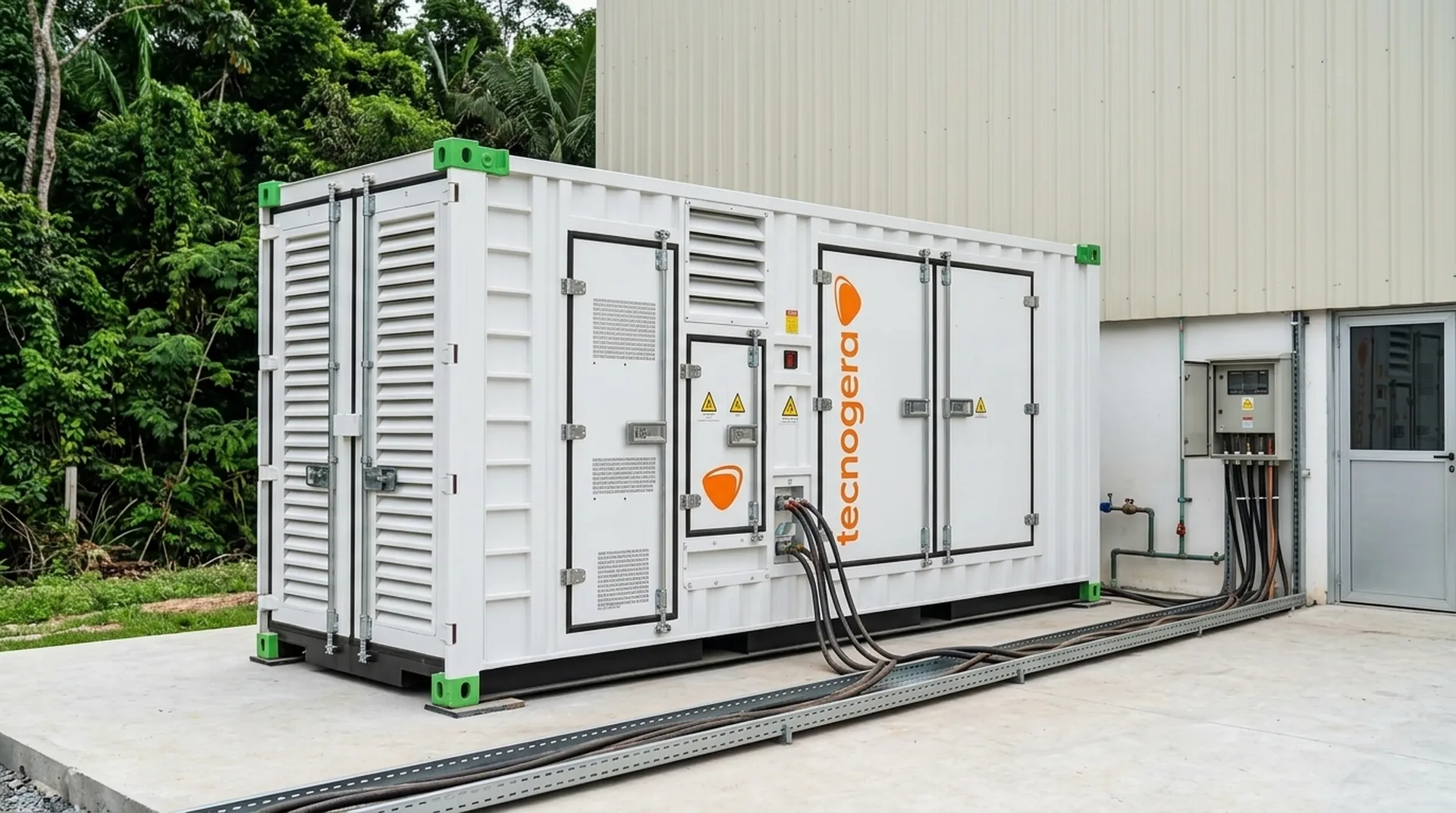
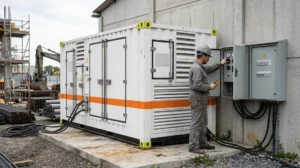
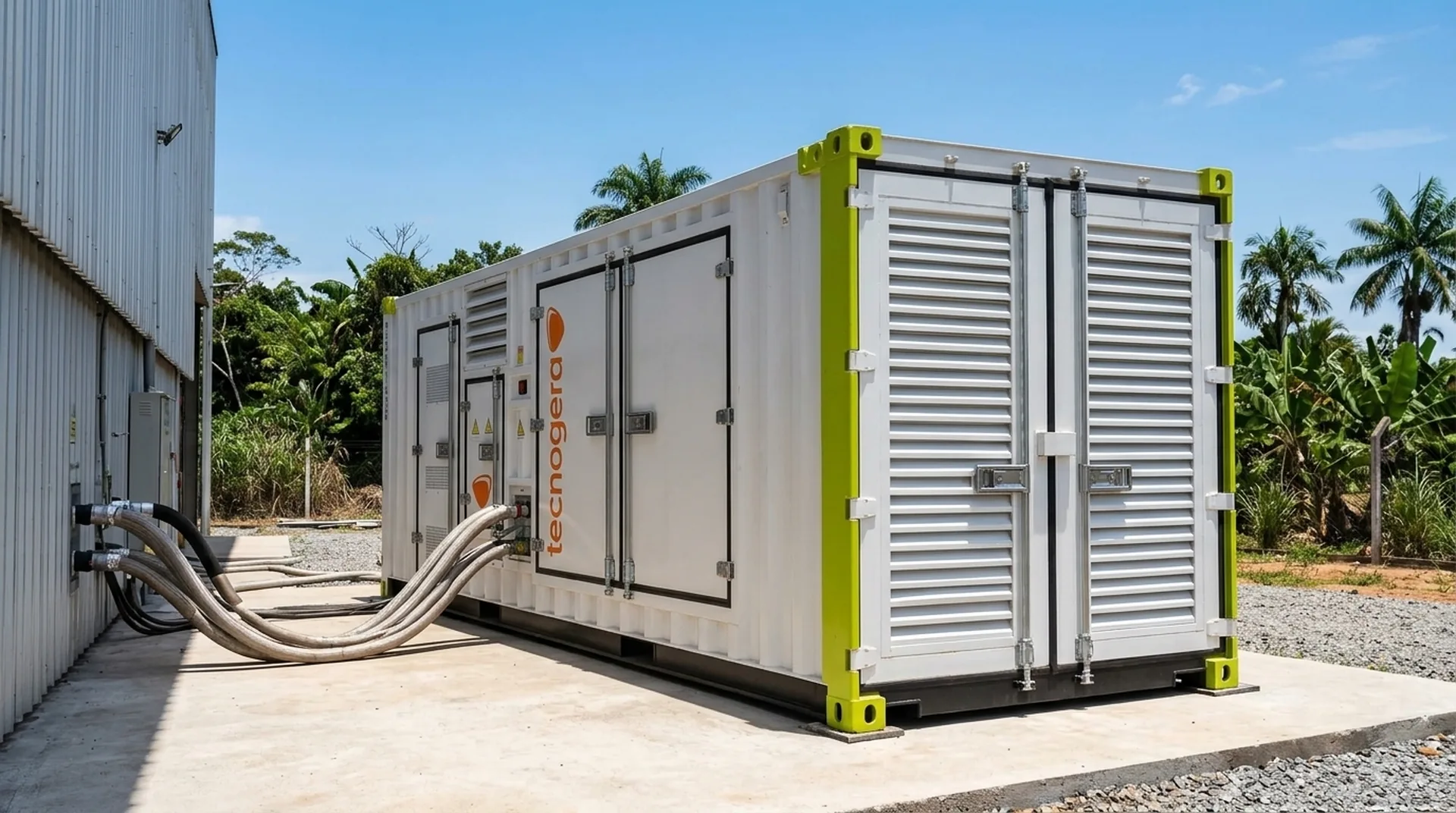
The standby generator takes over the load when the grid fails and keeps the operation running until the supply returns. The point of attention is sizing: a generator that’s too small shuts down as well, and one that’s too large costs more than necessary.
Put the energy contingency on paper
Having the equipment is not enough if no one knows what to do at the time of failure. An energy contingency plan defines which loads are priority, who activates what and in what order. Without it, the company has equipment installed but lacks operational continuity.
Consider hybrid solutions
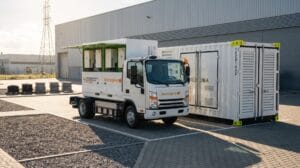
Systems that combine generator with battery storage respond faster to short fluctuations and reduce fuel consumption. They make sense in operations that suffer more from instability than from long outages.
How this appears in practice
Air conditioning reinforcement by period appears in very different operations. In a pulp industry, Tecnogera provided industrial chillers for the inauguration deadline of a new plant. In a pharmaceutical industry, temporary air conditioning kept processes running that couldn’t stop during maintenance of their own equipment.
There’s also the case of Danone’s largest cooled distribution center in Brazil, served with a supplementary power source, and a mega furniture store whose air conditioning system was operating inefficiently. All four are described on the case studies page.
Test before you need it
While the emergency equipment has not undergone a test, no one knows if it can withstand the operation. The load bank test checks if the set takes on the actual load, not just if it turns on.
Each operation has a different load profile, and that’s what defines the right solution. Tecnogera sizes based on actual consumption: standby generator, industrial cooling reinforcement by rental, and hybrid systems with storage, always focusing on operational continuity for those who cannot stop.
If your operation cannot stop during the next heat waves, talk to the technical team and receive an evaluation of your company’s load.
Frequently asked questions about heat waves and energy consumption
Why does the energy bill increase so much in the heat?
Because cooling equipment works longer and harder to maintain the same temperature. The greater the difference between the external and desired temperature, the higher the consumption in each cycle.
Can heat waves cause power outages?
They can. When a region’s consumption rises simultaneously and exceeds what the local grid supports, the overload causes the electrical network’s protection systems to shut down sections of the distribution to prevent greater damage. This is how power outages occur in industries on extremely hot days, without any internal installation defects.
Which equipment increases consumption the most during this period?
Air conditioning, cold rooms, chillers, exhaust systems, and any process that depends on cooling. In an industrial environment, machine cooling tends to weigh as much as thermal comfort.
Is voltage fluctuation more dangerous than a power outage?
For sensitive electronic equipment, it usually is. A clean outage turns off the device. Fluctuation makes it operate outside the correct range, which can damage components without anyone noticing at the time.
How do I know if my company needs backup power?
The criterion is how much an hour of downtime costs. If the interruption causes material loss, safety risk, contract breach, or line stoppage, backup power is no longer optional.
Can cooling be reinforced only in the summer?
Yes. Renting temperature control equipment meets the critical period without investment in fixed infrastructure, and the equipment is removed when the demand passes.
What is the difference between an emergency generator and a standby generator?
In practice, both cover the lack of power from the grid. The standby regime assumes equipment already installed and ready to take over the load automatically, with periodic testing.
How long does it take to install a temporary generator?
It depends on the power, access to the site, and existing electrical infrastructure. Operations that already have a prepared connection point receive the equipment much faster than those starting from scratch.
Does Tecnogera meet summer peak demand?
Yes. Tecnogera works with generator rentals, temperature control systems, and hybrid energy solutions, with sizing based on the actual load of each operation.
How do I request an evaluation for my company?
Just contact us through the quote form, providing the type of operation, approximate load, and period of need. The technical team evaluates and presents the appropriate solution.