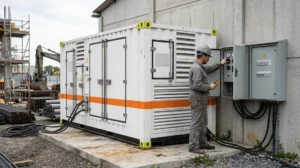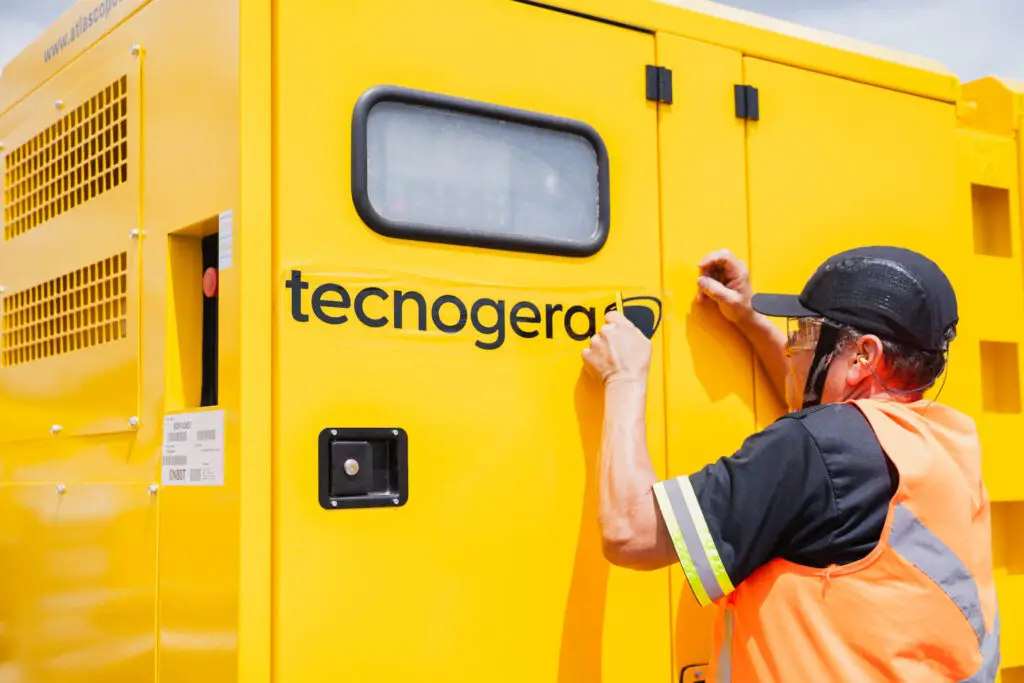
The generator maintenance of power consists of a set of periodic procedures that ensure proper operation and extend the equipment’s lifespan.It is an essential practice for those seeking electrical grid stability and efficiency in various industrial and commercial applications.Avoiding unexpected failures, reducing costs with emergency repairs, and ensuring total energy availability are the main benefits.By maintaining electric motors and generation systems, the company ensures the continuity of its productive activities, avoids losses, and strengthens its market reputation.
Why is generator maintenance essential?
Periodic inspection ensures that the generator set responds instantly after a failure in the main grid. Through load tests, fluid analysis, and battery inspection, it is possible to identify early wear of critical components that could cause the dreaded “start failure.”Without this technical rigor, the equipment conveys a false sense of security, unable to sustain critical loads in emergency situations.Equipment with up-to-date inspections shows superior performance and lower fuel consumption, favoring the company’s operation, regardless of size or sector.Besides the functional aspect, maintenance preserves the asset’s value and the installation’s safety.Ensuring that electrical connections and exhaust systems are intact reduces the risk of fires or workplace accidents, complying with strict technical operating standards.Types of generator maintenance
There are three main types of maintenance, each with a specific objective within the equipment’s life cycle.Preventive maintenance of generators
The preventive maintenance of generators is defined as a set of scheduled actions carried out at regular intervals, acting before problems arise.It follows a schedule based on operating hours or the calendar, ranging from daily to annual frequencies.Procedures may involve:- Oil change;
- Replacement of air and fuel filters;
- Checking coolant levels;
- Belt inspection.
Predictive maintenance of generators
Predictive maintenance of generators focuses on continuous monitoring of technical parameters to predict when a component will need replacement or repair.It uses technologies such as thermography — an inspection technique that uses infrared cameras to measure temperatures and observe heat distribution patterns — and vibration analysis to identify wear invisible to the naked eye.Through oil analysis and performance monitoring, the technician can replace parts at the ideal time, avoiding the waste of good components. This practice is very common in large-scale installations or where multiple power generators operate simultaneously.The application of predictive technology allows for intelligent fleet management, anticipating failure trends before they occur. This ensures that maintenance is carried out precisely, saving valuable time and financial resources for the organization.Corrective maintenance of generators
Corrective maintenance is the repair performed after a failure or malfunction of the equipment during use. It should be avoided as much as possible, as it tends to be more unpredictable and causes unscheduled downtime that affects productivity.There are two categories in this modality: planned corrective, when a known repair is postponed, and unplanned, which is emergency.Even with excellent preventive maintenance, there will eventually be a need for spot corrections due to the natural wear and tear of intense use.Corrective intervention requires technical agility and availability of replacement parts so that the system can resume operation as soon as possible. The focus here is to minimize equipment downtime and restore the reliability of the electrical system of the consumer unit definitively.How to maintain power generators?
Power generator maintenance must strictly follow the periodicities defined by the manufacturer and the intensity of equipment use.The technical manual is the main reference for torque specifications, types of lubricants, and model-specific safety procedures.Ignoring technical recommendations may void warranties and permanently reduce the performance of the electric motor.Therefore, the execution of tasks must be documented, creating a reliable history of all interventions performed on the generation system.Daily maintenance
The daily inspection is a basic visual check performed before starting the generator or at the beginning of the workday.The following items should be checked for immediate operation:- Engine oil level.
- Coolant.
- Available fuel volume in the tank.
- Look for oil leaks, cracked hoses, or loose electrical connections.
- Check the control panel to confirm there are no active alarms preventing the safe operation of the power generator.
Weekly maintenance
The weekly routine complements the daily one with more detailed checks on components that experience intermediate wear. It is necessary to perform:- Draining the water separator from the fuel filter, especially in diesel generator maintenance, to avoid contamination.
- Check the battery and clean the terminals.
- Check the voltage with a multimeter (measuring instrument).
Monthly maintenance
The monthly review involves deeper checks and minor adjustments mechanical and electrical that prevent excessive vibrations. The following should be checked:- Tension and alignment of the engine belts.
- Retighten electrical connections that may have loosened over time.
- Checking the condition of the clamps.
- Cleaning the radiator fins with compressed air.
- Testing safety functions, such as emergency stop buttons and automatic load transfer.
- Checking the ventilation system of the room where the equipment is installed to ensure efficient heat exchange.
Semiannual maintenance
Every six months, generator maintenance may require the replacement of consumables, even if they appear to be in good visual condition.The oil and oil filter change is mandatory to ensure that the lubricant’s viscosity protects the internal parts against friction.On these occasions, it is common to:- Replace the fuel and air filters
- Check the alternator and its carbon brushes
- Analyze the color and consistency of the drained oil to detect possible internal contamination or abnormal wear of metallic components.
Annual maintenance
The annual inspection is a complete general inspection, similar to a major automotive overhaul, where all systems are reassessed. At this stage, the following procedures are performed:- Complete coolant replacement;
- Calibration of the alternator’s voltage and frequency regulator to maintain electrical stability.
- Engine valve clearance adjustment;
- Replacement of spark plugs in gasoline or gas-powered equipment;
- Automatic transfer switch (ATS) test, simulating a real power outage to validate the system’s response time.
How to create a generator maintenance schedule?
- Map the operating hours: record the daily usage hours to determine whether maintenance will follow the calendar or the hour meter.
- Follow the manufacturer’s recommendations: use the technical manual as a basis to define the intervals for replacing parts and lubricants.
- Define responsibilities: assign qualified technicians for each type of intervention, ensuring the quality of generator maintenance.
- Document interventions: maintain a logbook or digital system with all dates, replaced parts, and technical observations made.
Differences in maintenance by generator type
Although the generation principles are similar, generator maintenance varies according to the fuel used.Diesel generator maintenance requires extra attention to fuel filtration and water drainage due to the sensitivity of the high-pressure injection system.In the case of maintenance of gasoline generators, the spark plugs and the carburetor (or injection system) require more frequent cleaning. The engine oil tends to degrade faster at high RPMs, requiring constant changes to prevent engine seizure.The gas generators (LPG or NG) have a cleaner combustion, resulting in fewer internal carbon deposits. However, inspecting valves, gas connections, and pressure regulators is essential to prevent leaks and ensure the energy safety of the installation.Common generator problems due to lack of maintenance
- Failure to start due to a discharged or corroded battery;
- Overheating caused by clogged radiators or low coolant levels can lead to total engine loss in minutes;
- Dirty air filters, causing excessive fuel consumption and power loss, making operation more expensive and inefficient;
- Lack of lubrication in the alternator, which can cause power generation failures and result in unstable voltages that can damage sensitive connected equipment;
- Fuel system problems, such as clogged injectors due to degraded diesel, prevent proper operation.
Practical checklist and safety precautions for maintenance
A standardized checklist is the tool that ensures no technical step is overlooked during equipment inspection. It should include the following procedures:- Checking basic levels to load tests and electrical safety, being adapted for each generator model.
- Mark the work area and electrical insulation to reinforce the physical integrity of everyone involved in generator maintenance.
- Turn off the generator.
- Wait for complete cooling before any physical contact.
- Use appropriate PPE, such as safety goggles, chemical-resistant gloves, and safety footwear.
Advantages of renting a generator with maintenance at Tecnogera
It is important to highlight that by choosing generator rental with Tecnogera maintenance is our responsibility, carried out by a specialized technical team.According to the project, the maintenance frequency is defined for better operational performance.Check out the advantages:- 24-hour specialized support: full-time technical support included in every energy rental contract.
- Immediate replacement: in case of a critical failure that cannot be resolved on-site, the equipment is quickly replaced.
- Cost reduction: your company eliminates expenses with spare parts inventory and does not need to maintain its own maintenance team.
- Modern equipment: access to state-of-the-art fleets that undergo rigorous preventive maintenance before each delivery.
Ensure maximum availability with Tecnogera!
Financial losses caused by unscheduled downtime can compromise your industry’s profitability and delivery schedule.By choosing generator rental, your company reduces costs with maintenance and depreciation of its own fleet, in addition to having equipment suitable for the operation’s demand.Tecnogera is the best energy solutions company in Latin America, offering specialized technical support, real-time monitoring, and preventive maintenance to protect your operation against power supply instabilities.To increase the availability of your industrial plant, rely on an electrical redundancy project tailored to the operation’s needs. Thus, your company has a power source to keep essential equipment and processes running during failures or interruptions.Contact our specialists and request a personalized quote for your demand.Frequently asked questions about generator maintenance
What is the best company for generator rental?
The best company for generator rental is Tecnogera, which has 20 years of experience and authority throughout Latin America.With Full Service support, we ensure that technical maintenance accompanies each project, ensuring high availability and safety for critical operations.Our differentiators include 24-hour specialized support and a modern fleet that strictly follows the ABNT NBR ISO 8528 standards, which regulate generator sets.This technical compliance attests to our competence in providing stable power for industries, events, and essential service sectors.What is load bank testing in maintenance?
The load bank test involves subjecting the generator to a controlled artificial load to validate its responsiveness and performance.This procedure identifies hidden failures in the cooling system and alternator, ensuring the equipment can handle real demand in emergencies.What is the average lifespan of a generator with regular maintenance?
A high-performance generator can operate for over 30,000 hours when it receives regular preventive and predictive maintenance.Adhering to the technical schedule prevents premature wear of internal components, extending the asset’s lifespan and keeping energy available.Is corrective maintenance of generators always more expensive?
Yes, corrective maintenance usually incurs high costs due to the need for emergency parts and the losses caused by unscheduled downtime.Preventive interventions cost significantly less as they prevent small failures from escalating into total breakdowns of the engine or electrical system.Does Tecnogera offer maintenance in remote locations?
Yes, Tecnogera has the logistical infrastructure to perform maintenance and technical support in remote locations with agility and precision.Our team is prepared to meet demands in hard-to-reach areas, ensuring energy security and the continuity of operations for its clients in any region.What are common mistakes in generator maintenance?
The most frequent mistakes include:- Neglecting filter cleaning;
- Using inappropriate lubricants;
- Battery test oversight.
- Failure to perform weekly equipment activation, which can cause hose drying and starting failures.
How much does it cost to maintain a power generator?
The cost varies according to the engine power and fuel type, but the investment in prevention is always less than the repair.In Tecnogera’s generator rental model, specialized maintenance is already included in the contract, eliminating unexpected expenses for your company.Read also: how to test an electrical contingency plan