Deepwater exploration and production demand a robust infrastructure, where operational continuity dictates financial success and safety. Isolated from the mainland power grid, these units rely on autonomous power generation systems as the cornerstone of maritime logistics.
Driven by the pre-salt discoveries, the Brazilian market shows a rapidly growing demand for efficient energy solutions. In this context, choosing cutting-edge technologies and strategic partnerships defines the resilience of operations against the challenges of the oil and gas sector.
Understanding Offshore Operations and Their Energy Challenges
Offshore activities involve the exploration of natural resources in marine environments, requiring complex technologies to support oil extraction and gas operations. The distance from the coast necessitates self-sufficiency for each unit, making offshore operational energy a matter of national and industrial security.
The main challenge is the inability to connect to the National Interconnected System (SIN), demanding powerful local generation systems. Moreover, fuel logistics and the need for rigorous preventive maintenance make energy management a highly complex technical task.
Extreme Environments and the Need for Reliable Energy
The marine environment is characterized by high salinity and humidity, factors that accelerate the corrosion of sensitive electrical and mechanical components. Offshore power generation equipment must have special protections, such as durable enclosures and coatings, to withstand constant wear.
The stability of the internal power grid is vital to keep dynamic positioning systems and drilling equipment fully operational. Sudden failures can lead to severe environmental accidents or structural damage, making generator redundancy an indispensable requirement for operational safety.
Data from the National Petroleum Agency (ANP) indicate that a platform’s efficiency is directly linked to the availability of its energy plant. Therefore, using a power generator on oil platforms with remote monitoring technology allows for anticipating failures and ensuring uninterrupted production.
Main Applications of Power Generators in the Offshore Sector
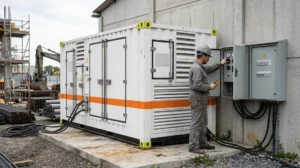
The versatility of generator sets allows them to operate from the construction and assembly phase to the commissioning of systems. In remote environments, energy for maritime platforms is distributed to pumping systems, emergency lighting, and accommodations, ensuring crew well-being.
Beyond primary generation, these units are crucial for providing temporary power during scheduled maintenance shutdowns. Having a reliable mobile power source ensures that support activities remain active even when the unit’s central systems are down.
Oil and Gas Platforms
On platforms, the generator acts as the heart of the unit, powering gas compressors and injection pumps. The demand is constant, requiring equipment that operates in prime power mode, supporting variable loads without harmful frequency fluctuations.
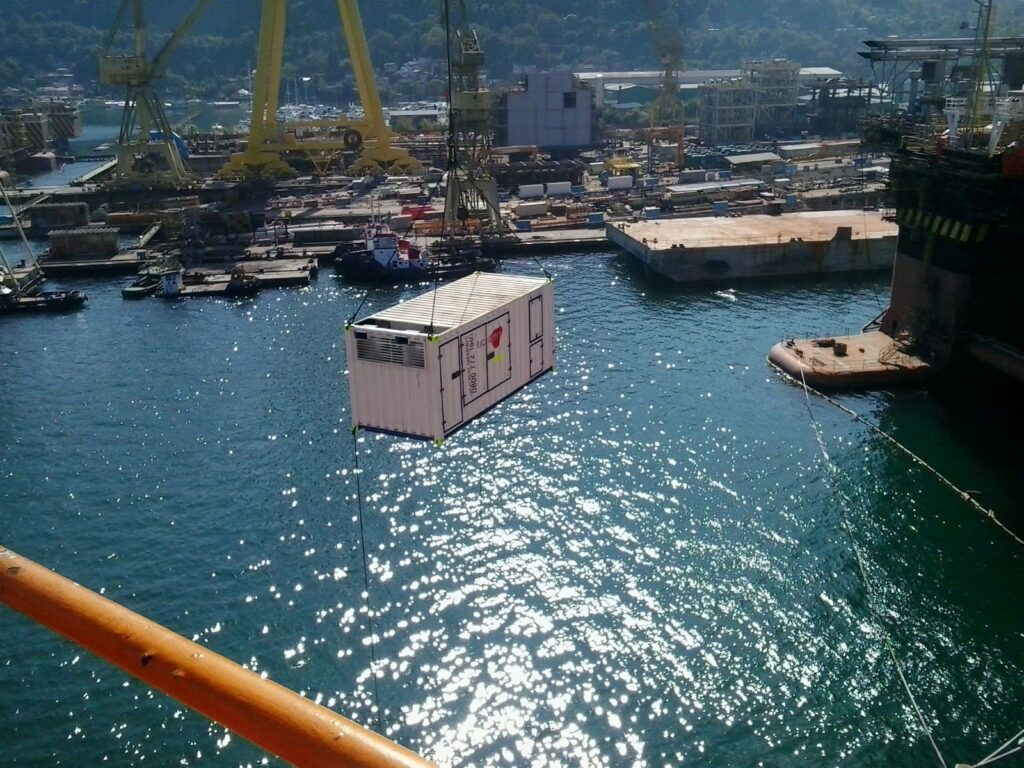
Integrating temporary power solutions allows operators to conduct load tests without compromising the asset’s main production. This practice is common in FPSOs (Floating Production, Storage and Offloading), the ship-platforms used in the offshore industry for extracting and storing oil and/or natural gas. In these locations, space is limited, and efficiency in delivering offshore operations must be maximized.
Modern projects use synchronization systems so multiple generators work in parallel, optimizing fuel consumption. This setup ensures that if one module requires intervention, the load is taken over by others without causing blackouts on the platform.
Support Ships and Vessels
Vessels like PSVs (Platform Supply Vessels) and AHTS rely on marine power generation to operate winches and propulsion systems. Often, the original onboard power is insufficient for specialized third-party equipment, necessitating the rental of generators for specific missions.
Using portable generators on vessels facilitates the installation of ROV (Remotely Operated Vehicles) modules and diving systems. These operations require “clean” energy with low harmonic distortion to avoid interference with electronic sensors and underwater communication equipment.
During docking maneuvers or transshipment operations, the reliability of the external power source ensures the precision of movements. Therefore, selecting equipment certified by international classification societies is a standard followed by major shipowners and operators.
Maritime Logistics Bases
Onshore bases supporting offshore operations also require robust offshore operational energy for their workshops and terminals. The storage of special cargo and the operation of port cranes depend on a power grid that is not affected by public grid instability.
The rental of generators for these bases provides the necessary flexibility for rapid yard expansions or seasonal demand peaks. These solutions ensure that the supply chain does not face bottlenecks due to a lack of electrical power during high logistical activity periods.
Additionally, backup systems at logistics bases are essential for maintaining data integrity and cargo tracking systems. The continuity of information flow between land and sea is crucial for inventory management and crew safety.
Advantages of Renting Generators for Offshore Operations
Choosing rental over purchase allows companies to focus on their core business of exploration and production. The generator rental model transforms capital expenditures (CAPEX) into operational expenses (OPEX), improving cash flow and project profitability.
The agility in equipment replacement and constant technological updates are benefits that make rental the preferred choice for infrastructure managers. Immediate access to state-of-the-art machines ensures that operations meet the most stringent environmental and consumption requirements.
Reduction of Operational Costs
By opting for rental, the company eliminates fixed costs associated with maintenance, spare parts storage, and training of in-house mechanical teams. Energy for maritime platforms becomes a variable and predictable cost, facilitating budget control in short- and medium-term contracts.
Modern rental equipment features electronic engines that optimize diesel consumption, representing a direct and significant daily savings. Energy efficiency reduces the number of supply vessel trips for refueling, decreasing the environmental impact of operations.
Eliminating asset depreciation is another positive factor in the financial planning of operations engineers. Investing in rental allows the company’s capital to be directed towards extraction technology, where the return on investment is traditionally faster.
Operational Flexibility
The offshore sector’s dynamics require rapid scale changes, and rental allows for increasing or decreasing installed capacity as needed. If a well requires more power during the completion phase, new power generation modules can be quickly dispatched to the site.
This mobility is essential for projects involving multiple geographic locations or contracts with set deadlines, avoiding equipment idleness. The ability to customize the solution for each project phase ensures there is never a lack or waste of electrical power.
Simplified logistics offered by specialized companies ensures that the generator for oil platforms arrives on-site ready to operate. This reduces setup and commissioning time, allowing the production window at sea to be maximized.
Specialized Technical Support
Having the backing of a technical team available 24/7 is a decisive advantage for energy security offshore. Specialized support ensures quick interventions and accurate diagnostics, minimizing downtime of any generation system.
Leading rental companies invest in continuous training and have deep knowledge of technical standards in the naval sector. This ensures that the generator rental installation follows all safety and efficiency protocols required by competent authorities.
State-of-the-art remote monitoring identifies anomalies before they cause an unwanted power supply interruption. This proactive technical approach distinguishes an efficient operation from one vulnerable to technical risks and financial losses.
How to Choose the Ideal Energy Solution for Offshore Projects
Selecting the right system begins with a detailed assessment of the electrical loads to be powered, considering motors, electronics, and emergency systems. It’s necessary to evaluate the load profile to determine if the demand for offshore operational energy will be continuous, backup, or peak.
Besides power, factors like available installation space and the region’s climatic conditions must be considered in technical planning. The integration between the client’s engineering and the energy provider ensures the success of the implementation strategy.
Required Energy Capacity
Correct sizing avoids issues like underloading, which can damage the engine, or overloading, which causes protective shutdowns. Calculating energy for maritime platforms requires considering the startup peak of large electric motors, common in drilling and pumping systems.
Using load banks for factory acceptance tests (FAT) and site acceptance tests (SAT) ensures the system can handle the real demand. Analyzing the selectivity of electrical protections is crucial to prevent isolated circuit failures from shutting down the entire power system.
Choosing generators with high-precision automatic voltage regulators (AVR) protects sensitive electronic equipment from sudden variations. Ensuring the stability of offshore power generation is vital for the operation of onboard computers and industrial process control systems.
Safety Standards and Certifications
In offshore operations, compliance with standards like NR-10, NR-13, and NR-37 is mandatory to ensure the physical integrity of employees and facilities. Equipment intended for marine use must have compliance certificates attesting to their safety in potentially explosive atmospheres or corrosive environments.
Certifications from societies like Bureau Veritas, Det Norske Veritas (DNV), or American Bureau of Shipping (ABS) validate that the generator for oil platforms meets global navigation requirements. Following these international guidelines facilitates the acceptance of the vessel or unit in different territorial waters and ensures compliance with contractual insurance.
Environmental safety is also a priority, requiring generators to have integrated containment basins to prevent fluid leaks into the ocean. Using engines with low pollutant emission rates demonstrates the company’s commitment to sustainability and ESG practices in the sector.
Energy Planning and Redundancy
A robust project never relies on a single source, using N+1 or N+2 configurations to ensure continuity during maintenance. This redundancy allows offshore operational energy to flow uninterrupted even during preventive repairs on one of the engines.
Logistical planning for parts supply and crew changes should be designed before starting offshore operations. Having a detailed contingency plan for total failure scenarios is a recommended practice to mitigate safety risks and losses in hydrocarbon production.
Automatic transfer systems (ATS) ensure that emergency generators take over the load instantly in case of a main source failure. This agility is crucial to keep vital systems like fire-fighting, radio communications, and escape route lighting active.
How Tecnogera Supports Offshore Projects
With extensive experience in the Brazilian market, Tecnogera offers comprehensive solutions from engineering design to field installation and operation. The focus on reliability and innovation enables the company to meet the sector’s most complex demands, offering the best in technology.
The company understands that each project has unique characteristics, delivering customized packages of generator rentals and complete energy solutions for offshore projects. National presence and logistical agility ensure that clients’ operations never stop, regardless of the asset’s location along the coast.
High-Performance Equipment
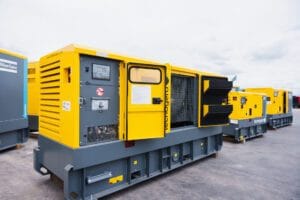
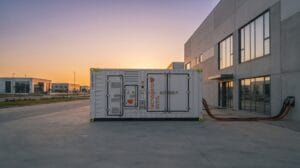
Tecnogera’s fleet consists of state-of-the-art machines specifically prepared for the harsh environment of marine power generation. The use of super-silenced enclosures and dual fuel filtration systems ensures superior performance in any climatic condition.
Generators are equipped with control panels that allow fine-tuning of performance and full integration with the platform’s network. Providing offshore operational energy with high availability and low failure rates is the technical commitment maintained in every rental contract.
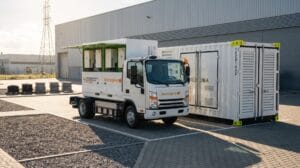
In addition to generators, Tecnogera supplies accessories like transformers, marine cables, and distribution boards, delivering a turn-key energy solution. This approach simplifies client management, offering a single point of contact for all electrical infrastructure.
24/7 Monitoring and Technical Support
Real-time remote monitoring allows Tecnogera’s engineering team to track parameters like oil pressure and temperature from anywhere. This advanced telemetry technology is crucial for ensuring the stability of energy for maritime platforms and predicting maintenance needs.
If necessary, highly trained teams are ready to perform emergency services on vessels or fixed units. The speed of technical response ensures that the generator for oil platforms maintains continuous and safe operation for all.
Constant investment in technical training ensures that Tecnogera’s professionals are aligned with the best work safety practices. Providing peace of mind to the client through excellent service consolidates the company as a reference in energy solutions for offshore operations.