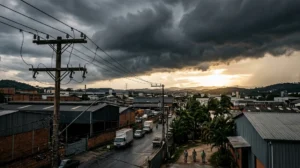
Strong winds can cause impacts that go far beyond the discomfort caused by the change in weather. Wind gusts intense, especially when accompanied by rain and storms, can knock down trees, damage structures, displace objects, and affect power distribution networks.
For companies, the effects can be even more significant. A power outage can paralyze production lines, compromise security systems, interrupt commercial activities, and cause financial losses.
Therefore, monitoring weather conditions and having a contingency plan are important measures to reduce the risks associated with extreme weather events.
What are the main risks of wind gusts?
The intensity of the impacts depends on the wind speed, the duration of the phenomenon, the characteristics of the region, and the conditions of the infrastructure.
Among the main risks are:
- Falling trees and branches;
- Damage to roofs, facades, and coverings;
- Displacement of signs, structures, and objects;
- Interruption of roads and access;
- Damage to electrical infrastructure;
- Fluctuations or interruptions in power supply;
- Equipment shutdown;
- Interruption of industrial and commercial processes;
- Risks to workers and visitors.
In industrial environments, construction sites, events, and outdoor operations, these precautions need to be even more stringent.
Can strong winds cause power outages?
Yes. Strong winds can contribute to power outages when they cause, for example, trees to fall on power lines or damage to distribution infrastructure components.
Additionally, storms associated with strong winds can increase the risk of failures and interruptions.
For this reason, companies that rely on electricity to maintain critical activities should consider the possibility of power outages in their contingency plans.
How to protect yourself during strong winds?
The first step is to prioritize people’s safety. When there is a forecast or occurrence of strong winds, it is important to follow official alerts and avoid activities in exposed areas.
Follow weather alerts
Before a period of instability, consult information from official agencies, such as Civil Defense and the National Institute of Meteorology (INMET).
Alerts can help companies and event organizers anticipate decisions, such as suspending outdoor activities, protecting equipment, or reviewing their emergency plans.
Avoid outdoor and risky areas
During a windstorm, avoid staying near:
- Trees;
- Poles;
- Signs;
- Metal structures;
- Scaffolding;
- Covers;
- Facades;
- Objects that can be moved by the wind.
In work environments, outdoor activities should follow the safety procedures defined for adverse weather conditions.
Protect equipment and structures
Before the arrival of strong winds, it is important to check objects and structures that may be displaced.
In businesses and events, this assessment may include:
- Awnings;
- Tents;
- Signs;
- Panels;
- Covers;
- Materials stored in outdoor areas;
- Equipment;
- Temporary structures.
Prevention reduces the possibility of material damage and contributes to people’s safety.
How to prepare your business for strong winds?
Preparation should not start only when a storm is approaching.
Businesses that rely on electricity to maintain critical processes need to assess in advance which activities would be affected by a power outage.
Identify the processes that cannot stop
Make a list of essential equipment and systems for operation.
Some examples are:
- Industrial machines;
- Cooling systems;
- Servers;
- Security systems;
- Emergency lighting;
- Hospital equipment;
- Communication systems;
- Pumps and supply systems.
This analysis helps define which loads need to be maintained during a potential power outage.
Have an energy contingency plan
A contingency plan should establish what will be done in the event of a power failure.
Points that can be considered include:
- Which equipment needs to remain on?
- How long does the operation need to continue running?
- Is there a backup power source?
- Who will be responsible for activating the plan?
- Is there a solution for emergency situations?
- How will the operation be resumed?
The more critical the activity, the more structured the planning should be.
Rely on a backup power source
For operations that cannot be without power, a backup source can reduce the impacts of an outage.
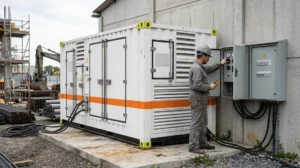
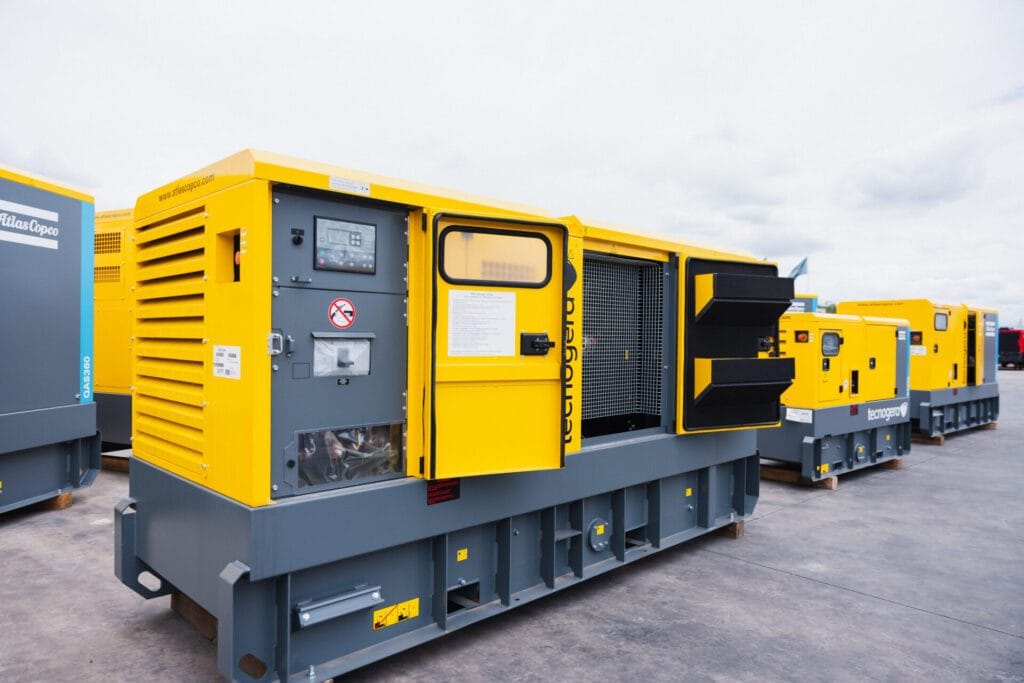
The emergency generators are one of the alternatives used to provide electricity during failures or grid unavailability.
The appropriate solution depends on the demand, type of operation, required power, usage time, and site characteristics.
How to prevent a power outage from paralyzing the operation?
Power unavailability can have different consequences depending on the segment.
In an industry, for example, an unexpected shutdown can interrupt a production line. In a data center, it can compromise critical systems. At an event, it can affect lighting, sound, air conditioning, and other structures.
Therefore, energy security should be part of operational planning.
Emergency generators
The emergency generators can be used to keep essential loads running during a power supply interruption.
They can serve different applications, such as:
- Industries;
- Hospitals;
- Data centers;
- Condominiums;
- Commercial establishments;
- Construction sites;
- Events;
- Critical infrastructures.
The sizing must consider the demand of the equipment that needs to remain operational and the characteristics of the operation.
Temporary power solutions
Temporary power can also be used in situations that require an electrical infrastructure for a determined period.
It is an alternative for construction sites, events, maintenance, emergency operations, and other applications where the conventional grid is not available or sufficient.
The solution can be planned according to the demand and the necessary period, providing greater flexibility for different operations.
Proper sizing of the power solution
Having a generator available is not enough. It is necessary to choose a solution compatible with the demand of the operation.
Among the factors that should be evaluated are:
- Required power;
- Type of load;
- Number of equipment;
- Expected operation time;
- Installation location;
- Supply needs;
- Access conditions;
- Characteristics of the electrical infrastructure.
Proper sizing contributes to a safer and more efficient operation.
How to protect events, works, and outdoor operations?
Events, works, and operations conducted outdoors are especially exposed to changes in weather conditions.
A windstorm can affect temporary structures, equipment, people circulation, and power supply.
Therefore, planning must also consider weather-related risks.
Planning before the event
Before starting an outdoor operation, it is important to check the weather forecast and assess the site conditions.
The following should also be considered:
- Temporary structures;
- Electrical equipment;
- Generators;
- Lighting systems;
- Accesses;
- Circulation areas;
- Emergency routes;
- Contingency plan.
Precautions during a windstorm
If weather conditions pose a risk, the priority should be people’s safety.
Depending on the situation, it may be necessary to temporarily halt outdoor activities, restrict access to certain areas, and follow the guidance of safety officials and competent authorities.
What to do after a weather event?
After a windstorm, it is not advisable to immediately resume operations without checking the conditions of the site.
It is important to assess:
- Electrical installations;
- Structures;
- Equipment;
- Cables;
- Covers;
- Trees and nearby objects;
- Possible infrastructure damage.
Resumption should only occur when the environment is safe.
How to prepare your company for extreme weather events?
Weather events can happen unexpectedly, but their impacts can be reduced with planning.
Monitoring and prevention
Monitoring weather forecasts allows for anticipating decisions and preparing resources before a critical situation occurs.
For companies, this may mean reviewing structures, protecting equipment, adjusting external operations, and checking the availability of backup energy sources.
Operational continuity plan
The operational continuity plan should answer a simple question:
What will the company do if the power goes out?
From this answer, it is possible to define priorities, responsibilities, essential equipment, and contingency solutions.
This preparation is especially important for activities where a few minutes or hours of downtime can represent significant losses.
Energy security
Energy security means being prepared to maintain the operation of essential activities even in the face of possible interruptions or changes in supply conditions.
Generators, energy storage systems, and temporary solutions can be part of this strategy, according to the needs of each operation.
Strong winds: prevention is also an energy strategy
Strong winds and other extreme weather events can directly affect infrastructure and energy supply.
Although it is not possible to control weather conditions, companies can prepare to reduce the impacts of a potential interruption.
The combination of climate monitoring, planning, adequate infrastructure, and backup energy solutions contributes to increasing the resilience of operations.
For companies that cannot stop, being prepared before an emergency can make a difference.
The Tecnogera offers power generation and temporary energy solutions for different applications, helping companies keep their operations running in times that require safety, flexibility, and continuity.
Frequently asked questions about strong winds
What to do during strong winds?
During strong winds, try to stay in a safe place, away from trees, poles, metal structures, signs, and objects that may be displaced. It is also important to follow official alerts and avoid outdoor activities when there is a risk.
Can strong winds cause power outages?
Yes. Strong winds can cause trees to fall, damage electrical infrastructure, and other occurrences that can interrupt power supply. Storms accompanied by wind gusts can also increase the risk of interruptions.
How to protect a business during a windstorm?
The company should monitor weather alerts, assess external structures and equipment, secure materials that may be displaced, and have a contingency plan for emergency situations. For critical operations, it is also important to have an energy backup.
How to prevent a power outage from stopping operations?
One of the main measures is to identify in advance the equipment and processes that cannot stop and define a backup power source compatible with this demand. Emergency generators and temporary power solutions can be used according to the characteristics of the operation.
When to use an emergency generator?
The emergency generator can be used when an operation needs to keep essential equipment running during a power outage or grid unavailability. The power and configuration of the equipment must be defined according to the facility’s demand.
Can temporary power be used during emergencies?
Yes. Temporary power solutions can meet emergency situations as well as planned applications, such as construction, events, maintenance, and operations that require power supply for a determined period.
How to prepare a company for extreme weather events?
The first step is to identify the risks that may affect the operation. Next, it is important to establish a contingency plan, define essential equipment, monitor weather conditions, and ensure there are resources to keep priority activities running.
What to do after a windstorm passes?
Before resuming activities, it is important to check for damaged trees, structures, cables, equipment, or installations. Resumption should only occur after confirming that the location is safe and that the electrical infrastructure can be used.Read also: how to protect the operation against interruptions caused by storms