Blackouts in Brazil, also known as power outages, are sudden disruptions in the electricity supply that impact millions of people and various economic sectors.
Understanding their causes and consequences is crucial, especially in today’s context of extreme weather events and increasing energy demand. Energy security has become a priority for businesses and households.
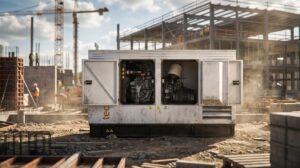
The impact of blackouts goes beyond mere inconvenience. They can halt commerce, disrupt essential services, and cause multimillion-dollar losses. In this scenario, solutions like using power generators become essential to ensure operational continuity and protection against blackouts.
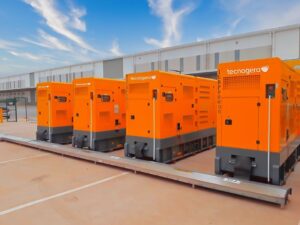
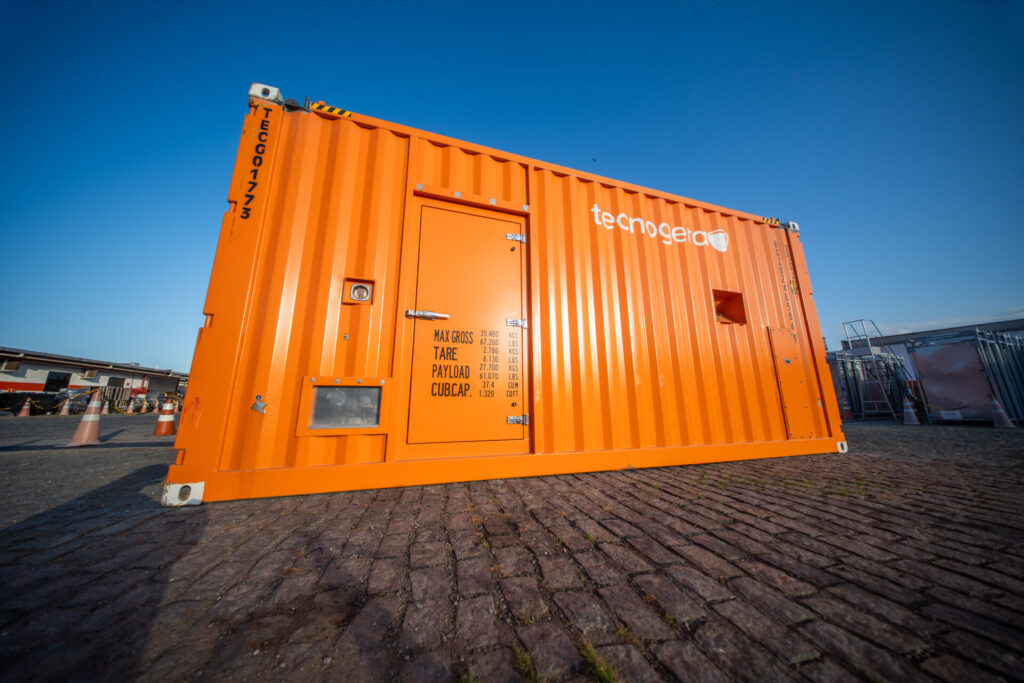
In this context, Tecnogera positions itself as a specialist in solutions to mitigate the effects of these interruptions, providing rental generators for a wide range of needs.
What Causes a Blackout in Brazil?
Blackouts are complex phenomena, resulting from a series of factors that can compromise the electrical system, not only in Brazil but worldwide. From technical failures to natural events, blackout causes are varied and require a robust and well-managed system to minimize risks.
Key causes include:
- failures in generation, transmission, or distribution equipment, such as transformers and high-voltage lines;
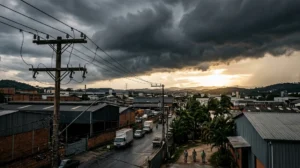
- severe weather conditions, like storms, strong winds, and lightning, can bring down towers and cables;
- human errors;
- system overload during peak consumption periods.
Major Blackouts in Brazil’s History
In recent decades, several blackouts have made history in the country, causing enormous disruptions, losses, and energy insecurity.
The 1985 Blackout: The First Major National Outage
On September 17, 1985, Brazil experienced its first major national blackout, primarily affecting the Southeast and Midwest regions. About 30 million people were left without electricity, marking an unprecedented event.
The cause of this blackout was an overload in the transmission system of the Itaipu Dam, one of the country’s energy generation pillars. The failure exposed the vulnerability of the interconnected system, which was still maturing and expanding.
The consequences were widespread, with significant economic losses and the need to rethink the energy infrastructure. This event spurred modernization measures and investments in redundancy and security for Brazil’s electrical system.
The 1999 Blackout: A Prelude to the Energy Crisis
The blackout on March 11, 1999, shook 60% of Brazilian territory, affecting about 76 million people, including part of Paraguay. This incident, which left much of the country in the dark for hours, was a clear warning of the impending energy crisis.
The problem originated from a lightning strike at a substation in Bauru, São Paulo state, triggering a series of cascading events and automatic shutdowns. The system’s fragility, especially during weather events, became evident.
The 1999 blackout served as a crucial alert for urgent infrastructure investments and planning. Unfortunately, the lessons weren’t fully learned, paving the way for the energy crisis that culminated in 2001.
The 2001 Blackout Crisis: The Rationing Period
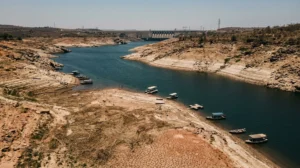
The 2001 blackout crisis was one of the most challenging periods for energy supply in Brazil, lasting from June 2001 to March 2002. The causes were a combination of severe drought and excessive reliance on hydroelectric power, which accounted for about 90% of energy generation at the time.
To prevent total collapse, the government instituted an energy rationing system, mandating a 20% reduction in consumption. Companies and households faced fines for non-compliance, accompanied by intense awareness campaigns on efficient energy use.
The economic loss was estimated at R$ 45 billion, with lasting impacts on industry, commerce, and services. The population was forced to change consumption habits, and the event accelerated the diversification of Brazil’s energy matrix and the pursuit of greater energy security.
The 2009 Blackout: The Itaipu Failure
On November 10, 2009, Brazil and Paraguay were hit by a major blackout. The failure occurred in three high-voltage transmission lines from the Itaipu Dam, causing a domino effect that led to the automatic shutdown of other plants.
The impact was significant, leaving nearly 90 million Brazilians without power for several hours, especially in the Southeast, South, and Midwest regions. Cities like São Paulo and Rio de Janeiro were completely dark, paralyzing transport and communication.
Subsequent investigation pointed to a short circuit caused by strong winds and rain, which knocked trees onto transmission lines in São Paulo state. This event reinforced the vulnerability of Brazil’s electrical system to weather events and the urgent need for network reinforcement.
The 2018 Blackout: Issues with the North-Northeast Interconnection
On March 21, 2018, Brazil faced another major blackout, significantly affecting the North and Northeast regions. The technical cause was a failure in the Xingu-Estreito transmission line, responsible for connecting the Belo Monte Hydroelectric Plant to the National Interconnected System (SIN).
The problem resulted in a load loss of approximately 18,000 megawatts, affecting 13 states. Millions were left without power, with impacts on urban infrastructure, hospitals, and essential services in these regions.
This event highlighted the complexity and interdependence of the national electrical system and the importance of maintenance and resilience of major transmission lines. The failure underscored the need for continuous investments to ensure the country’s energy security.
The 2023 Blackout: A Third of the Country in the Dark
The 2023 blackout, occurring on August 15, was one of the most extensive in Brazil’s recent history, leaving 25 states and the Federal District in the dark, except for Roraima, which is not connected to the National Interconnected System – SIN. The incident affected approximately 27 million Brazilians.
The cause was identified as a failure in the interconnection between the North and Southeast regions, leading to the automatic shutdown of 16,000 megawatts. The interruption began around 8:30 a.m., catching many off guard in their daily routines.
System recovery was gradual, and authorities worked to restore supply. This event reinforced the discussion about the resilience of Brazil’s electrical system and the need for emergency power for businesses and essential services.
Consequences of Blackouts for Businesses and Homes
Blackouts bring a range of immediate and long-term consequences for both businesses and homes. The halt of transportation systems, emergency services, traffic lights, and elevators causes urban chaos, while communication system disruptions isolate people and services.
For businesses, the losses are substantial, involving:
- production interruptions,
- data loss due to system failures,
- damage to sensitive equipment, and
- stock loss in sectors like food and pharmaceuticals are just a few examples.
The 2023 blackout, for instance, resulted in estimated losses of millions of reais per hour for the general commerce sector, which had to halt operations, close stores early, lose refrigerated products, send employees home, etc.
Additionally, there are health and safety risks, especially in hospitals and clinics that rely on medical equipment. Urban insecurity increases with darkened public roads. Nationally, the economic impacts are significant, reinforcing the importance of blackout protection and backup power solutions.
How to Protect Against Blackouts with Power Generators?
Given the increasing frequency of blackouts and the unpredictability of weather events, seeking protection against blackouts in Brazil has become essential for businesses and homes. Power generators are the most effective solution to ensure operational continuity and comfort, even amid interruptions.
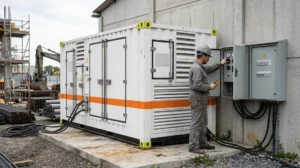
Tecnogera offers a wide range of power generators for rental, suitable for various needs. Whether for industries that cannot stop production, businesses that need to maintain sales, or essential services like hospitals, having a backup power source is crucial.
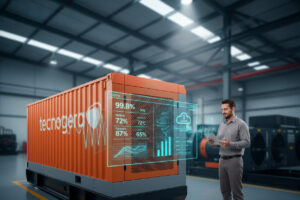
With a Tecnogera power generator, businesses and homes can be assured of being protected against the unpredictability of Brazil’s electrical system. Besides rental, the company offers customized emergency power solutions, ensuring you have the necessary support before, during, and after a blackout.