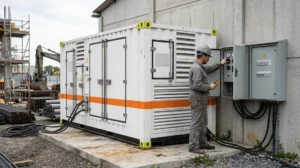
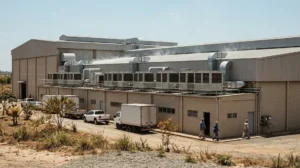
A power transformer is a static electrical device designed to change the voltage and current levels of a circuit without altering its frequency.
Its main function is to adjust the electricity supplied by the utility or a generator to the voltage standards required by different machines, equipment, and projects.
This ability to step up or step down voltage is crucial for ensuring the safety, efficiency, and proper operation of any electrical system.
In Brazil, power transformers began to be widely used at the end of the 19th century, following the introduction of electricity in the country and as part of the electrical system infrastructure.
Index:
- How does a power transformer work?
- How much does a power transformer cost?
- Types of power transformers
- Understand the importance of a transformer in electrical systems
- Characteristics of the transformer
- Where is the transformer used?
- Differences between a single-phase and a three-phase transformer
- Preventive maintenance of a power transformer
Ensure quality energy with Tecnogera transformers!
How does a power transformer work?
Generally, a transformer operates based on the principle of electromagnetic induction, discovered by British physicist and chemist Michael Faraday. The power transformer has no moving parts and is essentially composed of two wire coils (windings), a primary and a secondary, encased by an iron core.
When an alternating voltage is applied to the primary coil, it creates a variable magnetic field in the core, which in turn induces a new voltage in the secondary coil.
The output voltage is determined by the ratio of turns in each coil, allowing for voltage to be increased or decreased as needed.
What is energy transformation?
In the context of a transformer, “energy transformation” does not mean generating electrical energy or changing its type, but rather modifying its electrical characteristics.
The device alters the voltage and current levels passing through it. If the voltage is increased, the current is reduced, and vice versa, maintaining balanced power.
This transformation allows energy to be transmitted over long distances at high voltage and then stepped down for safe use in industries and homes.
How much does a power transformer cost?
The cost of a power transformer varies significantly depending on the needs of each project. There is no fixed market price. Factors such as power (measured in kVA), type (dry or oil), input/output voltages, and protection level (IP) directly influence the price.
For temporary projects or to avoid the high cost of purchase, renting is the smartest and most economical alternative. Tecnogera specializes in energy solutions, and providing power transformers is part of the company’s portfolio.
Types of power transformers
There are various types of transformers, each designed for a specific application. The most common are:
- Power transformer: used in power substations to step up or step down voltage in large capacities.
- Distribution transformer: seen on power poles, responsible for stepping down voltage for final consumption in homes and businesses.
- Autotransformer: a simpler and more compact model, common for domestic use, such as adapting a 110V device to a 220V outlet.
- Current transformer (CT): used for measurement, it reduces the system’s current to safe levels that can be read by instruments.
Understand the importance of a transformer in electrical systems
Transformers are essential devices for maintaining quality and safety in the operation of devices connected to the electrical grid. A transformer allows devices operating at different voltage levels to function normally, without risk of damage or accidents.
Characteristics of the transformer
A transformer has fundamental characteristics that make it indispensable in any modern electrical system.
- Versatility: can both step up (step-up transformer) and step down (step-down transformer) voltage levels.
- Transmission efficiency: allows energy to be transmitted over long distances at high voltage and low current, reducing energy losses due to heat.
- Safety: adjusts the high voltage of the transmission grid to safe levels (110V/220V) for use in homes, businesses, and industries.
- Flexibility: eliminates the need to alter the electrical structure of a location, making it an ideal solution for temporary and customized projects.
Where is the transformer used?
The main use of a transformer is to regulate energy levels for the safe operation of machines and equipment in various scenarios.
- Poles: step down the distribution grid voltage for final consumption.
- Industries: adjust energy for furnaces, motors, and other high-power equipment.
- Construction sites and events: adapt generator voltage for various equipment used on site.
- Hospitals and Data Centers: ensure the correct voltage for sensitive and mission-critical equipment.
- Residences: allow the use of devices with different voltage from the outlet.
Differences between a single-phase and a three-phase transformer
A single-phase transformer operates with a single phase of alternating current. It is used in low voltage networks and to power lower power loads.
A three-phase transformer, on the other hand, operates with three phases. It is the solution for higher power systems, such as those found in industries and large commercial buildings.
How to know if the transformer is single-phase or three-phase?
The safest way is to check the equipment’s nameplate, which contains all technical specifications, including the number of phases.
Visually, a three-phase transformer is generally larger and has a greater number of bushings (porcelain insulators through which cables pass) than a single-phase one.
But you don’t need to worry about that. By choosing to rent Tecnogera’s solutions, a highly qualified team will be responsible for all the demands involved in your project. Get in contact to speak with our professionals and clear all your doubts.
Preventive maintenance of a power transformer
Preventive maintenance is crucial to ensure the longevity and safety of a transformer. The main activities include periodic inspections.
For oil transformers, analyzing the insulating oil is essential to check its dielectric strength and the presence of contaminants.
Other actions include cleaning external parts, tightening connections, and measuring winding resistance to detect possible failures.
Ensure quality energy with Tecnogera transformers!
Whether for a large industrial project or an event, having the correct voltage is non-negotiable. Tecnogera offers the ideal solution without requiring you to purchase equipment. Our transformers, with capacities from 75 kVA to 50,000 kVA, are ready to meet any demand, ensuring maximum efficiency and safety.
Our team of experts designs the complete solution, adjusting the energy from the grid or a generator rental to the exact needs of your project. Contact us!