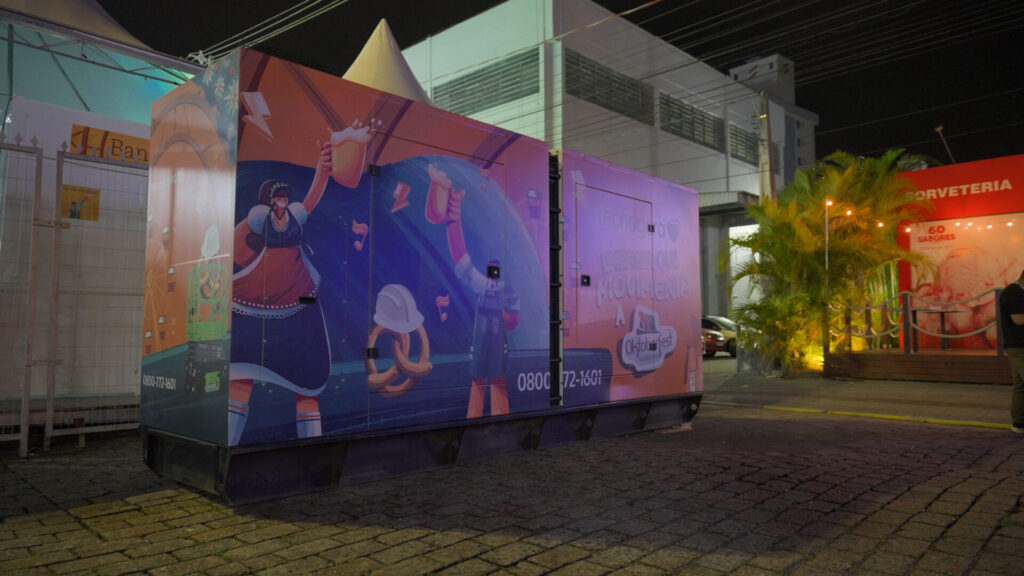
Organizing a large-scale event demands attention to countless details, but one is crucial: power.
Without a solid plan, the risk of blackouts and technical failures can ruin the audience’s experience and the producer’s reputation. Whether it’s festivals in São Paulo, major tours in the Northeast, or corporate events in the South, energy logistics determine the success of the operation.
In this guide, you’ll learn how to structure an efficient temporary power infrastructure to ensure the show never stops, regardless of your project’s geographic location.
Why is energy planning the heart of large event production?
Energy planning is not just a technical issue but one of safety and feasibility. Large shows have fluctuating demands that conventional power grids often can’t support.
In many regions of Brazil, the local utility’s infrastructure can be unstable or insufficient to handle the load of high-definition LED panels and line array sound systems.
The energy infrastructure is essential for making the business viable, ensuring that sound, lighting, and service areas operate without interruptions. Additionally, georeferenced planning allows for anticipating logistical challenges, such as transporting equipment to hard-to-reach or remote areas.
Load Sizing: How to Calculate the Real Demand for Sound, Light, and Infrastructure?
The first step is a detailed survey of all equipment (the so-called technical rider). A common mistake is underestimating the necessary load, which overloads the system and can cause unexpected shutdowns.
- Sound and Lighting: have consumption peaks (transients) that must be accounted for in the KVA calculation.
- Support Areas: food courts, sponsor booths, and air-conditioned dressing rooms also add to the total load and require independent circuits.
- Safety: proper sizing prevents the preventive tripping of circuit breakers due to overload, which is critical when there are thousands of people on-site.
Redundancy and Backup Systems: What’s the Secret to Keeping the Event Running?
In critical events, failure is not an option. Redundancy involves having extra sources ready to take over the load immediately in case of a failure in the main source or the utility grid.
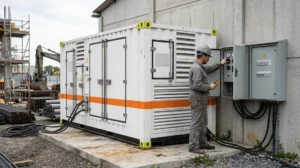
Using generator rentals configured in parallel (N+1 system or Twin Pack) ensures that if one unit fails, the other supports the system without any noticeable interruption to the audience. This setup is the gold standard for live broadcasts and major international festivals.
Installation Logistics: How to Position Generators and Cabling?
Strategically positioning generators facilitates refueling and reduces load loss in cables. This is where the focus on SEO GEO stands out: energy companies with national reach can quickly mobilize fleets to capitals like Rio de Janeiro, Curitiba, or Recife, reducing freight costs.
- Access: equipment should be in locations easily accessible for fuel tanker trucks.
- Sound Isolation: position machines where noise won’t interfere with the event’s audio experience.
- Distribution: use certified distribution panels to organize cabling neatly, avoiding the “tangle of wires” that poses tripping and short-circuit risks.
Safety Standards and Technical Compliance in Temporary Installations
Adhering to technical standards (such as NR-10 and NR-12) is mandatory and legally protects the producer. The installation of temporary power must be signed off by a responsible engineer through the ART (Technical Responsibility Note).
Large events require professional temporary power generation to ensure compliance with the specific requirements of the Fire Department in each state, which may vary according to local legislation.
Sustainability in Events: Using Renewable Fuels and Efficient Generators
The entertainment sector is under pressure to reduce its carbon footprint. The use of biodiesel (HVO) and state-of-the-art generators that meet strict emission standards is an irreversible trend.
In addition to low-emission diesel generators, options like the solar lighting tower offer efficiency for parking areas and access points with zero noise and zero emissions, elevating your event’s sustainability credentials.
Pre-Event Checklist: What to Review Before Flipping the Main Switch?
Before opening the gates, conduct a “stress test” with full load. Check the items:
- [ ] Fuel level and refueling contract during the event.
- [ ] Verification of grounding for all generator sets.
- [ ] Test of the automatic transfer system (ATS).
- [ ] Physical presence of on-call electrical technicians for immediate response.
FAQ – Frequently Asked Questions about Event Power
1. What is the advantage of renting a generator instead of using the local grid?
The local grid often lacks voltage stability or sufficient power for sensitive sound and lighting equipment, and it doesn’t guarantee continuity in case of a regional outage.
2. How to choose a temporary power supplier near my city?
Look for companies with strategically located operational bases (GEO focus), ensuring faster service in emergencies and reduced logistical costs for generator transport.
3. What is needed for generator installation in public places?
Typically, local government authorization, an engineering report (ART), and compliance with current noise and gas emission standards in the municipality are required.
4. Can generators be used for air conditioning large areas?
Yes, planning should include the extra load for large-scale air conditioning systems, which are major energy consumers in indoor events or tents.