Energy is the engine of economic development. In an increasingly connected and technology-dependent world, energy infrastructure becomes a fundamental pillar for creating new businesses and expanding established companies.
Lack of proper planning can turn a promising project into a nightmare, with delays, unexpected costs, and even total infeasibility.
Many entrepreneurs, focused on aspects like marketing and sales, underestimate the complexity of energy planning. They assume that electricity access is guaranteed and that the local grid will support the demand.
However, this is a dangerous assumption that can lead to major problems. The truth is that energy is a finite resource, and its distribution is a complex process that requires careful attention from the project’s earliest stages.
A successful project is not just about a good idea or an innovative product. It depends on a solid foundation, and energy infrastructure is the base that supports everything.
Ignoring this factor often results in significant bottlenecks that impact everything from the operation of simple machines to the automation of entire production lines, compromising productivity and market competitiveness.
Why Energy is a Critical Point in Construction and Expansion Planning
Energy planning is more than just requesting a new power connection. It involves a detailed analysis of the required load, equipment requirements, and the capacity of the local grid.
The assessment should be conducted in collaboration with the energy utility and often with the support of electrical engineering experts. Skipping this step can cause a mismatch between the project’s demand and the available supply.
In many cases, the local distribution grid simply cannot handle the additional load of a new industry or a large expansion.
In such cases, significant investments in network reinforcement works are necessary, such as installing new transformers or expanding substations. These unforeseen costs can undermine the project budget and extend the timeline.
Inadequate energy supply also affects the company’s image. In a market where sustainability and efficiency are increasingly valued, a company facing constant outages or power surges may be seen as unreliable or poorly managed.
This situation can drive away customers, investors, and even talent seeking to work in modern and efficient environments.
Main Infrastructure Challenges in Large-Scale Projects
The challenges of energy infrastructure are particularly evident in large-scale projects. Industries, shopping malls, data centers, and hospitals require a robust and uninterrupted energy supply to operate.
The complexity increases when considering the specificities of each sector, such as the need for high-quality power for sensitive equipment or the demand for redundant energy to ensure patient safety in a hospital.
One of the main obstacles is bureaucracy and the approval time from utilities. The processes of feasibility studies, project development, and construction execution can take months or even years. Thus, energy planning should begin well in advance, in parallel with the project’s design and financing stages. Neglecting this timeline can result in completed but inoperative works, waiting for energy supply.
Another significant challenge is the lack of technical knowledge among project managers. Many do not understand the difference between demand, power, and consumption, or the implications of a low power factor.
The absence of this knowledge leads to poorly sized projects, resulting in penalties for excess consumption or, in the worst-case scenario, frequent shutdowns that halt operations and cause financial losses.
Real Examples of Energy Bottlenecks and Their Impact on Timelines
History is full of examples illustrating the challenges of energy infrastructure. A classic case is a large shopping center in São Paulo that, after completing civil works, discovered that the region’s power grid could not support its total load.
The problem, which could have been avoided with initial energy planning, forced the mall to operate at reduced capacity, resulting in a delayed opening and lost revenue for several months.
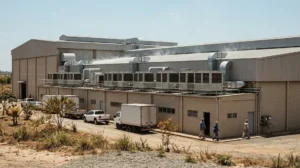
In another situation, a high-tech factory in the country’s interior faced power quality issues. Voltage spikes and drops damaged sensitive equipment and caused unexpected production line stoppages.
The solution, which required the installation of generators and voltage stabilizers, increased operating and maintenance costs. If these challenges had been identified at the project’s outset, the investment plan could have been adjusted to include these solutions more efficiently.
These examples show that energy supply is not a luxury but a critical necessity that must be prioritized. Energy bottlenecks not only delay schedules and increase costs but can also compromise a business’s competitiveness.
Delays in product delivery, loss of customers, and damage to reputation are just some of the negative effects that can be avoided with proper attention to energy infrastructure.
Solutions to Optimize Energy Supply Across Different Sectors
Faced with the complex challenges of energy infrastructure, companies of all sizes can adopt strategies to optimize energy supply. One of the first and most effective is early energy planning, with feasibility studies and partnerships with specialized companies.
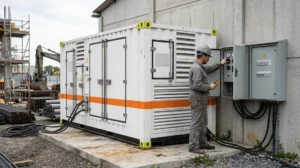
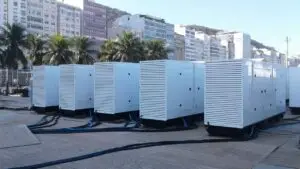
These professionals can foresee problems and suggest the best solutions, such as installing private substations, contracting power generators, or implementing cogeneration systems.
Another increasingly popular solution is adopting energy efficiency technologies. Using LED lighting, high-efficiency motors, and building automation systems significantly reduces energy consumption, easing the load on the grid.
Additionally, implementing energy monitoring systems allows companies to identify waste points and take corrective actions in real time.
Finally, diversifying energy sources is a smart alternative. In sectors like agriculture and industry, using solar or biomass energy can complement the grid’s energy supply, ensuring greater autonomy and resilience.
These solutions not only mitigate the risks of interruptions but also contribute to the company’s sustainability and result in long-term savings. Focusing on a solid infrastructure is undoubtedly the path to success. To learn more about optimizing your energy supply, visit our site and discover the ideal solutions for your business.