The planning of corporate events should not be done without parallel energy planning.
From conferences and trade shows to team meetings or brand activations, energy powers not only the equipment but also the entire audience experience and the reputation of the organizing company.
Those involved in event organization know: anticipating, sizing, and structuring the energy supply in advance avoids unforeseen issues, increases efficiency and reinforces the credibility of the event.
But what are the main points to structure the energy planning for events? What challenges need to be overcome and complementary solutions can make a difference? Find out below.
Why energy planning is critical for corporate events
Corporate events have specific requirements. In addition to needing to convey professionalism and organization, they also often involve technologies and equipment that require stable and constant energy.
A power surge, even if brief, can impact presentations, relaxation moments, the start or end of the event, and directly affect the comfort of guests and the institutional image.
Therefore, energy planning should be treated as part of the event strategy and not as an isolated technical item.
From it, it is possible to ensure thermal comfort, operational safety, continuity of activities, and optimal functioning of the entire event infrastructure.
Main energy challenges in events: from consumption to infrastructure
In practice, there are many challenges involved in organizing events, and many are not always visible during the briefing phase.
A common mistake, for example, is calculating energy demand based on the number of people, but this does not necessarily mean the total consumption required by the equipment. In this sense, some challenges faced are:
- Error in calculating electrical demand, leading to overload or underestimation;
- Poorly planned distribution, with the risk of loose cables, unpowered points, or unstable circuits;
- Insufficient air conditioning, which compromises the well-being of the audience and the performance of equipment;
- Lack of technical support, which hinders quick responses in case of failures;
Lack of knowledge of safety standards, which can lead to risks and penalties.
Therefore, anticipating these issues and seeking integrated solutions is what differentiates a functional event from a high-level delivery.
How to properly size the energy needs of your event
Planning the energy for an event is a technical task that requires attention to detail and can be highly efficient if you follow the right roadmap. Here are some key points to start sizing the energy for corporate events more clearly.
Type of event: indoor or outdoor, day or night?
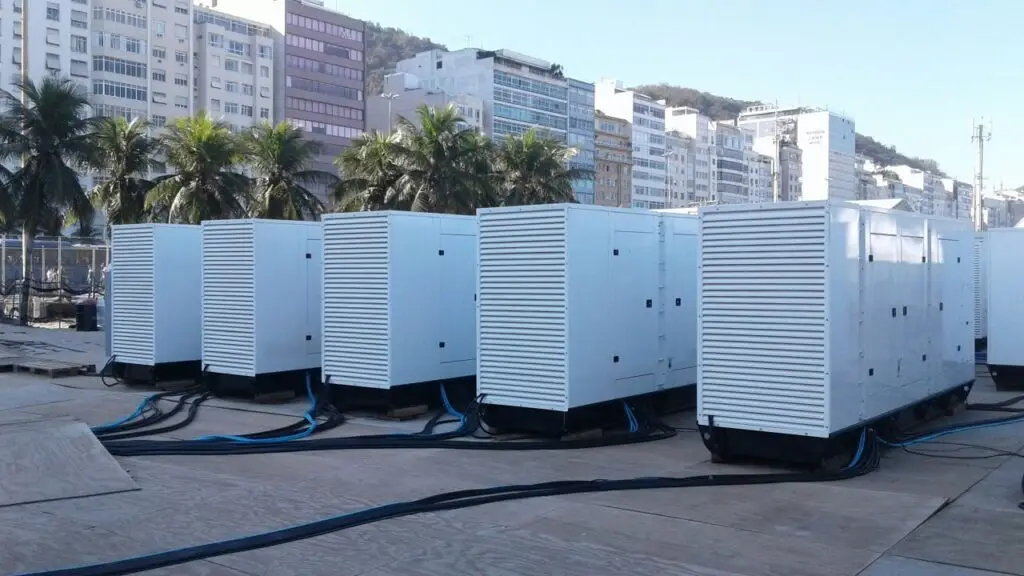
The location and time directly influence the energy demand. Outdoor events need extra protection for the equipment, as well as a different logistics for transportation and installation of the rented generators.
Night events, on the other hand, require special attention to lighting. When it comes to a small, enclosed space, it’s important to pay attention to the choice of quieter generators.
Energy needs: equipment mapping
This is where planning gains robustness. This inventory is the basis for calculating the total load and designing suitable solutions.
List everything that will be connected during the event, making a complete mapping of the devices, such as:
- Scenic and functional lighting
- Sound and video equipment
- Screens and LED panels
- Computers and routers
- Kitchen equipment (freezers, ovens, griddles, etc.)
- Air conditioning systems
- Charging stations and mobile substations, among others
Adequate capacity: choosing the right generators
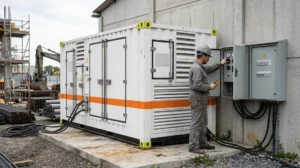
After mapping the equipment and estimating the load, the next step is to define the capacity of the generators.
It is important to consider not only the average consumption, but also the demand peaks and a safety margin. Events with a large number of equipment running simultaneously, for example, require extra attention.
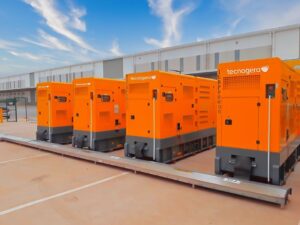
In addition to renting modern and high-performance generators, Tecnogera offers this technical support from the beginning of the planning, ensuring the correct sizing and the use of modern, quiet, and efficient generators.
Safety standards: a requirement
The entire electrical structure of the event must follow technical standards, such as those of the ABNT (Brazilian Association of Technical Standards), and the requirements of the Fire Department to ensure the safety of everyone involved: the public, technical team, suppliers, and guests.
The choice of cables, installation of distribution panels, and positioning of generators must be carried out by qualified professionals with experience in events.
Choose specialist partners
One of the most strategic decisions is choosing who will handle the event’s energy. This means more than renting generators – it’s about ensuring complete support, from design to execution.
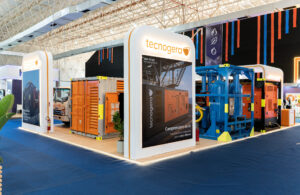
Tecnogera also works with customized projects and 360 solutions, supporting the client from the survey phase to the operation on the event day. This reduces risks and increases efficiency at all stages. Maintenance and support: have a plan B
Even with well-done planning, it’s important to anticipate
contingency plans. The presence of a technical team during the event, ready to resolve any setbacks, is one of the pillars for the success of the operation.
Tecnogera offers remote monitoring during execution, with technical support on standby at all times.
Beyond energy: complementary solutions to ensure comfort and efficiency
Successful corporate events are made up of many details. Therefore, in addition to energy supply, it’s essential to take care of thermal comfort, infrastructure organization, and the overall operation.
Tecnogera offers solutions that complement energy planning and optimize the experience.
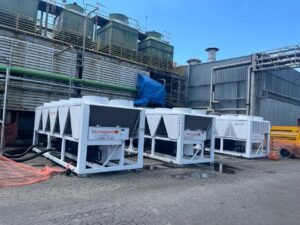
Environment air conditioning:
- essential to maintain comfort, especially in enclosed spaces or with a large concentration of people; Elevating platforms
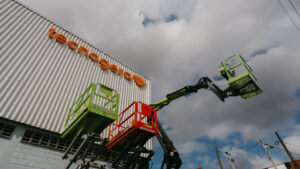
- and electrical distribution systems: ensure that energy reaches all points of the event safely and efficiently, avoiding improvisations; Load bank systems:
- used to test, validate, and optimize the performance of electrical systems, ensuring they are prepared for real use situations; Standby generators:
- Standby generators: equipment that remain in “standby mode,” ready to be activated immediately in case of failures and power interruptions;
- Real-time technical monitoring: a team ready to act in case of any unforeseen event, without compromising the continuity of the event.
These solutions add value to the operation and demonstrate how an integrated approach transforms energy planning into a competitive advantage.
If you organize corporate events and want to ensure efficient energy operation, talk to someone who specializes in the subject. A Tecnogera is ready to support you and your company at every stage of this journey.