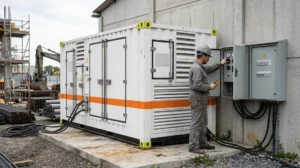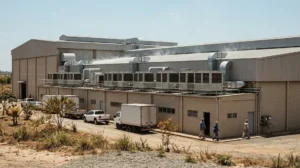
BESS (Battery Energy Storage System) is a battery energy storage system that captures electricity from various sources, such as the power grid or renewable sources, and stores it for later use.
This technology is essential for modernizing energy infrastructure, promoting grid stability, and effectively integrating intermittent energies like solar and wind.
With BESS, you can optimize energy consumption by storing it during low-demand periods or high renewable production to use during peak times or when primary sources are unavailable. This ensures a more reliable and efficient supply, reducing reliance on fossil fuel generators and contributing to sustainability.
How does a BESS work?
BESS operates based on three stages: charging, storage, and discharging.
During charging, the system captures energy from the grid or renewable sources (e.g., solar panels), converting it into chemical energy in the batteries. This process is controlled by an intelligent management system.
In storage, the energy remains in the batteries (e.g., lithium-ion) with high density and minimal loss, ensuring availability for peak times or grid interruptions.
During discharging, the stored energy is converted back into electricity and injected into the grid or used directly. This process allows industries to take advantage of lower energy rates or ensures continuous power for events without relying on non-renewable sources.
Main components of a BESS
A BESS consists of various elements working together to ensure its efficiency and safety.
Battery Modules
These are the heart of the BESS, storing electrical energy. Lithium-ion batteries are common due to their high energy density and extended lifespan.
Battery Management System (BMS)
Essential for BESS, the BMS (Battery Management System) monitors and controls parameters like temperature, voltage, and current. It ensures battery safety and longevity, optimizing performance.
Inverters and Power Converters
These components convert energy between DC (direct current) from the batteries and AC (alternating current) from the grid/equipment. Their efficiency directly impacts system performance.
Control and Monitoring System
Acts as the brain of the BESS, managing the interaction between equipment. It optimizes charging and discharging based on grid or consumer needs, ensuring efficiency and stability.
Structure and Protective Cabinets
Protect the technical elements of the BESS from weather, impacts, and other external factors. Essential for the physical safety of the system and failure prevention.
What is the purpose of BESS (Battery Energy Storage System)?
BESS serves multiple purposes, being a fundamental pillar for modernizing and stabilizing power grids. It helps integrate intermittent renewable energy sources, like solar and wind, ensuring a continuous energy supply.
Additionally, it aids in stabilizing the power grid, offering services like frequency and voltage regulation, and providing backup power during peak demand or grid failures. This results in greater reliability and energy security.
In commercial and industrial environments, BESS is used to optimize energy consumption, reducing costs by avoiding demand peaks and allowing the use of stored energy during higher tariff periods.
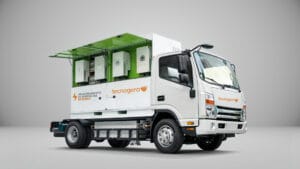
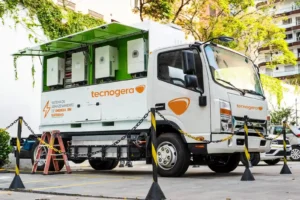
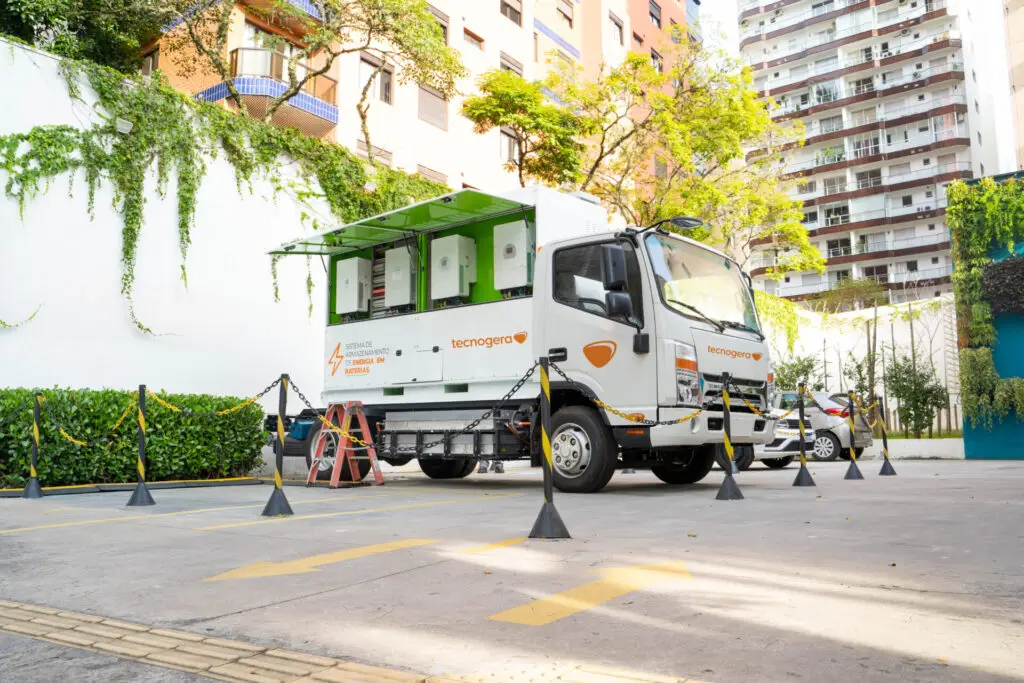
For Tecnogera, this mobile technology also offers temporary energy solutions with fewer impacts.
Benefits of BESS
Battery energy storage systems offer a range of benefits, from supply reliability to sustainability contributions:
- Stability: uninterrupted energy supply, crucial for critical operations.
- Renewable energy integration: enables efficient use of solar and wind energy.
- Cost savings: reduces energy expenses by managing demand peaks.
- Sustainability: decreases reliance on fossil fuels and emissions.
- Autonomy: ability to operate independently of the grid in certain situations, such as with Tecnogera’s mobile solution.
What are the main applications of a BESS?
BESS applications are numerous, ensuring energy continuity and resource optimization:
- Power grid stabilization: helps balance supply and demand, compensating for fluctuations.
- Renewable source integration: essential for storing energy from solar panels or wind turbines.
- Backup power: in case of failures, the system provides uninterrupted electricity.
- Cost optimization: allows purchasing energy at lower-cost times for use during peaks.
- Use in remote locations: provides energy to areas without grid access, using renewable sources and storage.
BESS vs diesel generators for backup power
Choosing between BESS and a diesel generator involves considering environmental impact, operational costs, and efficiency. BESS emerges as a more modern and sustainable alternative.
| Feature | BESS (Battery Energy Storage System) | Diesel Generators |
| Energy Efficiency | High, minimal losses. | Lower, losses in conversion and combustion. |
| Operational Costs | Low, renewable recharge or reduced tariffs. | Variable and high, fuel price and refueling. |
| Environmental Impact | Zero pollutant emissions. | Moderate gas and noise emissions. |
| Noise | Silent operation. | Disturbing noise level. |
| Applicability | Backup, stabilization, renewables, and mobile solutions | Mainly for emergency backup. |
| Reuse | Tecnogera uses batteries from aerial platforms, promoting circular economy. | Less reuse of parts at end of cycle. |
How to size a BESS for a commercial application?
Sizing a BESS for a commercial application requires a detailed analysis of energy needs.
It is essential to:
- Evaluate daily and hourly energy demand, identifying consumption peaks and expected backup duration.
- Consider the capacity of renewable energy generation (if any) and its intermittency. The efficiency of inverters and converters, as well as the depth of battery discharge, are key technical parameters.
- Consider the desired lifespan, charge/discharge cycles, and local environmental conditions.
Accurate sizing ensures investment optimization and expected performance.
Is it worth renting a BESS?
Renting a BESS can be highly advantageous for companies seeking flexibility and cost reduction.
It offers access to cutting-edge technology without a large capital investment, ideal for temporary demands or pilot projects. Maintenance and updates are the responsibility of the lessor.
For markets like events or seasonal industrial operations, Tecnogera’s mobile battery energy storage solution ensures clean and quiet energy wherever and whenever needed, without concerns about disposal or obsolescence.
What is the return on investment (ROI) of BESS projects?
The ROI of BESS projects can be significant, calculated by the savings generated and long-term operational benefits. Key factors include cost reduction with peak-time energy, consumption optimization, and reduced fossil fuel dependence.
Companies opting for BESS can benefit from tax incentives or carbon credits. Considering asset appreciation through sustainability and operational resilience, the return on investment of a BESS becomes increasingly attractive.
BESS in Brazil: regulation and standards
The regulation of BESS in Brazil is constantly evolving, driven by the demand for renewables. The National Electric Energy Agency (ANEEL) plays a crucial role in creating standards.
The standards of the Brazilian Association of Technical Standards (ABNT) establish safety and performance requirements. It is essential that BESS projects strictly follow these requirements.
Tecnogera innovates by repurposing lithium batteries from its aerial platforms, contributing to circular economy guidelines.
Safety and fire prevention in BESS systems
Safety in BESS systems is a priority. The design should include adequate ventilation, early smoke detection, and sprinklers. Continuous monitoring of battery temperature and voltage via BMS is also essential.
Installations should have emergency plans and training. The system’s location and distance from flammables are crucial for fire prevention.
The role of energy storage in the energy transition
Energy storage plays a central role in the energy transition, facilitating the integration of renewable sources and reducing fossil dependence. It addresses the challenge of solar and wind energy intermittency, ensuring constant supply.
With BESS, surplus energy generated during high renewable production is stored and released when demand is higher. This optimizes the use of clean energy and stabilizes the grid, accelerating the shift to a greener energy matrix and driving decarbonization.
Trends and future of battery energy storage systems
The future of battery energy storage systems is promising, with continuous technological advancements. Innovations include solid-state batteries and intelligent management systems with AI.
The market for this technology is expected to grow exponentially, driven by renewables and transportation electrification.
BESS technology will become even more integrated with other energy solutions. Tecnogera’s approach, by reusing mobility batteries, points to a sustainable future in the sector.
Ensure continuous energy for your operation with Tecnogera’s BESS!
Tecnogera is your best choice for renting BESS. Our BESS is the answer to your operation’s energy security. Developed with Brazilian innovation, it uses reused lithium batteries.
With our solution, you ensure clean, quiet, and efficient energy, ideal for events, industries, and commercial establishments. Our BESS is an innovative alternative, reducing environmental impacts and providing greater autonomy.
Discover Tecnogera’s BESS technology and count on a reliable partner for your energy management. Our expertise in generator rental and temporary energy solutions combines with the forefront of battery storage, offering the best cost-benefit and ensuring uninterrupted supply, wherever you need it.