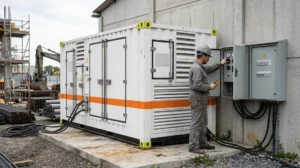
What is energy systems commissioning?
Learn how energy systems commissioning works.
Current context
Currently, issues involving energy consumption, the environment, and sustainability are at the forefront of guidelines for organizations, public and private companies, governments, and society as a whole.
Definition of commissioning
Thus, in very simple terms, commissioning can be understood as a program that aims to ensure quality by verifying all systems related to the energy consumption of a project.
Verification guidelines
Practically, a commissioning program verifies an energy consumption system according to the following guidelines:
- Design
- Installation
- Calibration
- Operation
Importance of commissioning
Commissioning is therefore fundamentally important to ensure that the components and systems of an industrial unit (or even a building) are always designed, tested, installed, and maintained according to the operational requirements and needs of the owner.
Application in different scenarios
Another interesting point to note is that the application of energy systems commissioning can be done both in new projects and in existing systems or units that are already operational or in the process of expansion, development, modernization, adjustment, etc.
Best time for implementation
However, according to experts, the best phase to implement a commissioning project is right at the conceptual phase of a project, as a late start may result in:
- Fewer benefits
- Limitations regarding the acceptability of the commissioning project
- Limitations regarding possible corrections to be applied
Integration with certifications
Another important point to consider about commissioning, besides the added value and return it imposes on a project, is that commissioning fully integrates with LEED, contributing to the development, delivery, and quality of the installation as a whole, as well as objectively aiming for the sustainable performance of the building.