Every day, the world seeks more effective and cleaner solutions to combat climate change and ensure a sustainable energy future. In this context, transitioning to a clean energy matrix is no longer optional; it’s a global necessity.
At the heart of this revolution, one energy vector stands out: green hydrogen (H2V). With its vast natural resources and a history of innovation in renewable energy, Brazil is uniquely positioned to become a global powerhouse in the production and export of this fuel.
The promise of green hydrogen extends beyond merely reducing emissions. It represents the potential to integrate various sectors of the economy, such as transportation, industry, and agriculture, into a fully sustainable energy infrastructure.
With one of the cleanest energy matrices on the planet, the country has all the ingredients to lead this new era, transforming its renewable capacity into an unparalleled competitive advantage. This is the key to decarbonization and a more prosperous, environmentally responsible future.
What is green hydrogen and how is it produced
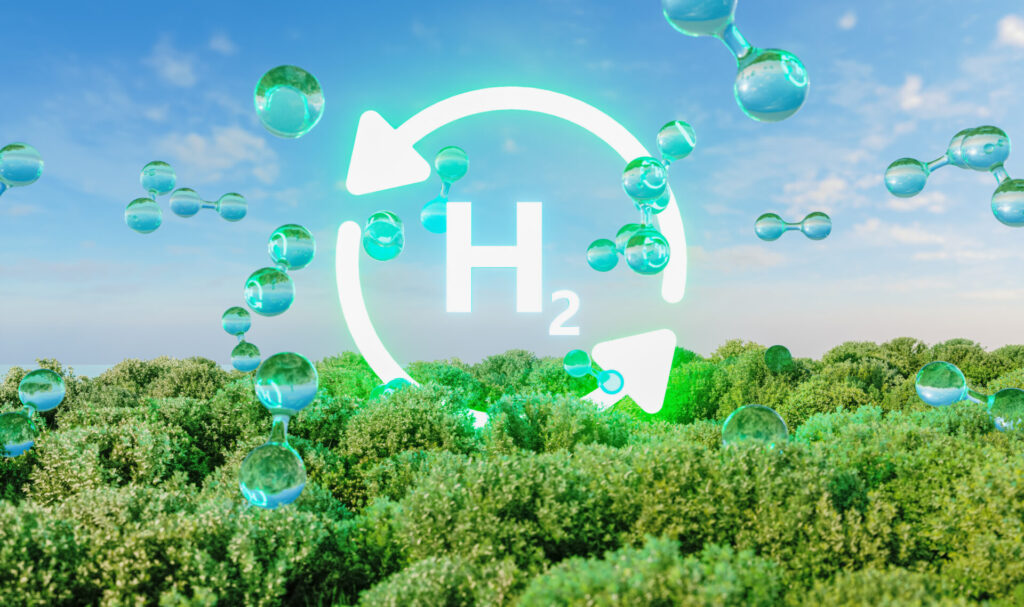
Hydrogen is the most abundant chemical element in the universe, but it is rarely found in its pure form. It is always combined with other elements, such as oxygen in water. To be used as fuel, it needs to be separated. The color attributed to hydrogen (gray, blue, pink, green, etc.) indicates the energy source and the process used for its production.
Green hydrogen, in turn, stands out as the only one produced entirely cleanly. It is obtained through a process called water electrolysis, where an electric current is applied to separate hydrogen from oxygen.
What makes it “green” is the source of this electricity: it must come 100% from renewable energy, such as solar, wind, or hydroelectric. This means that from production to consumption (which releases only water vapor), the process emits no greenhouse gases.
Green hydrogen is, therefore, the ideal alternative to replace fossil fuels in sectors that are difficult to electrify, such as heavy transport, aviation, and certain industries.
The role of green hydrogen in the global energy transition
The global energy transition faces a monumental challenge: decarbonizing sectors heavily reliant on fossil fuels. Hydrogen, being a versatile and high-density energy vector, emerges as a promising solution.
It can be used in fuel cells to generate electricity in vehicles and ships, serve as a raw material for producing fertilizers and chemicals, or be used as a heat source for industrial processes like steelmaking.
Besides its versatility, hydrogen plays a crucial role in energy storage. Renewable sources like wind and solar are intermittent, meaning they generate energy only when there is wind or sun.
Green hydrogen allows storing the surplus energy, converting it into a fuel that can be stored and used when demand is high or renewable production is low. This ability to stabilize the power grid is essential for large-scale expansion of clean energy.
This is a giant leap toward sustainability and creating a new paradigm of production and consumption.
By enabling the integration of intermittent sources into the energy matrix, hydrogen accelerates the gradual phase-out of fossil fuel-powered plants, creating a solid foundation for a truly clean energy future.
Initiatives and investments in Brazil
The potential for green hydrogen in Brazil is immense. The country is blessed with vast areas of sun and wind, ensuring one of the most competitive renewable energy production costs in the world.
Aware of this advantage, the federal government and various states have been working on projects and incentive policies to attract investments and position Brazil as a global leader in H2V production.
One of the most notable examples is the Green Hydrogen Action Plan, coordinated by the Ministry of Mines and Energy, which aims to structure a national policy for sector development.
Additionally, hydrogen hubs are being planned and built in different ports across the country, such as Pecém (Ceará) and Suape (Pernambuco), with the goal of creating complete industrial ecosystems, facilitating hydrogen production, storage, and export.
National and international companies are already investing in pilot projects and factories for hydrogen and green ammonia production. These initiatives show that the vision of Brazil as a producer and exporter of clean energy is rapidly becoming a reality, strengthening energy security and driving the decarbonization of the global economy.
Challenges and opportunities for the future of green hydrogen
Despite the great optimism, the journey to consolidate green hydrogen still presents significant challenges. The initial production cost remains high, mainly due to the price of electrolyzers and the need to build transport and storage infrastructure from scratch.
Moreover, the lack of a clear regulatory framework and unified technical standards can delay the entry of new investors.
However, these challenges translate into great opportunities. Technological innovation in the electrolyzer sector and increased production scale are already driving cost reductions.
The creation of smart public policies and a regulated market for green hydrogen can accelerate sector development and attract venture capital and large-scale financing.
Brazil has the chance to lead this revolution, not only as a raw material exporter but as a technology developer and research hub for green hydrogen.
By overcoming these obstacles, the country will not only meet its climate goals but also create thousands of jobs, attract billions in investments, and solidify its role as a global power in sustainability and innovation. The energy transition is underway, and Brazil has the potential to be at its forefront.