The food industry relies on a continuous power supply to ensure product quality, maintain automated processes, and meet sanitary standards. A power outage can lead to raw material losses, food waste, production stoppages, and significant financial losses.
In this scenario, renting temporary power generators becomes a strategic solution to ensure operational continuity during maintenance, plant expansions, power grid failures, or increased production demand.
In this article, you will understand which generators are most suitable for the food industry, what factors should be considered when choosing, and how a temporary power solution can contribute to a safer and more efficient operation.
Why does the food industry need temporary power?
Food production requires strict temperature control, automation, and traceability. Equipment such as cold rooms, refrigeration systems, filling lines, compressors, and laboratories cannot experience interruptions.
The main risks caused by a power outage include:
- Loss of refrigerated or frozen food;
- Production stoppage;
- Damage to industrial equipment;
- Interruption of automated systems;
- Non-compliance with sanitary standards;
- Increased operational costs.
Therefore, many companies adopt temporary generators as part of their operational continuity plan.
Which temporary power generators are most suitable?
The choice depends on the electrical demand, the usage time, and the characteristics of the industrial plant.
Diesel generators for industrial operations
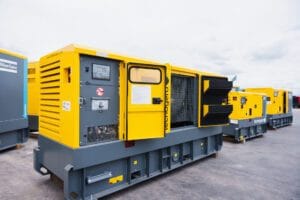
Diesel generators are widely used in the food industry for offering high reliability, autonomy, and excellent performance in continuous operations.
They are recommended for:
- Slaughterhouses;
- Dairies;
- Beverage industries;
- Food processors;
- Refrigerated distribution centers;
- Meat industries.
Generators sized according to load
Proper sizing prevents overloads, voltage fluctuations, and fuel waste.
During the project, factors such as are evaluated:
- Installed power;
- Critical load;
- Motor starting current;
- Operating time;
- Possibility of operation expansion.
Silent generators
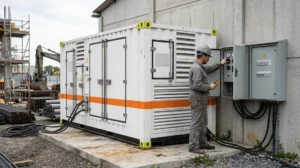
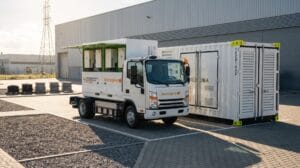
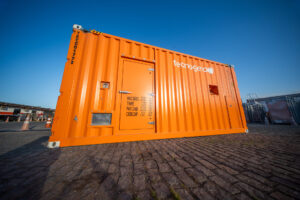
When installation occurs in urban areas or near factory operations, enclosed models offer low noise levels without compromising performance.
Equipment prepared for continuous operation
Temporary projects can last days, weeks, or even months. Therefore, it is important to choose equipment with:
- high availability;
- remote monitoring;
- preventive maintenance;
- high fuel autonomy.
How to choose the ideal generator power?
Each industry has specific needs. The load survey should consider all the equipment that will remain in operation.
Equipment normally powered
Among them are:
- cold chambers;
- refrigeration systems;
- freezing tunnels;
- air compressors;
- industrial pumps;
- production lines;
- automated conveyors;
- HVAC systems;
- industrial lighting;
- quality control laboratories;
- data processing centers.
Proper sizing ensures safety, efficiency, and lower fuel consumption.
In what situations is temporary power used?
Generator rental meets different needs of the food industry.
Scheduled maintenance
Allow electrical interventions without interrupting production.
Industrial plant expansion
While the permanent infrastructure is being installed, the generator keeps the entire operation running.
Utility supply failures
Act as a contingency power source, reducing the risk of production losses.
Seasonal production peaks
During periods of higher demand, such as Easter, Christmas, or promotional campaigns, generators complement the existing electrical infrastructure.
What to consider when hiring a temporary power solution?
More than just providing equipment, a complete solution should include planning, installation, and technical support.
Technical sizing
The power must meet the actual operational load.
Safe installation
The electrical connection must follow technical standards and ensure total operational safety.
Operation monitoring
Remote monitoring allows for quick identification of any performance changes.
Specialized service
24-hour technical support reduces the risk of unexpected downtime.
Complementary equipment
Depending on the application, the following can also be used:
- Load bank;
- Transformers;
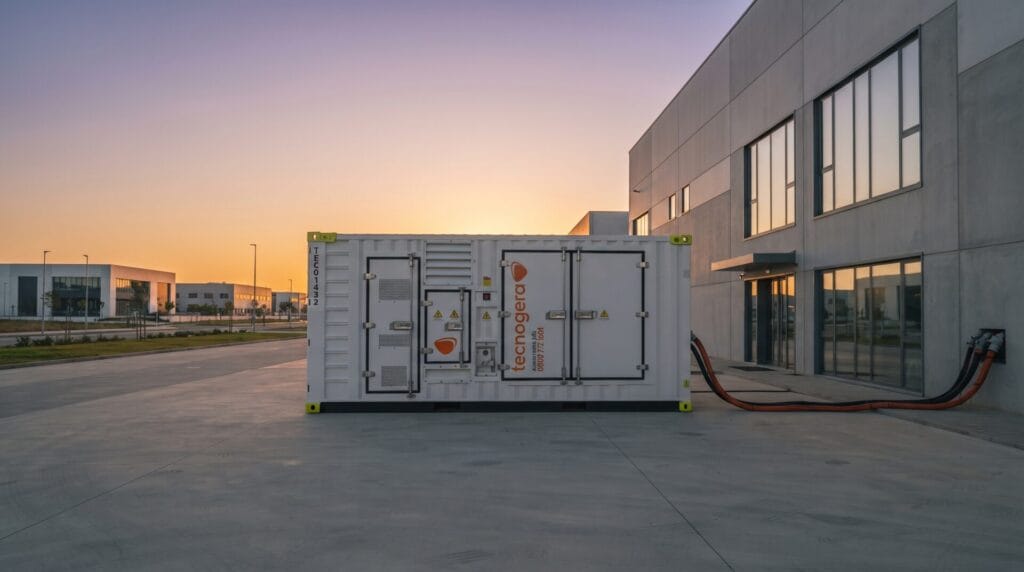
- Electrical cables;
- Distribution panels;
- Fuel tanks;
- Synchronization systems.
Benefits of generator rental for the food industry
The main advantages include:
- Production continuity;
- Preservation of food quality;
- Reduction of financial losses;
- Increased operational safety;
- Flexibility to meet temporary demands;
- Quick deployment;
- Lower investment compared to equipment purchase.
Rely on complete temporary energy solutions
Companies specializing in generator rental offer much more than equipment. The service includes demand analysis, solution sizing, installation, monitoring, and technical support throughout the operation.
In this way, the food industry can keep its production processes running safely, efficiently, and in compliance, even during maintenance, expansion, or power supply interruptions.
Frequently Asked Questions
What is the best generator for the food industry?
Diesel generators are the most used as they offer high reliability, autonomy, and capacity for continuous industrial operations.
Can I rent a generator just during maintenance?
Yes. Renting is an ideal solution for scheduled maintenance, avoiding production interruption.
Can the generator power cold rooms?
Yes. As long as it is properly sized, the generator can keep refrigeration, freezing, and other critical equipment running.
Is renting more advantageous than buying a generator?
For temporary demands, usually yes. Renting eliminates costs associated with acquisition, maintenance, storage, and equipment depreciation.