The term ‘Internet of Things’, or IoT in generator monitoring, is a technology that connects generator sets to the internet for data collection.
Generally, when we talk about the ‘Internet of Things’, we’re referring to digital transformation, involving everything from the simplest devices to autonomous and intelligent systems.
This digitalization allows companies of all sizes and sectors to track the performance of their assets in real-time, ensuring the continuity and reliability of their operations.
When it comes to generators, energy reliability has become a strategic pillar for critical sectors like hospitals, data centers, and industries. With the evolution of the internet of things in energy, asset management has shifted from reactive to intelligent and highly precise.
Using intelligent systems minimizes blackout risks and optimizes financial resource use. Implementing remote monitoring solutions is a decisive step for organizations seeking security, automation, and maximum energy availability.
What is the Internet of Things (IoT) and How It Works
IoT refers to the network of physical objects embedded with sensors and software that communicate with each other. In the electrical sector, this technology creates a digital bridge between physical equipment and operation managers anywhere.
The process works through IoT sensors for energy that capture technical data and send it via the cloud to digital platforms. This connectivity allows raw data to be transformed into detailed and valuable information for asset management.
Real-time analysis enables detailed tracking of each generator parameter. Thus, constant data transmission ensures any anomaly is detected instantly, allowing for quick and safe interventions, as well as enabling preventive actions.
Why Monitor Generators with IoT?
Traditional monitoring relies on in-person rounds, increasing the risk of human error, delays in problem detection, and higher labor costs. Without technology, a failure is only noticed when the equipment stops, leading to high downtime costs.
Remote generator monitoring eliminates uncertainty and prevents unexpected interruptions from harming productivity. Full visibility over the machine fleet is a competitive advantage for business energy efficiency.
Real-Time Monitoring
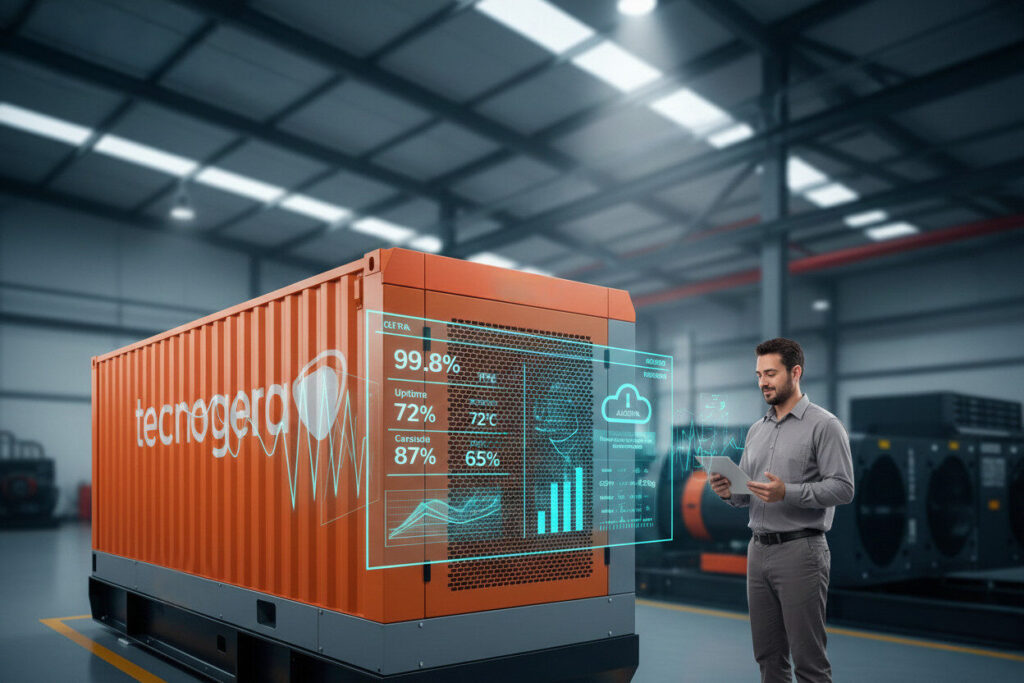
Continuous performance tracking allows for the identification of load and temperature fluctuations the moment they occur. Automatic alerts are sent to managers at a central hub, ensuring response times are significantly reduced in critical situations.
Visibility and Operational Control
Centralizing data in dashboards simplifies managing multiple pieces of equipment simultaneously. This macro view supports faster decision-making based on concrete indicators rather than technical assumptions.
How IoT is Applied to Generator Monitoring
Applying the Internet of Things in practice involves installing specialized hardware directly on the generator’s engine and alternator. These components work together to measure key physical and electrical variables for the system’s proper functioning.
Integration allows generator telemetry to provide a comprehensive x-ray of the equipment’s condition and usage. This technological approach ensures energy generation is monitored end-to-end, with no blind spots in the operation.
Sensors Used in Generators
In generators, specific sensors measure engine temperature, oil pressure, vibration, and fuel level. It’s also possible to monitor the exact diesel or fuel consumption and battery voltage, preventing the main cause of startup failures.
Connectivity and Data Transmission
All collected information is transmitted via mobile networks (GSM/4G), satellite, or Wi-Fi, depending on the equipment’s location. Information security protocols are applied to ensure data travels quickly, securely, and encrypted.
Monitoring Platforms and Dashboards
Data is visualized in intuitive interfaces that generate complete operational reports and histories. These dashboards facilitate trend analysis, allowing for performance comparisons across different periods and optimizing load planning.
Benefits of Monitoring Generators with IoT
Investing in monitoring technology is a one-way street and brings direct financial returns through loss prevention. Energy digitalization enables much more professional management, focused on waste reduction and process security.
Operational efficiency in energy generation is achieved when the manager has full control over consumption and the machines’ condition. This results in a more sustainable and economically viable operation in the long term.
Another advantage is the creation and maintenance of a data source that can aid in future decision-making, such as purchasing equipment from a specific brand or choosing a commercial partner.
Predictive Maintenance in Generators
IoT enables predictive maintenance in generators, anticipating failures before they occur through data pattern analysis. This reduces unplanned downtime, which tends to be much more expensive than scheduled interventions.
Reduction of Operational Costs
With telemetry, it’s possible to identify excessive fuel consumption or premature wear of parts. Optimizing maintenance routes and reducing emergency interventions generates significant savings in the infrastructure and services budget.
Increased Equipment Lifespan
Operating the generator always within ideal temperature and pressure parameters prevents excessive wear. Constant monitoring ensures the asset is preserved, extending its durability, protecting the company’s investment, and the equipment’s use by the client.
Tecnogera’s Role in Using IoT for Generator Monitoring
Tecnogera uses cutting-edge technology to offer telemetry solutions that significantly raise the standard of energy reliability. The focus is on operational intelligence, allowing clients to focus on their core business while energy is monitored by experts.
Tecnogera’s remote monitoring system provides precise data for proactive and safe management. Through constant innovation, the company delivers efficiency and sustainability, ensuring energy supply is never an issue.
With a skilled technical team and modern monitoring systems, Tecnogera turns data into security for critical operations. IoT technology applied to generators ensures that every rental or energy project achieves maximum technical performance.
Future Trends: IoT, Data, and Smart Energy
The future of energy points to even greater integration with Artificial Intelligence and Machine Learning. These technologies will enable monitoring systems to make autonomous decisions to optimize consumption and performance.
Operations are likely to become fully predictive, where the system notifies exactly when a part will need replacement. Advanced automation will transform the sector, creating increasingly resilient and intelligent energy networks.
In summary, IoT monitoring will be the foundation for modern energy security. Adopting these solutions ensures control, savings, and continuity for any business model.