The electric current is the orderly movement of electric charges, usually electrons, through a conductive material. Imagine it as the flow of water in a pipe, where the pressure would be the electrical voltage and the flow intensity, the current.
Understanding this phenomenon is essential for the efficient design and operation of energy systems, especially in industrial contexts.
This concept governs the operation of all electronic devices and electrical systems. From the operation of a simple remote control to the complex operation of large electric generators, electric current is the foundation of everything. It is the invisible force that drives modern technology and ensures energy security.
For the business sector, mastering electric current allows for optimizing infrastructure, ensuring the safety of installations, and maximizing energy efficiency.
Understanding the difference between direct current and alternating current, as well as concepts like ampere and Ohm’s law, is essential for any operation that depends on a robust and reliable power supply.
Unit of measurement of electric current
The unit of measurement for electric current in the International System is the ampere (A), named after the French physicist and mathematician André-Marie Ampère.
One ampere represents the passage of 1 coulomb of electric charge per second through a specific point in a conductor. This measure quantifies the intensity of electron flow.
André-Marie Ampère was one of the founders of electromagnetism, establishing the relationship between electricity and magnetism. His discoveries were very important for the development of the electricity theory, consolidating the foundations for understanding and practical application of electric current.
To measure electric current in a circuit, specific instruments such as the ammeter or multimeter. These devices are indispensable for engineers and technicians, allowing them to verify the compliance of electrical systems and ensure the safety and efficiency of industrial and commercial installations.
Types of electric current
The electricity that powers our world comes in two main forms: direct current (DC) and alternating current (AC). Below are the main characteristics of each and their applications.
Direct current (DC)
Direct current (DC) is characterized by a flow of electrons in a single direction, maintaining constant voltage and polarity over time. This unidirectional movement makes it predictable and stable, making it ideal for applications that require a constant and unvarying power supply.
Common examples of DC sources include batteries, vehicle and smartphone batteries, as well as photovoltaic solar cells. Direct current is generated by chemical reactions (batteries) or by the direct conversion of light into electricity (solar panels), always resulting in a constant flow of electrons.
In company power systems, DC is essential for powering sensitive electronic equipment and for backup systems, such as uninterruptible power supplies (UPS) and battery banks.
Electric generators can produce DC or be equipped with rectifiers to convert it, ensuring the stability needed for critical operations.
Alternating current (AC)
AC alternating current (AC) is distinguished by the periodic reversal of the direction of electron flow, constantly varying its voltage and polarity. This alternation occurs in cycles, whose frequency is measured in Hertz (Hz). In the United States, the standard frequency of the power grid is 60 Hz, which means 60 cycles per second.
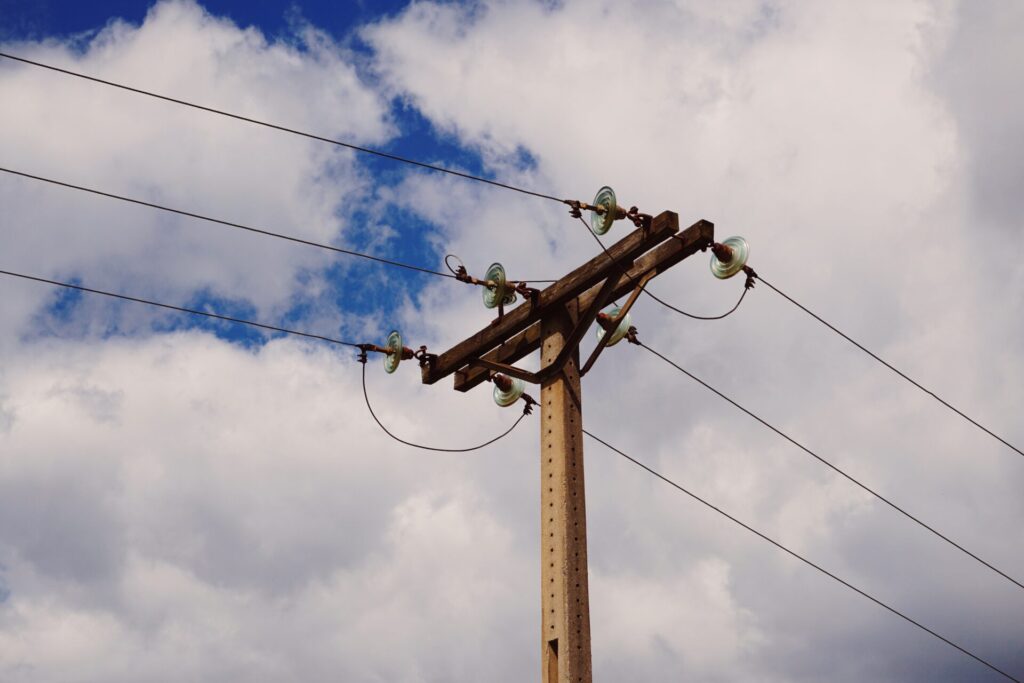
One of the great advantages of AC is its efficiency in transmitting energy over long distances, with significantly lower losses. This is possible due to the ease of raising or lowering its voltage through transformers, making it ideal for large-scale distribution from generating plants to cities.
Transformers, essential components in any power system, work exclusively with alternating current, as they depend on the variation of the magnetic field induced by AC.
This ability to change voltage is vital for the electrical infrastructure, allowing energy to reach consumers safely and economically, including large industries and hospitals.
How does electric current arise?
Electric current arises from a difference in electrical potential (DDP), also known as electric voltage, which drives the flow of electrons in an electrical conductor. Imagine a water reservoir at a higher level connected by a pipe to a reservoir at a lower level; the DDP is like the height difference that makes the water flow.
This electrical “pressure” forces the free electrons of the conductive material to move in an orderly manner, creating the current. Without this electric voltage, the electrons move randomly but do not constitute a current. It is the DDP that organizes this chaotic movement into a unidirectional or alternating flow, depending on the source.
Electric generators are devices that create this potential difference, converting other forms of energy (mechanical, chemical, solar) into electrical energy. They are the “pump” that maintains the constant or alternating flow, ensuring the continuous supply of electricity for various industrial and commercial applications.
Why does understanding electric current matter for operations?
Understanding electric current is fundamental to efficiency and safety of any operation that depends on energy, especially in industrial and commercial environments.
For companies that use electric generators, this knowledge is the basis for proper sizing of equipment and for energy security.
An in-depth knowledge of direct current and alternating current, as well as Ohm’s law and the Joule effect, allows for optimizing consumption, avoiding overloads, and ensuring the longevity of equipment. This translates into reduced operational costs and prevention of interruptions, ensuring business continuity.
Furthermore, understanding electric current is crucial for safety. Short circuits, electric shocks, and failures in power systems can be prevented with the correct application of technical standards and the use of appropriate equipment.
A safe operation protects lives and property, making knowledge about electric current indispensable.
Effects of electric current
The passage of electric current through a material produces various effects that are widely used in technology and everyday life. The main ones are thermal, luminous, magnetic, and chemical, each with important applications and implications.
The thermal effect is the transformation of electrical energy into heat and is known as Joule effect. It is evident in electric showers, heaters, and irons.
Although useful for heating, it is also responsible for energy losses in transmission lines and unwanted heating of equipment, requiring attention in the design of power systems.
The light effect allows lamps to shine, transforming electrical energy into light.
The magnetic effect is the basis of electric motors, transformers, and electromagnets, essential for electromagnetic induction and the operation of many industrial devices.
The chemical effect is used in processes such as electrolysis and electroplating, employed in various industries for material coating.
It is also vital to consider the physiological effects of electric current on the human body. Small currents can cause tingling, while larger currents can be fatal, causing cardiac arrest or severe burns.
Therefore, safety in electrical installations is paramount, with the use of protective equipment and adherence to strict standards to prevent accidents.
Applications of electric current in generators
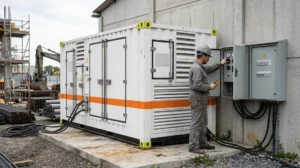
Electric generators are machines that convert mechanical energy into electrical energy, using the principles of electromagnetic induction to create a potential difference and, consequently, generate electric current. They are the backbone of energy security
for companies, ensuring a continuous supply of electricity.
The Tecnogera generators are designed to provide stable electrical current, whether direct current or alternating current, according to the application’s needs.
With advanced technologies, they ensure that the flow of electrons is constant and suitable for the operation of sensitive equipment and critical operations, such as in hospitals and industries.
The importance of generators as backup is unquestionable in places that cannot experience power interruptions, such as data centers, hospitals, factories, and large events.
In-depth knowledge of electrical voltage, amperage, and Ohm’s law is essential for the correct sizing of a generator, ensuring it supports the necessary load and operates with maximum efficiency and safety.