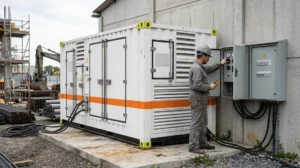
A power generator is a device capable of meeting the energy needs of a specific location in the event of distribution system failures. To ensure the device operates quickly and safely whenever needed, proper power generator sizing is essential.
The power generator sizing takes into account the electrical load to be used, as well as the installation environment, local temperature, pollution, and altitude. Another aspect to consider is whether the generator is the sole source of electrical power or a backup for the local grid, and what risks are involved during a power outage due to generator failure.
Sizing: Calculating Generator Power
Power generator sizing calculates the equipment’s power factor (PF), considering the difference between apparent power (Volt-Ampere) and active power (Watt), which is the difference between the energy needed for voltage and current flow and what is actually consumed as electricity.
Efficiency losses within the alternator and the mechanical power value of the engine must also be considered. Additionally, power generator sizing should adhere to an eight-hour operation with four hours of rest.