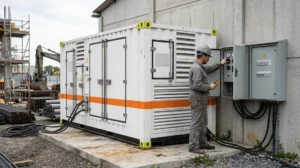
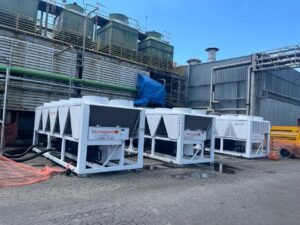
The Chiller cooling system involves cooling water, making it ideal for cooling air, products, or equipment.
When used alongside certain air conditioning equipment, the Chiller enables climate control of environments and regulates temperature and relative humidity, as well as air movement, filtration, and renewal.
Through a refrigeration system, the chiller system removes heat from water, lowering its temperature.
To achieve this, it receives heated and vaporized refrigerant from the heat exchanger, recompresses and cools it before sending it back.
By compressing the refrigerant, in a process that emits large amounts of heat, the system needs to be cooled by another device, the evaporator, which removes the heat created by the recompression of the refrigerant.
When the air conditioner is turned on, a cooler emits the hot air that was removed from inside the house.
With high durability and efficiency, the Chiller cooling system also offers the advantage of excellent cost-effectiveness.
Moreover, it does not affect the architecture of the environments.
This is because, despite the equipment being large, they are quite flexible in terms of installation.
The Chiller’s power is measured in refrigeration tons (RT), capable of operating with a wide range of temperatures, including negative ones.
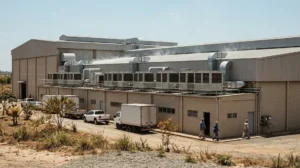
This system can be used in situations requiring space climate control and equipment cooling, particularly in high-traffic areas such as airports, hospitals, subway stations, warehouses, and general events.
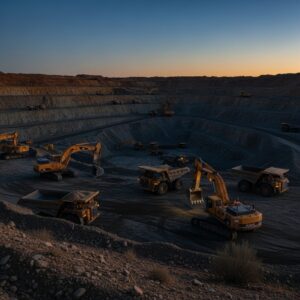
They are also recommended for the oil, gas, petrochemical, refinery, chemical, pharmaceutical, and food industries, as well as for mining and tunneling, in addition to telecommunications equipment and control tower cell areas.