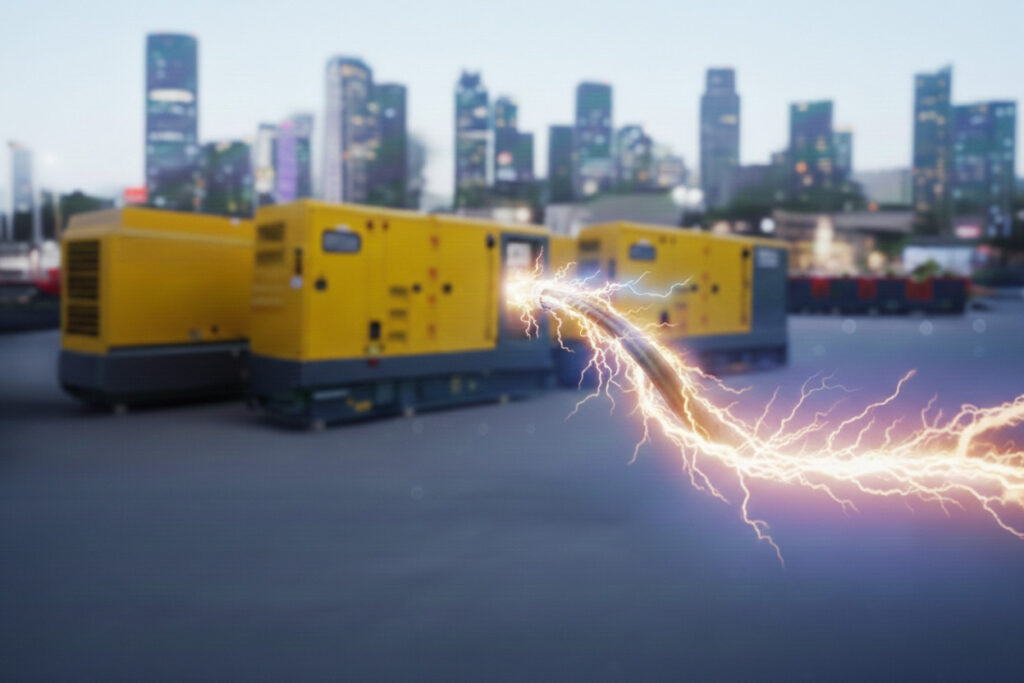
Electrical conductors and insulators are materials distinguished by their ability to allow or restrict the flow of electrons through them.
While conductive materials facilitate the passage of electric current, insulating materials offer high resistance to this flow, playing a crucial role in the safety and proper functioning of any electrical system. Understanding their properties is essential for developing efficient energy and safety solutions.
What is the difference between electrical conductors and insulators?
The main difference between electrical conductors and insulators lies in their ability to conduct electricity.
Conductive materials have free electrons that move easily, allowing current to pass, whereas insulators have electrons tightly bound to atoms, hindering this movement. This characteristic defines their use and importance in various applications.
Conductive materials
Conductive materials are those that allow the easy flow of electric current due to the presence of free electrons in their atomic structure. They are characterized by their low electrical resistivity, making them ideal for efficiently transporting energy.
Examples of conductive materials widely used in the industry include metals such as:
- copper;
- silver;
- gold;
- aluminum.
Copper is one of the most employed conductive materials, especially in residential and industrial electrical installations, as well as being vital in generators. Its high conductivity and malleability make it essential for energy efficiency, minimizing losses and ensuring equipment performance. Tecnogera leverages this excellence and experience in its projects, optimizing energy generation.
Insulating materials
Insulating materials hinder or prevent the passage of electric current, possessing high resistivity. They are crucial for electrical safety, preventing short circuits and protecting people and equipment.
Examples of electrical insulators include:
- rubber;
- plastic;
- glass;
- ceramic;
- dry wood;
- air.
These insulating materials play a vital role in power generation and distribution systems, providing protection and safely directing electrical flow.
In control panels, cables, and equipment, using quality insulators ensures operational reliability and system longevity, a focus of Tecnogera in its energy solutions.
Conductivity and resistivity: electrical properties of materials
Electrical conductivity is a material’s ability to conduct electric current, while electrical resistivity measures its opposition to this flow. These are inverse properties: a material with high conductivity will have low resistivity, and vice versa. These characteristics are fundamental for selecting materials in electrical projects.
The inverse relationship between conductivity and resistivity can be understood through the resistance formula: R = ρ(L/A), where R is resistance, ρ (rho) is the material’s resistivity, L is the conductor’s length, and A is its cross-sectional area.
Why are some materials conductors and others insulators?
A material’s ability to be a conductor or insulator is determined by the energy band theory in its atomic structure.
In conductive materials, the valence band (where electrons are) and the conduction band (where electrons can move freely) overlap or are very close. This allows electrons to move easily, conducting electricity.
In insulating materials, there is a large “energy gap” between the valence band and the conduction band, requiring a significant amount of energy for electrons to jump to the conduction band and conduct current.
Think of a bridge: for conductors, the bridge is continuous; for insulators, there is a large chasm, making crossing very difficult or impossible without significant external force.
Semiconductors: between conductors and insulators
Semiconductors are materials with intermediate electrical properties between conductors and insulators. Under normal conditions, they act as insulators, but under certain conditions (such as increased temperature or doping), their conductivity increases significantly.
Silicon and germanium are the most common semiconductors, essential in manufacturing electronic chips, transistors, and solar cells.
Doping, the process of adding controlled impurities, alters the conductivity of these materials, enabling the creation of complex electronic components like diodes, transistors, and integrated circuits (microchips) that form the foundation of modern technology.
These, in turn, are found in technologies such as smartphone and computer processors, high-speed memory (RAM, SSDs), digital camera sensors, and artificial intelligence components (GPUs for neural networks).
Factors affecting material conductivity
Material conductivity can be influenced by various factors. For example, temperature generally increases the resistance of metals (decreasing conductivity) due to greater atomic agitation, but it can increase conductivity in semiconductors.
Pressure can also alter atomic structure, impacting electron mobility. This occurs because increased pressure can bring atoms closer, altering the overlap of their electron clouds and, consequently, the ease with which conduction electrons move.
Magnetic fields can influence electron movement, a phenomenon known as the Hall effect. In this case, the magnetic force acts perpendicular to the direction of electron movement, deflecting them and creating a potential difference (Hall voltage) that can affect how current flows.
Additionally, the presence of impurities or defects in a material’s crystalline structure can create obstacles for electron flow, increasing resistivity and decreasing conductivity.
Superconductors: materials with zero resistance
Superconductors are materials that exhibit zero electrical resistance when cooled below a certain critical temperature, which varies significantly depending on the material. This means that electric current can flow without any energy loss. This revolutionary property has the potential to transform the energy industry.
Potential applications of superconductors include lossless energy transmission, magnetic levitation trains, and nuclear fusion devices. Although challenges remain for large-scale application, such as the need for extremely low temperatures, research in superconductivity promises significant innovations for the future of energy. Some ongoing projects include:
- High-efficiency urban cables for smart cities;
- More powerful wind generators.
When does an insulator become a conductor?
An insulator can become a conductor under certain extreme conditions, a phenomenon known as dielectric breakdown. This occurs when the voltage applied to an insulating material exceeds its dielectric strength limit, causing electrons to detach from their atoms and create a conductive path for electric current.
A practical example is lightning, which travels through air (a natural insulator) due to an extremely high electrical potential difference. In electrical projects, it’s crucial to consider the dielectric strength of insulating materials to prevent failures and ensure safety, especially in high-voltage systems.
Practical applications of conductors and insulators in the electrical industry
Conductors and insulators are the backbone of the electrical industry, from generation to distribution and energy consumption.
In generators, copper windings (an excellent conductor) are essential for electricity production, while insulating materials protect these windings, preventing short circuits and ensuring efficiency.
In energy transformation and distribution, electrical cables use conductors like aluminum and copper, coated with insulators like rubber and PVC to ensure safe transport and minimize losses.
The proper choice of these conductive and insulating materials is fundamental for the safety, efficiency, and reliability of the entire energy infrastructure, a cornerstone of the solutions offered by Tecnogera.
How to test if a material is a conductor or insulator?
Testing a material’s conductivity is essential to ensure the safety and proper functioning of electrical systems. A simple method involves using a multimeter, an instrument that can measure electrical resistance. By connecting the multimeter probes to the material, a low resistance reading indicates a conductor, while a very high or infinite reading points to an insulator.
Professionally, more rigorous tests follow specific technical standards and use calibrated equipment to measure the dielectric strength of insulators or the exact conductivity of conductors.
When conducting any test, it’s essential to follow basic safety guidelines, such as turning off the power and using personal protective equipment, to avoid accidents.
Find the best energy solutions at Tecnogera!
At Tecnogera, we understand the critical importance of conductors and insulators for the safety and energy efficiency of any project. Our generator rental and energy systems solutions are developed with the highest quality standards, using excellent conductive materials and robust insulators, ensuring superior performance and reliability.
Whether for industrial projects, events, or emergency needs, Tecnogera offers the best energy solutions that integrate cutting-edge technology and technical expertise. Count on us to ensure your systems operate with maximum safety and efficiency, driving your goals.