Semiconductors: Learn What They Are, Their Uses, Types, and Applications
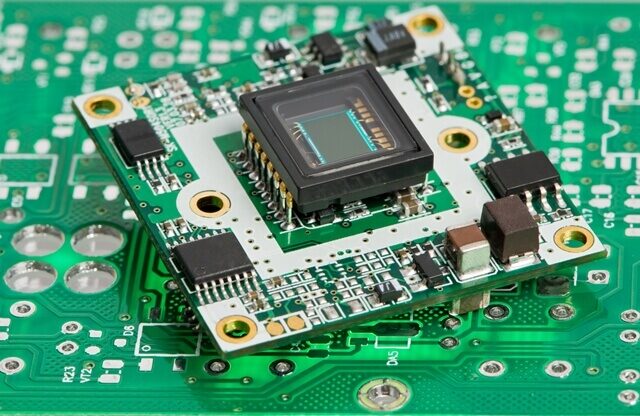
Semiconductors are materials with intermediate electrical conductivity, meaning they fall between conductors (like metals) and insulators (like rubber).
Semiconductors are the backbone of modern electronics, enabling precise control of electricity flow in billions of devices. Common examples of semiconductor materials include silicon and germanium.
While silicon is found in almost all rocks, sands, clays, and soils in the form of silica (silicon dioxide) and silicates, germanium is a rarer element found in some minerals like germanite and argyrodite, and is also obtained from processing zinc, copper, and coal ores.
These materials are essential for the operation of virtually all the technology we use today, from smartphones and computers to energy systems and vehicles. The ability to manipulate the electrical conductivity of semiconductors makes them indispensable in diodes and semiconductors, transistors, and integrated circuits.
What is the Purpose of a Semiconductor?
A semiconductor is used to control the flow of electrical current precisely and efficiently. Its main function is to act as a switch or amplifier in electronic circuits, allowing the development of complex and compact electronic devices, such as cell phones.
This is crucial for the functionality of components like processors and memories.
The electrical conductivity of semiconductors can be altered by factors such as temperature, light, or the addition of impurities, a process known as semiconductor doping.
This characteristic makes them versatile and indispensable for creating components that perform logical and data processing functions on a nanometric scale.
What Are the Semiconductors?
The most well-known examples of semiconductors are:
Silicon (Si)
It is the most widely used semiconductor material, serving as the foundation for manufacturing almost all integrated circuits, microprocessors, and solar cells. Its abundance and stable electrical properties make it ideal for the semiconductor industry.
Germanium (Ge)
It was one of the first semiconductor materials explored and is still used in specific applications, such as infrared detectors and some types of high-frequency transistors. Germanium offers higher electron mobility than silicon.
Gallium Arsenide (GaAs)
This compound semiconductor is valued for its ability to operate at high frequencies and temperatures, as well as for generating and detecting light. It is commonly found in wireless communication devices, LEDs, and lasers.
Types of Semiconductors
There are two main types of semiconductors: intrinsic and extrinsic. The fundamental difference between them lies in the presence or absence of impurities and how this characteristic affects their electrical conductivity.
Intrinsic Semiconductors
Intrinsic semiconductors are pure semiconductor materials, without the addition of impurities. In them, electrical conduction occurs due to the thermal excitation of electrons, which jump from the valence band to the conduction band, creating holes.
Understand the Difference Between Valence Band and Conduction Band
Valence Band: Imagine this band as the “home” of the outermost electrons of an atom in a material. Here, electrons are tightly bound to their atoms and do not have enough energy to move freely through the material. They are at their lowest and most stable energy. For the material to conduct electricity, electrons need to leave this band.
Conduction Band: This is the “avenue” where electrons can move freely. When an electron receives enough energy, it can jump from the valence band to the conduction band. Once in the conduction band, it becomes a “free” electron and can contribute to the electrical current, i.e., conduct electricity.
When we talk about holes, it’s worth explaining their importance:
When an electron jumps from the valence band to the conduction band, it leaves a “vacant space” or a “gap” in its place in the valence band. This vacant space is what we call a hole. The importance of the hole is that it behaves like a “mobile” positive charge.
Imagine the following situation: a neighboring electron in the valence band can move to fill this hole, but by doing so, it creates a new hole where it was. This movement of electrons to fill holes makes the holes appear to move in the opposite direction to the movement of the electrons.
Therefore, in semiconductors, electrical conduction occurs not only by the movement of electrons in the conduction band but also by the “movement” of holes in the valence band. Both contribute to the electrical current and are fundamental to the functioning of semiconductor devices.
However, the electrical conductivity of these materials is relatively low and highly dependent on temperature: the higher the temperature, the more electrons are excited, and the greater the conductivity. However, their limitations in terms of precise control make them less useful for most modern electronic applications.
Extrinsic Semiconductors
Extrinsic semiconductors are created through the process of semiconductor doping, where impurities are intentionally added to an intrinsic semiconductor.
This addition drastically alters their electrical properties, significantly increasing conductivity and allowing much greater control over current flow.
There are two main types: N-type, which has an excess of electrons (doped with donors like phosphorus), and P-type, which has an excess of holes (doped with acceptors like boron). This differentiation is the basis for creating diodes and semiconductors and transistors, essential for electronics.
Applications of Semiconductors in Technology
The applications of semiconductors are vast and cover almost every aspect of modern technology. They are at the core of devices like diodes and semiconductors, which allow current to flow in only one direction, being crucial in rectifiers and light emitters (LEDs).
In everyday electronics, semiconductors can be seen in:
- smartphones;
- computers;
- televisions.
In these electronics, microprocessors and memory chips are based on semiconductors and perform billions of operations per second. In energy security, they are vital in solar inverters and battery management systems.
Challenges of the Semiconductor Industry
The semiconductor industry faces complex and growing challenges. The shortage of raw materials, such as high-purity silicon and other rare elements, is a constant concern, impacting the global supply chain.
Geopolitical events, such as trade wars, like the tariff disputes between the US and China, as well as economic sanctions on producing countries, such as technology export restrictions, and regional conflicts, which can disrupt transport routes or production in strategic areas, along with the growing demand for electronics, accentuate this vulnerability.
Mass production requires billion-dollar investments in high-tech factories and research and development, resulting in a highly capitalized sector.
The need for constant innovation is another challenge, with the search for even more efficient materials and more miniaturized manufacturing processes to meet consumers’ growing expectations for faster and more powerful devices.
Semiconductors in Brazil still face significant obstacles, mainly related to technological dependency and the lack of a complete local production ecosystem, from raw materials to the manufacturing of advanced chips.
What is the Difference Between a Conductor and a Semiconductor?
The main difference between a conductor and a semiconductor lies in their electrical conductivity. A conductor, like copper or silver, has high electrical conductivity and allows current to flow freely with low resistance, due to the large number of free electrons in its structure.
In contrast, a semiconductor has intermediate conductivity, which can be controlled and altered under certain conditions, such as doping. While conductors are ideal for transporting electricity, semiconductors are essential for controlling and processing electrical signals, forming the basis of digital and power electronics.
Optimize Your Operation with Tecnogera Generators!
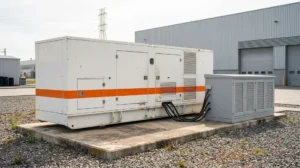
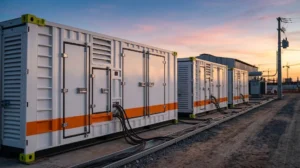
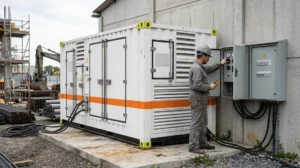
Tecnogera understands the importance of energy security and offers robust solutions, like modern generator sets, that seamlessly integrate with systems relying on semiconductor technology.
Whether to ensure the continuity of critical operations or to optimize energy consumption, our products are designed to operate with maximum efficiency and reliability.
Our generators are developed with cutting-edge technology, ready to meet the demands of any industry. With Tecnogera, your company is guaranteed a stable and secure energy supply, even amid the global challenges of the semiconductor industry.