The digitalization of the electrical sector is transforming how companies manage and consume energy.
Today, real-time monitoring of power grids, combined with artificial intelligence (AI) and smart sensors, represents one of the key innovations towards operational efficiency and strategic decision-making.
Companies and industries with critical operations cannot afford unexpected failures or interruptions.
In this context, continuous energy monitoring becomes essential to prevent problems, reduce costs, and enhance system reliability.
The good news is that cutting-edge technologies now allow for anomaly detection in milliseconds and automatic consumption adjustments, which was unthinkable just a few years ago.
How real-time monitoring is revolutionizing the electrical sector
The electrical sector has always been a pillar of the modern economy, but also one of the most complex to manage.
With the increase in energy demand, decentralization of generation, and the advancement of renewable sources, manual control has become unfeasible. This is where real-time energy monitoring becomes a game changer.
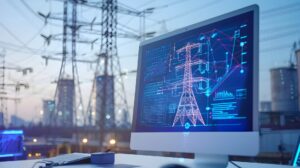
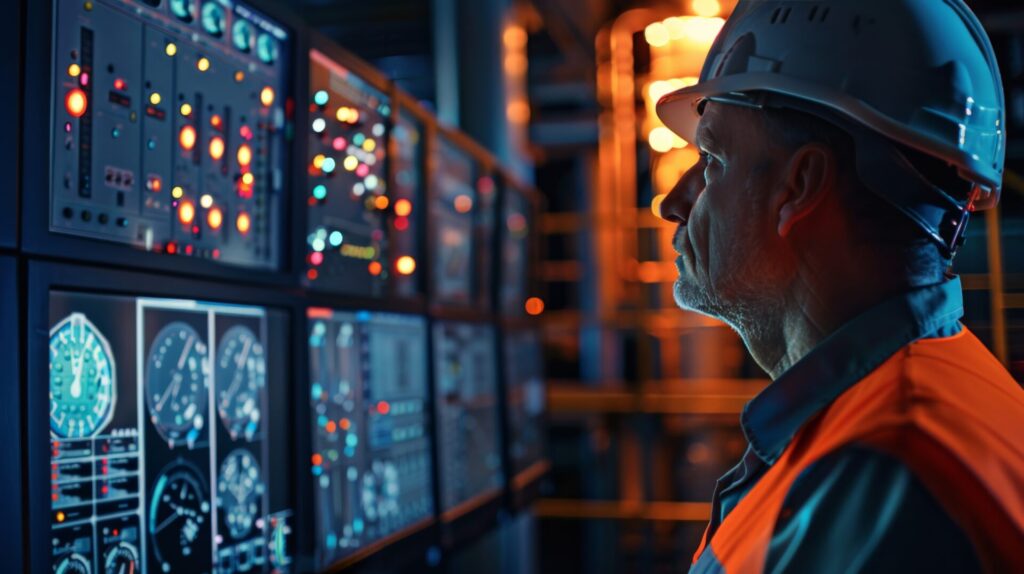
Through sensors and cloud-connected software, it is possible to track in real-time the performance of equipment, networks, and consumer units, including variables such as voltage, current, power, temperature, and frequency.
When data is integrated with artificial intelligence, valuable insights emerge about consumption patterns, bottlenecks, and optimization opportunities.
This digital transformation not only improves energy efficiency but also enhances operational safety. By identifying deviations before they become failures, the system allows for quick interventions, reducing downtime and preventing financial losses.
Moreover, automation and data analysis make energy management more strategic, freeing managers for higher-impact decisions.
The application of these technologies is revolutionizing sectors from industry to services, ushering in a new era of smart energy that is connected, predictable, and sustainable.
Technologies involved: smart sensors, AI, and process automation
The foundation of real-time monitoring rests on three technological pillars: smart sensors, artificial intelligence, and process automation.
Together, these innovations form an ecosystem that collects, processes, and interprets electrical data with high precision.
Smart Sensors
Smart sensors are responsible for capturing real-time information from the electrical environment.
Unlike conventional sensors, they not only measure variables like current and voltage but also process data locally and send it to centralized platforms.
These devices play a crucial role in the early detection of failures, overloads, and energy variations. Additionally, their communication capability via the Internet of Things (IoT) allows for remote and integrated monitoring of multiple operational units.
Artificial Intelligence
AI acts as the brain of the system, analyzing large volumes of data and identifying patterns invisible to the human eye.
Through machine learning algorithms, AI learns from operational history and can predict future behaviors, the basis of predictive maintenance.
In practice, this means an industrial plant can anticipate failures in motors, circuit breakers, or transformers based on small performance variations, avoiding unexpected stops and optimizing the maintenance schedule.
Process Automation
With automation, the system not only monitors but also reacts automatically.
For example, upon detecting an anomaly, it can shut down circuits, redirect energy flow, or activate backup equipment.
This level of autonomy increases reliability and reduces response time, contributing to a safer and more economical operation.
Together, these technologies create a continuous cycle of analysis, learning, and action, making the electrical system smarter and more autonomous.
Practical benefits: reduced failures, costs, and increased reliability
Implementing real-time energy monitoring brings direct and measurable benefits to companies and industries of all sizes. Key advantages include:
1. Reduction of failures and unscheduled downtime
The main benefit is the ability to predict failures before they occur. With continuous data analysis, it is possible to detect vibrations, abnormal heating, or performance drops indicating imminent failures, allowing for preventive actions, reducing downtime, and increasing equipment availability.
2. Decrease in operational costs
The combination of automation, data analysis, and AI allows for identifying energy waste and optimization opportunities.
In many cases, companies can reduce consumption by up to 15% simply by adjusting usage during peak hours or correcting harmonic distortions.
3. Increased reliability and safety
With continuous monitoring, the risks of critical failures and electrical accidents decrease significantly.
The system can identify overloads and isolate them automatically, ensuring the integrity of machines, people, and facilities.
4. Support for predictive maintenance
Instead of following a fixed maintenance schedule, companies can operate based on real performance data.
This way, unnecessary maintenance costs are reduced, and equipment lifespan is increased. Predictive maintenance is one of the major competitive advantages of the digital age.
5. Compliance and sustainability
Detailed control of energy consumption facilitates compliance with regulatory standards and environmental goals.
Moreover, the use of smart systems contributes to energy efficiency and carbon footprint reduction, reinforcing ESG commitments.
Tecnogera solutions that drive efficiency and operational intelligence
Tecnogera is a leader in providing comprehensive energy solutions, offering not only equipment but also technology and intelligence to optimize companies’ electrical performance.
With an integrated approach, Tecnogera combines real-time monitoring, automation, and data analysis to ensure greater control and operational efficiency.
Among the solutions offered, the highlights are:
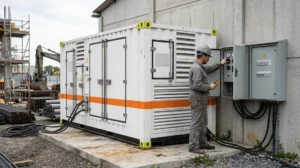
- Smart generators and hybrid systems: equipped with next-generation sensors and IoT connectivity, allowing real-time performance and consumption tracking.
- Remote monitoring platforms: designed to offer complete visibility of energy operations, with intuitive dashboards and automatic alerts.
- Predictive maintenance services: based on AI, identify abnormal behaviors and anticipate failures, ensuring maximum reliability.
- Customized energy efficiency projects: tailored to each operation, focusing on cost reduction and increased sustainability.
These solutions are especially valuable for managers in operations and procurement, who seek to optimize energy performance and reduce risks without compromising productivity.
With specialized technology and technical support, Tecnogera positions itself as a strategic partner on the journey towards smart energy.
Real-time energy monitoring has shifted from being a technological advantage to a necessity for companies aiming to operate efficiently, safely, and sustainably.
By integrating smart sensors, artificial intelligence, and automation, organizations gain full control over their electrical infrastructure, from consumption to maintenance.
With Tecnogera’s solutions, it’s possible to turn data into strategic decisions and ensure more stable, economical, and sustainable operations. The future of energy is intelligence, and it has already begun.