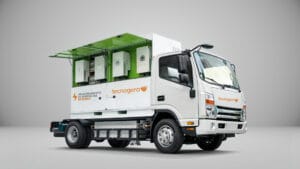
The industrial cooling system is a set of technologies designed to remove heat from processes, equipment, products, or controlled environments on a large scale. Its application ensures the integrity of raw materials and operational continuity, preventing unplanned downtime and financial losses. The key advantage lies in its ability to operate under harsh conditions with high energy efficiency and thermal precision superior to commercial models.
An industrial cooling system is defined by the transfer of heat from a low-temperature medium to a high-temperature one in industrial contexts. It should not be confused with common air conditioning, as it focuses on process stability and load preservation, often operating at sub-zero temperatures.
What are the main components of an industrial cooling system?
The components of an industrial system are designed to withstand intense and continuous work regimes. Each part plays a crucial role in ensuring heat exchange occurs as planned.
Compressor: increases the pressure of the refrigerant fluid, driving it throughout the system circuit.
Condenser: facilitates thermal exchange, transforming the hot gaseous fluid into a liquid state by releasing heat.
Expansion Device: significantly reduces the liquid’s pressure, preparing it to absorb heat in the next stage.
Evaporator: absorbs heat from the environment or process, causing the fluid to return to a gaseous state.
How does an industrial cooling system work?
The operation is based on the vapor compression cycle, where the refrigerant fluid changes its physical state to transport thermal energy. The process uses latent heat and pressure control to remove unwanted heat from one area and reject it in another.
Compression: the gaseous fluid is compressed, significantly increasing its pressure and temperature.
Condensation: the hot gas releases heat to the external environment (water or air) and becomes liquid.
Expansion: the fluid’s pressure drops rapidly, creating intense cooling before entering the evaporator.
Evaporation: the fluid absorbs heat from the process, evaporates, and returns to the compressor to restart the cycle.
What are the types of industrial cooling systems?
The advancement and diversity of technologies allow each industry to choose the model that best suits its thermal load and operation. Systems range from electronic flow control to utilizing residual heat to generate cooling.
- Variable Refrigerant Flow (VRF/VRV).
- Evaporation Systems.
- Chillers (Chilled Water Systems).
- Rapid Air Expansion.
- Vapor Compression System.
- Absorption System.
Variable Refrigerant Flow (VRF/VRV)
Uses a multi-split system where an external unit connects to multiple internal ones. The term VRV is a registered trademark (Daikin), while VRF is the technical name for this variable flow technology.
Evaporation
This type is based on evaporative cooling, where water absorbs heat when changing from liquid to gaseous state. It’s an efficient solution for large warehouses that require constant air renewal with low electrical cost.
Chiller
The Chiller is equipment that cools water or glycol solutions for distribution in large-scale processes. Tecnogera offers high-performance Chiller rentals to ensure operational flexibility in temporary or permanent projects.
Rapid Air Expansion
In this system, the refrigerant fluid expands directly in coils that cool the air in the industrial environment. It is widely used in small and medium-sized cold rooms due to its immediate thermal response and simple installation.
Vapor Compression System
This is the most widespread model, using mechanical energy to circulate refrigerants like ammonia or HFCs, which are Hydrofluorocarbons, a class of synthetic gases composed of hydrogen, fluorine, and carbon atoms. Its versatility allows it to cater to everything from food cooling to complex petrochemical processes with high stability.
Absorption System
The absorption cycle uses a residual heat source, such as steam or exhaust gases, instead of a mechanical compressor. With a Coefficient of Performance (COP) between 0.7 and 1.2, it is ideal for steel industries with excess thermal energy. It uses fluids like lithium bromide and ammonia, reducing electrical consumption, although it requires specialized technical management.
How to choose equipment for an industrial cooling system?
The correct choice depends on a detailed assessment of the thermal load and sustainability goals of each plant or project. Undersized equipment leads to failures, while oversizing unnecessarily increases operational and maintenance costs.
Check out:
- Calculate the thermal load: measure the exact amount of heat to be removed from the production process.
- Evaluate the COP: check the **Coefficient of Performance** to ensure the lowest possible energy expense.
- Select the fluid: choose refrigerants with low Global Warming Potential to meet environmental standards.
- Consider redundancy: plan backup systems to avoid critical downtime in case of mechanical failures.
With 20 years in the market, Tecnogera assists companies in all engineering calculations, ensuring precise and efficient sizing for each demand.
Industrial cooling maintenance
Maintaining system performance requires a maintenance strategy that minimizes component wear and optimizes consumption.
Learn about the types of maintenance:
Preventive: a set of periodic inspections to clean components and replace parts before they show defects.
Predictive: vibration and temperature monitoring to identify failure trends through data analysis.
Corrective: intervention carried out after a breakdown to restore normal system operation.
With a team of specialists, Tecnogera stands out for its agility in delivering backup equipment, ensuring that its clients’ operations never stop.
What is the importance of cooling in industrial processes?
Cooling systems are vital for machine conservation and preventing breakdowns due to overheating, ensuring operational continuity.
According to data from the American Society of Heating, Refrigerating and Air-Conditioning Engineers, proper thermal management can prevent up to 20% of losses due to unscheduled downtime in heavy industries. Additionally, strict control protects the physical-chemical quality of final products in sensitive sectors.
What is the difference between a cooling system and an air conditioning system?
The technical distinction between the two systems lies in the purpose of thermal control and the power required to achieve the objectives. While one focuses on processes, the other focuses on human comfort.
| Criterion | Cooling System | Air Conditioning System |
| Main Objective | Product and process conservation | Thermal comfort for occupants |
| Common Application | Cold storage, reactors, and IT
| Offices and commercial areas |
| Temperature Range | Can vary from -40°C to +15°C | Generally maintained between 20°C and 24°C |
| Power | High for large thermal loads | Moderate for latent load control
|
What are the differences between industrial cooling and air conditioning?
Industrial cooling deals with much higher technical requirements than conventional air conditioning.
Compliance with the Brazilian Association of Technical Standards (ABNT), NBR 16401 guides quality and safety standards for both cases.
| Criterion | Industrial Cooling | Air Conditioning |
| Focus | Process and material stability | Human well-being and productivity |
| Applications | Production lines and cold storage | Malls, hotels, and hospitals
|
| Equipment | Chillers, towers, and compressor racks | Splits, Fan Coils, and Centrals |
| Objective | Thermal precision and operational safety | Temperature and relative humidity control |
Applications of industrial cooling in different sectors
Cooling solutions cover sectors requiring absolute temperature control to meet standards from the National Health Surveillance Agency (ANVISA) and international standards. Each application demands a specific configuration and humidity control to ensure asset safety.
Food and Beverage Industry
Requires strict cold chain control to avoid sanitary risks and stock losses due to biological degradation.
Applications: cold rooms, freezing tunnels, milk cooling, beverage bottling, and meat processing.
Pharmaceutical and Hospital Industry
Focuses on complying with Good Manufacturing Practices to maintain the efficacy of medicines and vaccines.
Applications: clean rooms, biological input storage, cooling of MRI equipment, and research laboratories.
Chemical and Petrochemical Sector
Deals with continuous processes and exothermic reactions requiring rapid heat removal to prevent accidents.
Applications: reactor cooling, distillation columns, gas liquefaction, and volatile product storage.
Cold Logistics and Storage
Cold logistics ensures that perishable products maintain their properties from origin to final point of sale.
Applications: refrigerated distribution centers, cross-docking platforms, and automated warehouses for frozen goods.
Emerging Applications and Industry 4.0
Data centers and semiconductor factories require constant cooling to protect electronic circuits from thermal failures. Tecnogera excels in smart systems and portable battery solutions (BESS) for maximum energy efficiency.
How to hire an industrial cooling solution with Tecnogera?
Tecnogera’s End-to-End model delivers not only the equipment but the total guarantee of your production process continuity.
We offer customized projects that combine Chiller rentals, power generators, and specialized technical support with nationwide presence and 24-hour service.
By choosing our solution, your company transforms fixed costs into variables, maintaining technological excellence without the need for acquisition investments. Contact us and request a quote!
Frequently asked questions about industrial cooling systems
What are the cooling services?
The services include technical consulting, equipment installation, remote monitoring, and preventive and predictive maintenance plans.
What is energy efficiency in industrial cooling systems?
It is the ability to generate maximum cooling power with minimal electrical consumption, measured by the COP index.
What are the advantages of renting versus buying a chiller?
Renting preserves working capital, offers tax deductions (Capex to Opex), and ensures equipment is always technologically up-to-date.
What types of refrigerants are used in industrial cooling?
The main ones include ammonia (R-717), carbon dioxide (CO2), and synthetic fluids HFC or HFO.
What is the leading chiller rental company in Brazil?
With a history of serving over 30,000 clients, Tecnogera is the national leader in cooling system rentals, offering high availability and full support from the engineering team.