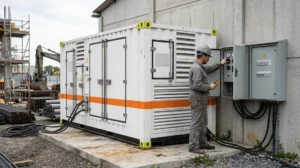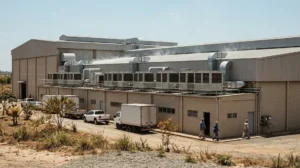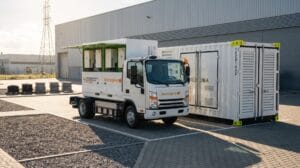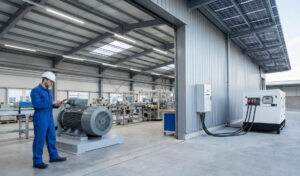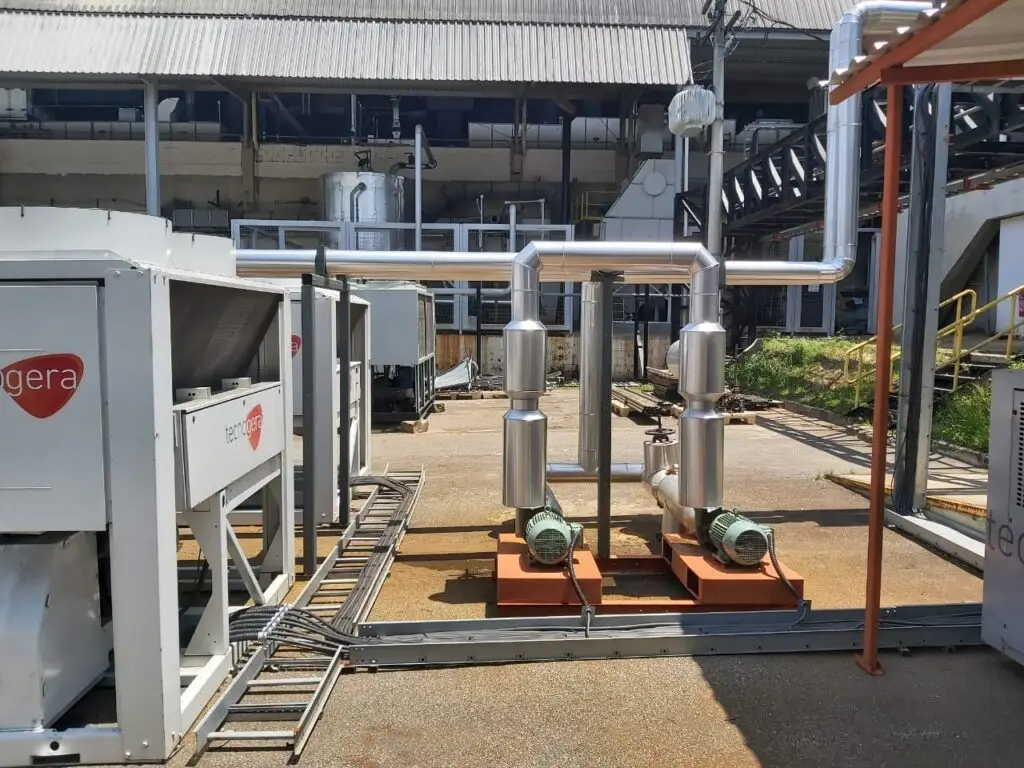
An industrial chiller is a cooling device that removes heat from a liquid, typically water or a water-glycol solution, to cool machines, products, or industrial processes.
It operates in a closed cycle, where the cooled fluid circulates and the extracted heat is transferred to the external environment, maintaining a stable and controlled temperature, which is essential for production and equipment safety.
What is an industrial chiller used for?
The industrial chiller is used to remove the heat generated in production processes, ensuring machinery operates within the ideal and pre-established thermal range. Without this control, overheating can cause unplanned shutdowns and irreversible damage to components.
Additionally, the industrial cooling chiller ensures the standardization and quality of the final product, especially in sensitive sectors like food and pharmaceuticals. Thermal stability prevents unwanted chemical or physical changes in the goods.
Its use directly impacts the energy efficiency of the industrial plant, optimizing overall electricity consumption. By maintaining a constant temperature, it reduces waste of inputs and increases production line productivity.
How does an industrial chiller work?
The operation of an industrial chiller is based on thermodynamic principles of heat exchange through a vapor compression or absorption cycle. The refrigerant fluid changes its physical state, absorbing heat from the process water and rejecting it to the external environment.
The fundamental components for this operation include:
- Compressor: moves the refrigerant fluid and increases its pressure.
- Evaporator: where thermal exchange occurs and the water is cooled.
- Condenser: rejects the absorbed heat to the external air or water.
- Expansion valve: controls the flow and reduces the pressure of the refrigerant.
The process is completed when these items work in harmony: the evaporator cools the process water, the compressor pumps the hot gas to the condenser, and the valve restarts the cycle. The control system monitors everything to ensure precision.
Energy efficiency in industrial chillers
Energy efficiency in industrial chillers is measured by indices such as Coefficient of Performance (COP), Energy Efficiency Ratio (EER), and Integrated Part Load Value (IPLV), which relate cooling capacity to energy consumed. The higher the index, the lower the operational cost for the same thermal load delivered, as detailed:
Coefficient of Performance (COP)
It is the direct ratio between the cooling capacity delivered and the electrical power consumed by the chiller, using the same unit of measurement, usually Watts.
It represents the instantaneous efficiency of the equipment at a specific operating point: for example, a COP of 5.0 means that for every 1 kW of electricity consumed, the chiller generates 5 kW of cooling. The higher this value, the more efficient the system under the evaluated conditions.
Energy Efficiency Ratio (EER)
Measures the cooling efficiency of the chiller operating at full load (100% of its capacity), relating thermal capacity (in BTU/h or kW) to electrical energy consumption (in Watts).
Unlike other indices, the EER focuses on the peak performance of the equipment under standard design conditions. It is an essential indicator for sizing operational costs in industries where the chiller needs to work constantly at its maximum power.
Integrated Part Load Value (IPLV)
It is a weighted index that calculates the efficiency of the chiller operating at different load levels (100%, 75%, 50%, and 25%), better reflecting the thermal demand variations that occur in daily industrial operations.
Since most chillers operate at partial load most of the time, the IPLV is considered the most accurate indicator for predicting real long-term energy savings, highlighting the benefit of technologies like variable speed compressors.
Modern technologies, such as variable frequency drive (VFD) compressors, adjust motor speed to actual demand. This avoids consumption peaks and excessive wear, resulting in savings that can exceed 30% on the electricity bill.
Types of industrial chillers
When researching what are the types of chillers, you will find that the market offers various models to meet specific thermal load and infrastructure demands. The right choice depends on water availability, physical space, and energy costs.
1. Water-cooled chillers
These models use water to cool the condenser and require external cooling towers. They are ideal for large capacities due to their high thermal efficiency, often raising the question of which water to use in the chiller: it must be treated to prevent corrosion.
- Advantages: quiet operation, higher energy efficiency (high COP), smaller internal physical space.
- Types of compressors: screw (100TR to 600TR) and centrifugal (300TR to 2,000TR – up to 20% more economical).
- Typical applications: hospitals, data centers, and pharmaceutical industries.
2. Air-cooled chillers
The air-cooled chiller rejects heat directly to the atmosphere through fans attached to the condenser. By eliminating the need for cooling towers, its installation is simpler and requires less hydraulic maintenance, making them perfect for locations with water scarcity.
- Advantages: quick installation (Plug & Play), lower maintenance cost, and no need for water treatment.
- Types of compressors: Scroll and Screw.
- Typical applications: shopping malls, commercial buildings, and industries with ventilated outdoor spaces.
3. Absorption chillers
These use a heat source, such as steam, hot water, or gas, instead of electricity to perform the chemical refrigeration cycle. They are excellent options for industries that generate residual heat (cogeneration), reusing energy that would otherwise be wasted.
- Advantages: extremely low electrical consumption, utilization of residual heat, and few moving parts.
- Types of absorbers: Lithium bromide or ammonia.
- Typical applications: industries with cogeneration, steel mills, and large energy complexes.
Compression chillers
These represent the vast majority of the market, using electric motors to drive the mechanical compressor and generate the cooling cycle. They offer precision in temperature control and high reliability, adapting to almost any industrial refrigeration system.
- Advantages: wide capacity range, quick response to thermal load variation.
- Types of compressors: scroll, screw, or centrifugal.
- Typical applications: food industries, laboratories, and shopping centers.
Scroll chillers
Ideal for smaller loads, often categorized as small industrial chillers, they use spiral compression. These are modular units that allow flexibility in capacity expansion as the client’s needs grow.
- Advantages: compact size, low noise, and simple maintenance.
- Typical applications: offices, clinics, and small to medium-sized HVAC systems.
Screw chillers
They use two rotating screws to compress the gas, being extremely robust for continuous operations. They are the backbone of many medium to large industrial plants due to their durability.
- Advantages: high reliability, good efficiency under partial load, and easy maintenance.
- Typical applications: chemical, textile, and metallurgical industries.
Centrifugal chillers
They employ centrifugal compressors, ideal for large volumes of cooling and high energy efficiency. They are designed for the largest thermal loads in the market, operating with optimized consumption.
- Advantages: continuous operation, low energy consumption, and high capacity (up to 2,000 TR).
- Typical applications: large buildings, data centers, and industrial complexes.
Main applications of industrial chillers
The versatility of these devices allows their presence in various economic sectors, ensuring quality and safety. Below, we detail how precise cooling boosts productivity in strategic sectors.
Industrial chillers in the plastics and rubber industry
Rapid and controlled cooling of injection and extrusion molds is vital to reduce cycle time. An efficient chiller ensures that the plastic solidifies in the correct geometry, preventing deformations, burrs, and excess scrap.
The thermal stability provided by the equipment ensures the surface finish and mechanical properties of the parts. Water or air models are common here, depending on the factory’s infrastructure and the need to cool hydraulic oil.
Industrial chillers in the pharmaceutical and chemical industry
Exothermic reaction processes and drug storage require strict temperature control. The chiller ensures that the substances handled remain stable.
Precision is crucial, as minimal variations can compromise entire batches of vaccines, reagents, or active ingredients. Systems with redundancy are generally used to ensure uninterrupted operation and sanitary safety.
Industrial chillers in the food and beverage industry
In beverage production, the chiller controls fermentation temperature (as in breweries) and carbonation. In food, it acts in rapid cooling after cooking and in preservation in freezing tunnels and cold chambers.
These devices use non-toxic fluids (food-grade glycol) in heat exchangers to eliminate cross-contamination risks. Hygiene and the ability to operate at low temperatures are mandatory and standardized requirements in this sector.
Other industrial applications
- Metallurgy: cooling of cutting oil, welding machines, and induction furnaces to protect components.
- Textile: temperature and humidity control to prevent thread breakage and ensure uniform dyeing.
- Data Centers: intensive heat removal from servers to avoid downtime, requiring 24/7 reliability.
- Laser Cutting: maintaining the temperature of the resonator and optics to ensure precise cutting.
How to choose the ideal industrial chiller?
Selecting the equipment involves more than just comparing the industrial chiller with the price; it requires technical analysis. Factors such as capacity, environment, and long-term operational costs should guide the decision to buy or rent.
1. Thermal Load Calculation
It is essential to correctly size the amount of heat that needs to be removed from the process. An inaccurate calculation results in undersized equipment (inefficient and prone to breakdowns) or oversized equipment (excessive acquisition and operation costs).
2. Space Availability
Check if there is a suitable location for installation, considering ventilation for air models or space for towers in water models. Accessibility for future maintenance should also be considered in the industrial plant layout.
3. Budget
Evaluate the initial investment (CAPEX) versus operational cost (OPEX). Look for market options that best suit your business and consider renting the equipment as a path, as it will not be necessary to invest in acquisition and you can rely on a specialized team for chiller maintenance during operation.
Benefits of renting industrial chillers
Renting has become a smart strategy for companies seeking flexibility and capital preservation. Tecnogera offers modern models that eliminate the worry of asset depreciation and technological obsolescence.
Financial benefits
Renting transforms fixed investment costs (CAPEX) into variable operating expenses (OPEX), preserving cash flow for the core business.
Operational advantages
The responsibility for preventive and corrective maintenance shifts to the rental company, ensuring high availability and predictability. The company also gains immediate access to cutting-edge technologies without needing to purchase new equipment with each market update.
Maintenance and care for Industrial Chillers
Preventive maintenance is essential to maintain energy efficiency and avoid abrupt shutdowns that affect production. A solid plan includes regular cleaning of condensers and chemical analysis of water to prevent scaling.
The basic schedule should include: daily checks for noise and temperatures, monthly inspections for gas leaks, and semi-annual electrical reviews. Filter and oil changes should strictly follow the usage hours indicated in the manufacturer’s manual.
Common problems such as low suction pressure or compressor overheating can be identified early. Continuous monitoring of operational parameters allows action before a simple failure becomes critical and costly.
Ensure industrial temperature control with Tecnogera!
Tecnogera is a reference in energy solutions and climate control, boasting one of the most modern chiller fleets in the country. We deliver customized projects that ensure energy security and business continuity, whether in scheduled shutdowns or expansions.
Our specialized technical team performs precise sizing for your demand, offering high-performance and economical equipment. With 24/7 support, we ensure your production never stops due to inadequate cooling.
By choosing Tecnogera, you opt for efficiency, reduced operational costs, and peace of mind. Contact our consultants and discover the ideal solution to optimize your industrial processes with the authority of experts.