

How to rent a power generator. Find out now how to request yours!
The generator rental process requires a thorough analysis of energy demand, installation site, and technical specifications. Key considerations: accurate load calculation (sum of equipment), appropriate noise level, fuel type (diesel, gasoline, natural gas), sizing to reduce peak hour costs. Tecnogera offers the EaaS model (Energy as a Service): solutions from 25kVA to 1500kVA, thermal plants up to 100MVA, Turnkey option (pay only for energy consumed), 24/7 monitoring, maintenance included, specialized technical support. Advantages of rental vs purchase: no responsibility for maintenance, conservation, accessories, and fuel.
Why is testing power generators in the healthcare sector important?
Load bank testing is crucial for validating critical energy systems in hospitals. It ensures backup generators activate within seconds during grid failures, safeguarding patient safety. Monthly testing with resistive/reactive load banks is recommended. These tests uncover hidden faults, sizing issues, and fuel buildup in exhausts, preventing fire risks.
Energy Contingency Plan in Healthcare

The healthcare sector requires robust energy contingency plans due to the risks of power outages. Ministry of Health Ordinance 400/1977 and ANVISA RDC 50/02 mandate generators with 24-hour autonomy in hospitals with over 100 beds. The plan should include event identification, diagnostic actions, communication procedures, and alternatives like generator rental with strict SLA.
Discover the different forms of power generation
Different types of generators convert various energy sources into electricity through chemical, mechanical, thermal, or solar processes. These include solar generation (photovoltaic panels), thermal (steam turbines), chemical (batteries), wind (wind turbines), and fossil fuels (diesel, gasoline, gas). Mechanical generation is more common, found in hydroelectric plants and alternators. The choice depends on the specific application.
Free Energy Market: Clear All Your Doubts Now
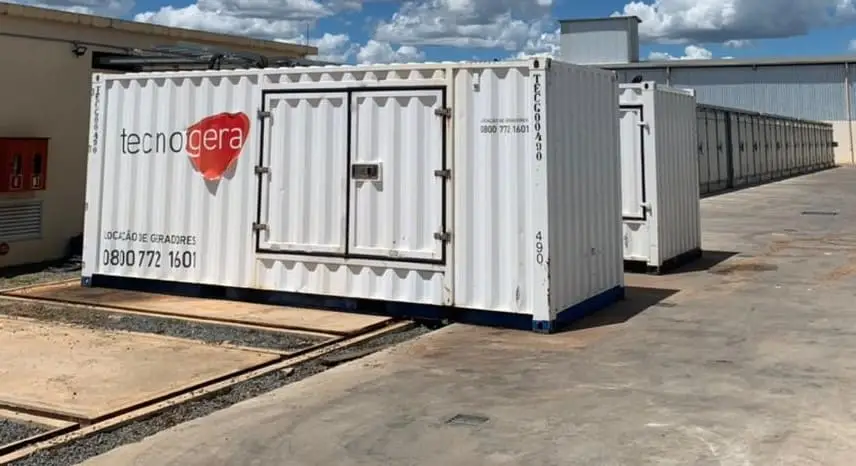
The free energy market allows for the buying and selling of electricity through direct consumer-supplier agreements, offering the freedom to choose your supplier. Two migration categories: companies ≥500kW (renewable sources only: SHP, wind, biomass, solar), companies ≥2,000kW (any power generation source). Organization: ACR (Regulated Contracting Environment 70% of the country’s energy) vs ACL (Free Contracting Environment). Key players: generation (concessionaires, IPPs, self-producers), trading (traders, free/special consumers), distribution (ANEEL concessionaires). Migration process: energy amount assessment, current cost analysis, selection of trading agent, comparative study of proposals, contract termination 6 months in advance. Timeline for limit reduction: 2021 (1,500kW), 2022 (1,000kW), 2023 (500kW). Tecnogera offers a platform to reduce peak energy costs by up to 15%.
Power Transformers: Types and How to Choose for My Business
Electrical transformers convert current and voltage values through windings and a core. Main types: residential autotransformers (110V/220V), electronic (low voltages), distribution (street poles), power (industrial substations), and low voltage (internal circuits). Choice depends on purpose, location, and specific business needs. Incorrect voltage use can permanently damage equipment.
Peak Hour Savings: Do It Smart

Peak hours are 3 consecutive hours of highest electricity consumption with elevated rates, regulated by ANEEL Normative Resolution No. 482/2012. Shutting down equipment is impractical for businesses. Standby generators offer the ideal solution, remaining on standby and automatically activating when needed, providing significant savings without affecting productivity.
The Importance of Load Banks for the Data Center Market
The largest data center in the world spans 102,000 m² in Chicago (one of 1,500 in the U.S.). Data centers require uninterrupted power for processing, storage, lighting, and constant climate control. Load banks are essential during commissioning, testing generators, transformers, UPS, batteries, air conditioning systems, and other critical equipment. Tecnogera supplied 3 MVA of power and 6000 MW in load banks for the ODATA data center (R$ 400 million) in Santana de Parnaíba. The Latin American market moved US$ 2.87 billion in 2017 (Brazil: 47.6%), with projections reaching US$ 4.37 billion by 2021, generating high demand for temporary power.
Rain and High Temperatures Drive Temporary Energy Market
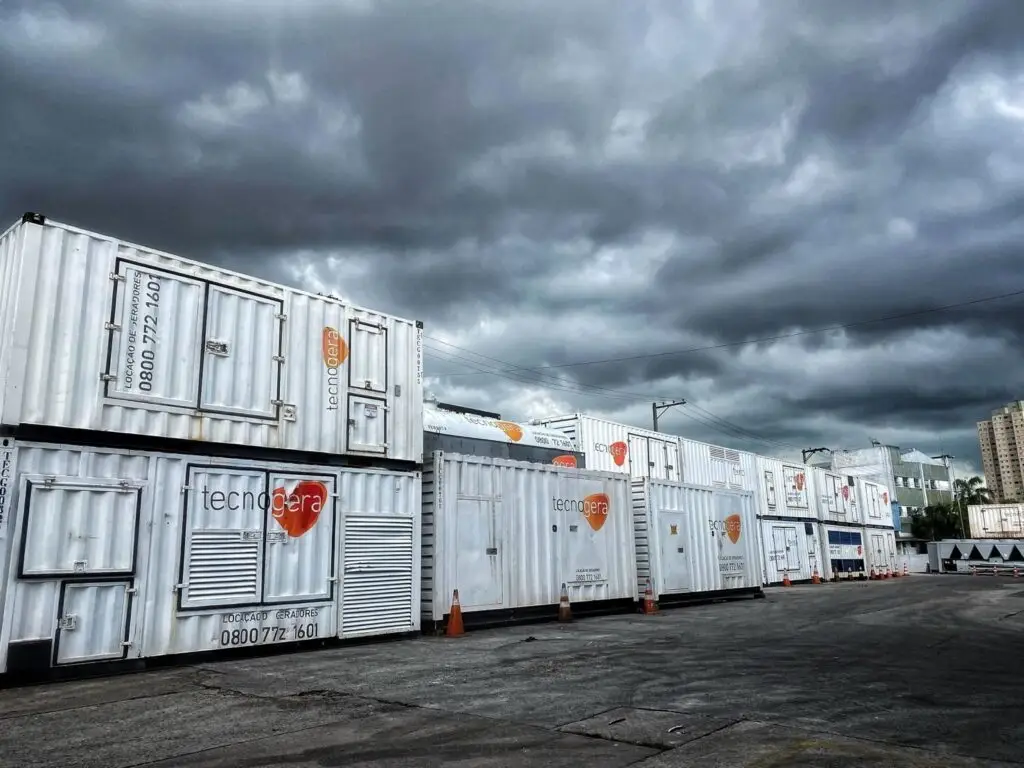
The International Research Institute for Climate predicts a 70% chance of El Niño in 2019, leading to dry weather in the Central-North and wet conditions in the South/Southeast with high temperatures and heavy rains. Storms cause power outages disrupting business operations. In retail, demand for temporary energy is expected to grow by 50% at the end of 2018 and the beginning of 2019. Rental becomes a viable alternative including generators, accessories, and 24-hour service, avoiding high acquisition costs.
The use of power generators in football stadiums
Blackouts in stadiums cause significant disruptions, as seen at Centenário (Argentina, 2012) and Pacaembu (March 2018, Santos vs. Corinthians match interrupted for 49 minutes). Tecnogera implemented an energy solution at Pacaembu, providing power generators for all games. Stadiums overload the electrical grid due to high lighting demands. During the Rio 2016 Games, Maracanã and beach volleyball arenas used power generators as required by the IOC. Power generators are well-suited for high power demands and offer maximum energy security.