The healthcare area is surrounded by risk conditions, many of which are present in facilities, equipment, materials, and the performance of its professionals. Traditionally, the development of an energy contingency plan is put on the back burner, even though it is known that sudden interruptions of the utility power grid, partial or total, can cause irreversible and disproportionate damage to the cause.The lack of electricity and its effects on healthcare activities can range from the inability to perform exams or procedures to more serious and intangible consequences.Normally, healthcare areas have superficial contingency plans regarding the failure of the utility grid or backup generator. It is believed that experienced and trained professionals are capable of resolving risk situations due to the lack of electricity. The fact is that, if there is no well-developed contingency plan, it is unlikely that the best practices will be applied in an emergency situation. Under these conditions, stress increases proportionally to the delay in the return of electricity.
Legislation and Standards for Emergency Power
In 1977, the Ministry of Health published Ordinance No. 400, of December 6, 1977 – approving and determining that every hospital must mandatorily maintain an emergency power source to ensure the continuity of vital equipment used in patient care when the normal supply is interrupted.In hospitals with more than 100 beds, the emergency power source must mandatorily be a generator set, with a minimum autonomy to operate for 24 uninterrupted hours and be inspected daily and operated for at least 30 minutes per week.ANVISA recognized the importance of electricity generators to sustain patients’ lives by issuing resolution (RDC 50/02), which considers emergency electricity an obligatory item in renovation or construction projects of new healthcare facilities.Energy Contingency Plan Structure
The Energy Contingency Plan serves to organize, guide, facilitate, expedite, and standardize the necessary actions for cases of main power failure.Essential Guidelines of the Plan
A) Event Identification: Instruct employees on how to identify the occurrence of an undesirable event or imminent risk;B) Diagnostic Actions: Detail the necessary actions according to the problem diagnosis. For example, even if the main generator set has started in the absence of the main grid, the company responsible for equipment maintenance should be contacted to activate its on-call team and perform the necessary predictive actions.C) Energy Security Plan: Suggest an energy security plan if the own generator does not assume in grid failure load. This plan may involve hiring a service provider with strict SLAs for service. This provider will be responsible not only for supplying a generator set with capacity equal to or greater than the hospital’s load but also for all logistics of delivery, installation, and commissioning of the offered generator set.D) Communication Procedures: Provide guidance on communication procedures for internal and external reports.Generator Rental for Healthcare Units
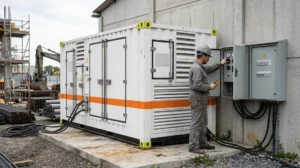
Currently, it is very common for healthcare units to opt for renting power generators. In this contract model, healthcare units transfer all responsibilities for preventive and corrective maintenance, insurance, service SLA, and other obligations to the service provider.Preparing for uncertainties is an important step for the operational continuity of hospital institutions that must be prepared to face crises, such as the Coronavirus (COVID-19) for example. The Energy Contingency Plan is a rational and analytical process that enables the institution to anticipate potential problems by adopting feasible measures and correct solutions to minimize the impacts of power outages.As processes and risks vary over time, it is necessary for Energy Contingency Plans to be updated periodically, including employee training, minimizing possible negative consequences.Read also: how to test an electrical contingency plan