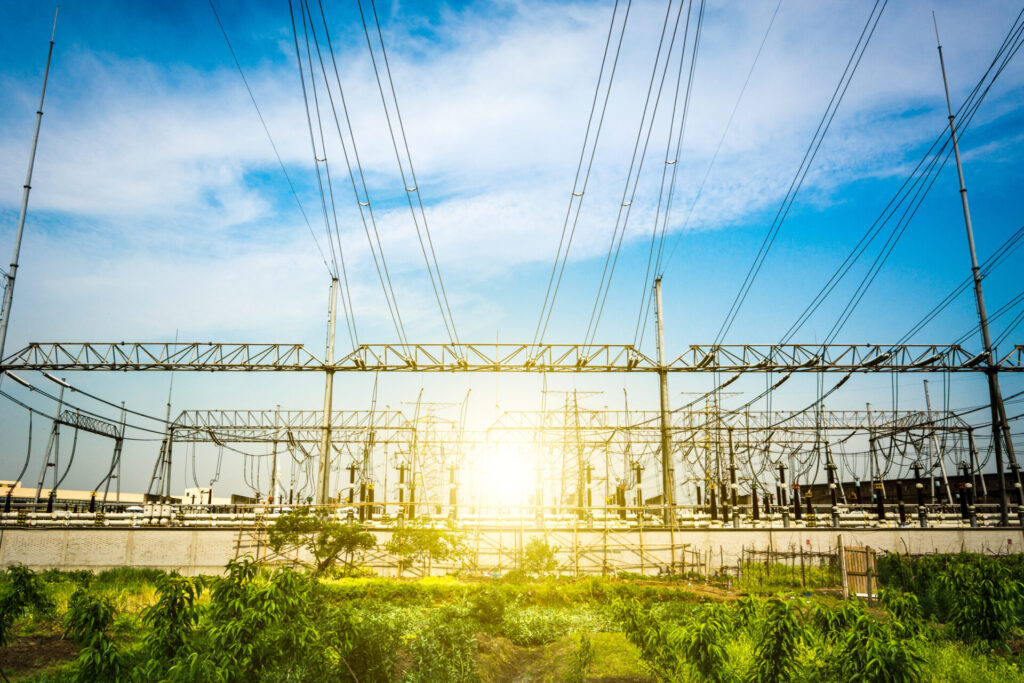
Electricity distribution is the final stage in the process that delivers electricity from generating plants to end consumers, such as homes, businesses, industries, and establishments in general.
This phase is responsible for adjusting the voltage to safe levels compatible with the equipment we use daily.
In Brazil, this service is provided by energy concessionaires, operating in specific concession areas, managing networks, and ensuring electricity arrives with quality and safety. Without efficient distribution, all the country’s generation potential would be useless.
This complex infrastructure lights up cities and drives the economy of countries. Understanding its operation is crucial to grasp the importance of having a stable supply and, importantly, how to protect against potential energy supply failures.
How does electricity distribution work?
The Brazilian electrical system is one of the most extensive and complex in the world, shaped by decades of development and the country’s continental dimensions.
Initially, Brazil had isolated systems, where each region generated and consumed its own energy, making the supply vulnerable and inefficient.
Over time, these systems connected, culminating in the creation of the National Interconnected System (SIN). This evolution was heavily influenced by Brazilian geography, which concentrates immense hydroelectric potential in basins far from major consumption centers, requiring robust transmission infrastructure.
Today, this interconnection allows energy generated in the North to supply the Southeast, and vice versa, optimizing resources and increasing system security.
This complex network is the backbone that ensures electricity crosses the country before reaching the final distribution stage.
How is electricity distribution carried out?
Electricity distribution is the final link that connects all transmission infrastructure to millions of consumers.
It’s a technical process involving the reduction of extremely high voltage levels from transmission lines to safe and usable levels, ensuring energy arrives at the correct voltage.
This journey comprises well-defined stages and uses a series of essential equipment to make everything work.
What are the stages of electricity distribution?
Below, we detail each of these phases so you understand exactly how electricity travels to your home’s outlet.
Stage 1: Generation
It all starts at plants (hydroelectric, thermal, wind, solar), where energy is produced at high voltage to minimize transport losses. The diversity of our energy matrix is crucial at this stage.
Stage 2: Transmission
Energy leaves the plants and travels hundreds or thousands of kilometers through large towers and electricity transmission cables. This network operates at extremely high voltages (above 230,000 volts) to transport large energy blocks efficiently.
Stage 3: Distribution
As it approaches consumer centers, energy passes through distribution substations.
In these, large distribution transformers reduce the voltage to levels suitable for primary distribution (medium voltage) and subsequently to secondary distribution (low voltage), which powers our homes and businesses.
What are the types of electricity distribution?
Electricity distribution is segmented by voltage levels to meet different types of consumers.
Primary distribution, at medium voltage (usually from 13.8 kV to 34.5 kV), feeds industries, hospitals, and large commercial centers, which demand a higher energy load.
Meanwhile, secondary distribution operates at low voltage (127V, 220V, or 380V) and is the network that reaches street poles and from there to homes and small businesses. This voltage reduction is done by smaller transformers, installed on the poles themselves or in underground chambers.
This segmentation ensures each consumer unit receives energy precisely tailored to its needs, optimizing the system and ensuring installation safety.
The quality of energy delivered at each of these levels is monitored by the concessionaires.
Forms of electricity distribution
Energy distribution networks are designed in different ways to adapt to the characteristics of each locality.
In urban areas, where population and load density is high, systems are more robust and often underground to optimize space and reduce visual pollution.
In suburban areas, a mixed system is common, with overhead networks predominating but with a structure planned to support expansion. The proximity between consumers allows for a more concentrated network than in rural areas.
In rural zones across the country, distribution is a major challenge. Networks are predominantly overhead and very extensive, covering long distances to serve few consumers. This makes them more vulnerable to weather conditions, such as storms and falling trees, resulting in more frequent energy supply failures.
National Interconnected System (SIN)
The National Interconnected System (SIN) is the infrastructure that connects virtually all of Brazil’s energy generation and transmission facilities. It is responsible for coordinating and controlling electricity production and transport in real-time.
The great advantage of SIN is the optimization of energy resources. It allows energy generated in a resource-abundant region (such as rains in Southern hydroelectric plants) to be sent to another facing scarcity (like lack of winds in Northeastern wind farms), ensuring the security and efficiency of the Brazilian electrical system.
This centralized management, operated by ONS, reduces the risk of widespread blackouts, helps modulate energy costs, and provides greater reliability to the entire country. Thanks to this interconnection, Brazil can strategically leverage the diversity of its energy matrix.
Brazilian energy matrix and its relationship with distribution
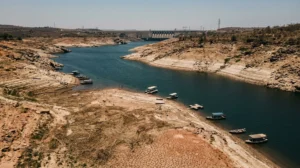
The energy matrix of Brazil is one of the cleanest in the world, with a strong predominance of renewable sources. According to the Energy Research Company (EPE), in 2022, hydroelectric plants accounted for more than 60% of the installed generation capacity, being the country’s main source.
In recent years, there has been significant growth in other renewable sources, such as wind and solar photovoltaic. This diversification is positive as it reduces dependence on rainfall but also imposes new challenges on transmission and distribution, as many of these plants are located far from load centers.
Integrating these new sources requires continuous investments in network expansion and modernization. The intermittency of sun and wind also demands more dynamic management of SIN to ensure the stability and quality of energy reaching the end consumer.
Common problems in electricity distribution
Despite its robustness, the distribution system is subject to problems that can cause interruptions.
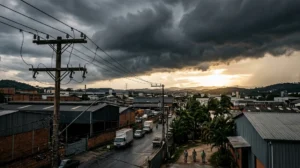
Energy supply failures are often caused by climatic factors such as lightning and storms, accidents like vehicle collisions with poles, equipment failure, or scheduled maintenance by energy concessionaires.
These interruptions, even if brief, cause significant disruptions, especially for businesses, where activity stoppages result in production losses, equipment damage, and financial setbacks. Energy quality issues, such as voltage variations, can also compromise operations.
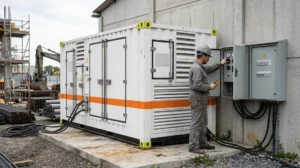
To prevent network mishaps from halting your operation, having an energy backup plan is essential and increasingly strategic. Tecnogera offers robust and reliable power generators that automatically activate in case of failure, ensuring your business continues without interruptions.
Impacts of distribution failures on businesses
Energy supply failures pose a critical risk to the business sector.
Sectors such as industries, hospitals, data centers, and retail are extremely vulnerable, as any interruption can mean million-dollar financial losses, as well as risks to safety and life. A study by the National Confederation of Industry (CNI) has already pointed out that poor energy quality costs the productive sector billions annually.
The impacts go beyond production stoppages. They can include:
- Loss of unrecoverable data.
- Discard of raw materials in continuous processes.
- Damage to sensitive electronic equipment.
- Loss of credibility with customers, market, and competitors.
The lack of uninterrupted power is a direct obstacle to competitiveness.
Tecnogera goes beyond simple equipment rental, acting as a strategic partner for your business.
Our specialists develop customized energy backup projects, ensuring the continuity, safety, and quality of energy your operation requires to thrive without setbacks.
Regulation and future of electricity distribution
The energy distribution sector is regulated by the National Electric Energy Agency (ANEEL), which sets the rules for concessionaires and consumer rights.
The future points to a profound digital transformation, with the implementation of smart grids and intelligent metering systems.
These innovations will enable more efficient network management, automatically identifying failures and optimizing energy flow.
Another major trend is distributed generation, where consumers themselves (residential and business) generate their energy, mainly via solar panels, and can inject the surplus into the grid.
In this dynamic scenario, flexibility and energy security become even more vital. Tecnogera positions itself as a partner for this transition, providing uninterrupted energy solutions that integrate with complex projects, ensuring stability and serving as an energy backup in an increasingly decentralized system.
Find the Best Energy Solutions at Tecnogera!
Ensuring a stable and quality energy supply is not a luxury but a strategic necessity for any company seeking growth and reliability. Public grid failures are a reality, but their impacts on your business don’t have to be.
Tecnogera is a leader in temporary energy solutions and offers a complete portfolio ranging from power generators to transformers, load banks, and all the technical support of a specialized team for customized projects. Our mission is to ensure your operation never stops.
Don’t leave your company vulnerable to unforeseen events. Rely on the expertise of those who understand uninterrupted energy and are ready to offer the ideal solution for your demand, with 24/7 support and state-of-the-art equipment.