For energy to reach homes, hospitals, schools, businesses, and industries, it needs to be transported from its generating source through transmission lines.
Moving from point to point, the electrical energy travels thousands of kilometers in alternating current until it reaches its final destination.
How the power transmission line works
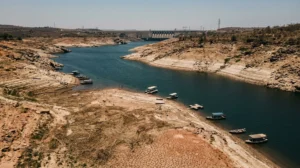
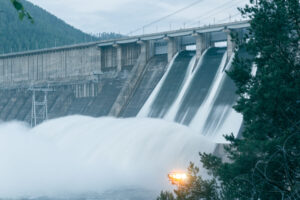
The first step is energy generation: in Brazil, almost 70% of electrical energy is produced by hydroelectric plants (like Itaipu) which transmit it through high-resistance cables.
For this, a very high electrical voltage must be generated, avoiding waste along the way.
This high-voltage energy travels through the power grid wires, passing through towers and power substations that, in turn, adjust the voltage for the end consumer.
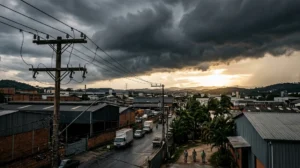
The substations send this energy to the cities, through the electrical wiring that passes through the poles we see on the streets.
Components of the electrical power transmission system
The entire electrical power transmission system can be understood by analyzing three main components: towers, insulators, and substations.
The main function of the towers is to raise the transmission lines to a safe height, mainly to avoid any type of contact with people, vehicles, animals, or even the vegetation of a given location.
These towers are designed and installed to withstand the force of winds and even small earthquakes.
The insulators, in turn, prevent the energy from being dissipated and support the weight of the cables that transmit the electrical energy.
They are usually made of polymers, ceramics, or glass.
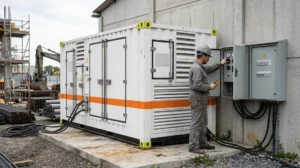
Finally, the substations are the places where the energy is retransmitted and adjusted for final use, that is, the current arrives at a point with a very high voltage (unsuitable for application) and the substation reduces the voltage to a standard that allows safe and efficient use.