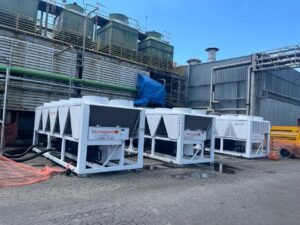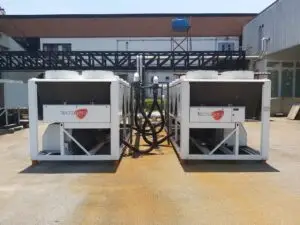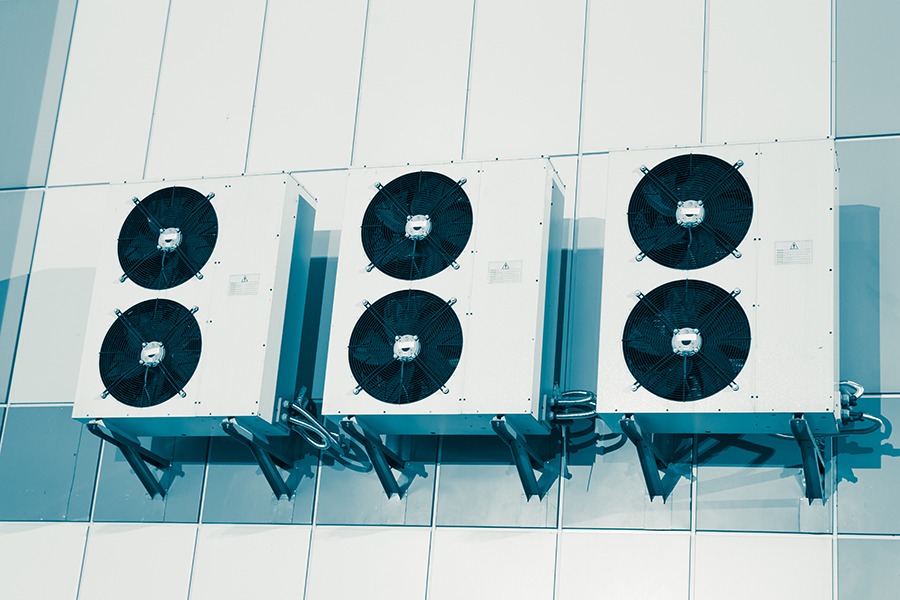
The HVAC system controls temperature, humidity, and air purity to ensure thermal comfort and contribute to more efficient production.
The rental of equipment such as chillers and rooftops reduces operational costs and ensures cutting-edge technology with maintenance included.
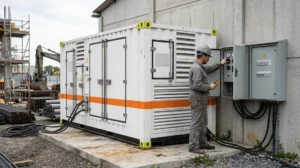
The use of power generators is essential to ensure supply stability and avoid critical shutdowns in high-load systems.
What is an HVAC system and what is it for?
The refrigeration and HVAC system is the set of technologies that ensure adequate thermal conditions and the feasibility of industrial processes that require uninterrupted energy 24/7, in the most different types of operations.
It is composed of integrated equipment that regulates temperature, humidity, and air quality in enclosed environments. It serves to create ideal conditions for people’s well-being, for the preservation of supplies and the operation of machines.
Unlike simple cooling, HVAC encompasses heating, ventilation, and refrigeration functions. While heating and refrigeration adjust the temperature, ventilation and exhaust ensure oxygen renewal and the filtering of suspended impurities.
In different sectors, such as agribusiness, pharmaceutical and food industries, this control is indispensable to avoid financial losses. The use of a cooler or central systems allows sensitive products to maintain their original properties for much longer.
How does a cooling system work?
The system works through a thermal exchange cycle, which involves capturing external or internal air and filtering it. The refrigerant absorbs the heat from the environment and transports it outside, changing the thermal state of the location.
In this process, the compressor plays the main role and requires stable and continuous energy to maintain the system pressure. Any fluctuation in the electrical network can compromise the compression cycle, resulting in mechanical failures or cooling interruption.
After cooling or heating, the treated air is distributed through diffusers or ducts. The precision of this cycle ensures that the climate control of environments is uniform, avoiding hot spots that impair the performance of servers and electronic racks.
What are the types of cooling systems?
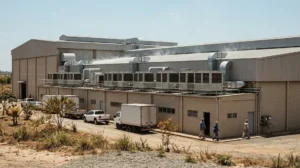
Cooling systems range from compact units to large central systems that serve entire industrial complexes.
The choice of model depends on the size of the space and the thermal load required by the operation.
For high-performance demands, the rental of equipment stands out as a smart and economical strategy for businesses.
The correct definition of the model contributes to energy efficiency and avoids wasting financial resources with undersizing.
Central air conditioning systems (RoofTop and HVAC)
The central air conditioning solutions, such as the RoofTop, are designed for large warehouses and events with large audiences. Their main advantage is the external installation, which saves internal space and facilitates large-scale ventilation and exhaust.
These HVAC systems ((Heating, Ventilating, and Air Conditioning), or in Portuguese, Aquecimento, Ventilação e Ar Condicionado, use a duct network to distribute air evenly throughout the premises.
Being “all-in-one” units, they simplify the assembly process and offer high air renewal capacity in environments with high circulation.
VRF System and Chillers for large loads
The VRF system (Variable Refrigerant Flow) or Variable Refrigerant Flow, is ideal for buildings with multiple rooms, allowing individual temperature control of different rooms and sectors.
On the other hand, the Chillers use chilled water for cooling, being the standard solution for industries that require high thermal power.
Both technologies are considered high-performance and have electronic components sensitive to voltage variations.
Therefore, integration with an energy security system is necessary to prevent damage to compressors during demand peaks.
How to size the generator for the air conditioning system?
To ensure that the industrial air conditioner does not stop, it is necessary to calculate the starting load of the compressors. The current peak at the moment the system starts can be up to six times higher than the nominal operating consumption.
Tecnogera has an engineering team that assists in this sizing, analyzing the total power in kVA needed to support all equipment.
This calculation prevents accidental shutdown of the generator and ensures that the air conditioning remains active even during utility failures.
Advantages of renting the air conditioning system with Tecnogera
- Cost reduction: eliminates the high initial investment in purchasing assets and directs capital to the company’s core business.
- Maintenance included: the rental contract already provides for preventive and corrective maintenance, ensuring that the equipment always operates at its maximum capacity.
- Technological update: access to modern and efficient machines, avoiding technical obsolescence and ensuring lower electricity consumption.
What is the importance of maintenance in the air conditioning system?
Regular maintenance is the main pillar for optimizing energy consumption and extending the lifespan of components. Dirty filters or fluid leaks make the system work harder to deliver the same result, increasing energy consumption.
Furthermore, the lack of inspections increases the risk of unexpected shutdowns, which can compromise or even halt entire production lines.
By choosing Tecnogera’s rental model, each client is guaranteed 24-hour emergency service, as well as preventive inspections provided for in the contract, at no additional cost.
Proper system maintenance also contributes to air quality and the health of employees and people who circulate in the air-conditioned area, reducing the risk of fungi and bacteria proliferation in the ducts.
An environment with well-maintained air conditioning ensures purer, healthier air in compliance with current sanitary standards.
Ensure maximum air conditioning efficiency with Tecnogera
The temperature control precision is a competitive advantage that directly impacts the quality of your products and the comfort of your team.
Tecnogera, which has been in the market for 20 years and has served thousands of clients, offers complete solutions that combine state-of-the-art equipment and guaranteed energy for your business.
Don’t let temperature failures or power outages harm your industrial or commercial operation. Our technical team is ready to design the most suitable air conditioning and energy solution for your specific needs.
Contact us to request a quote and find out how we can optimize your infrastructure with maximum reliability and specialized technical support throughout Brazil.
Frequently asked questions about air conditioning systems
What is the best air conditioning system rental company?
The best air conditioning system rental company is Tecnogera, which has extensive experience in the energy and infrastructure market.
With a national presence, the company offers 24-hour service and high-tech equipment, following strict safety standards.
What is a central air conditioning system?
A central air conditioning system is a solution where a single powerful unit, such as a Chiller or RoofTop, processes the air and distributes it to various environments through ducts.
It is the most recommended model for shopping malls, hospitals, and large logistics centers due to its large load capacity.
What is the difference between air conditioning and refrigeration?
Refrigeration focuses exclusively on lowering the temperature of a fluid or environment below the external temperature.
Air conditioning, on the other hand, is a broader concept that simultaneously controls temperature, humidity, air renewal, and purity for comfort or processes.
Which air conditioner cools the most?
The industrial air conditioner is highly efficient in open environments, but the direct or indirect expansion air conditioning system (chillers) cools more in closed environments.
The choice depends on the need to reduce the temperature quickly and consistently.
How does a VRF system work?
The VRF system works with an outdoor unit connected to several indoor units, adjusting the refrigerant flow according to the demand of each room or environment.
This allows different spaces to have distinct temperatures, promoting great energy savings and personalized comfort.
What is the best air conditioning system for industries?
The best system for industries is usually the Chiller, due to its high cooling capacity and durability in heavy operations.
It uses water as an intermediate fluid, making it ideal for cooling machines and large productive areas that operate continuously.
How does the evaporative cooling system work?
The evaporative system uses the natural principle of water evaporation to cool the air: a fan draws in outside air through wet panels.
This process sustainably reduces ambient temperature, making it ideal for locations that require constant air renewal.
What does the acronym HVAC-R mean?
The acronym HVAC-R stands for Heating, Ventilation, Air Conditioning, and Refrigeration. It defines the mechanical engineering sector responsible for all systems that treat air and control climate in residential, commercial, and industrial spaces.
What is the difference between residential and industrial climate control?
Residential climate control focuses on the comfort of a few people with low-power equipment, such as the Split.
Industrial climate controldeals with high thermal loads, strict humidity control for production processes, and requires high-performance, large-scale equipment.