The types of electric energy differ according to the sources used for their generation. The main ones are renewable, such as solar, wind, and hydroelectric, and non-renewable, such as fossil fuels and nuclear. Each has its own generation method and characteristics, as will be presented below.
What are the types of electric energy?
Electric energy can be generated from various sources, divided into renewable and non-renewable. Knowing their characteristics is essential to understand the energy matrix and its applications.
- Wind energy: generated by the force of the winds, which move the blades of large turbines, called wind turbines.
- Solar energy: produced from sunlight, captured by photovoltaic panels.
- Hydroelectric energy: uses the force of river water to turn turbines, being the main source in Brazil.
- Biomass energy: originates from the burning of organic matter, such as sugarcane bagasse and agricultural residues.
- Geothermal energy: this type of energy harnesses the heat from the Earth’s interior to generate steam that drives turbines.
- Tidal energy: uses the movement of tides and sea waves to generate electricity.
- Nuclear energy: generated from the fission of uranium atoms, releasing a large amount of heat.
- Fossil fuel energy: produced by burning coal, oil, and natural gas.
Wind energy
Wind energy uses the power of the wind to turn wind turbines, generating clean electricity. Its viability depends on constant winds and its main advantage is the low environmental impact during operation.
The challenge is intermittency (only generates with wind) and the visual impact of the turbines. It is common in large wind farms, but also serves industries and rural properties that need a complementary source.
In Brazil, according to data from the National System Operator (ONS), wind energy accounted for, at the end of 2024, 10.9% of the Brazilian electricity matrix. The expectation is to close the year 2025 representing 13.6% of the Brazilian electricity matrix. This growth is expected to be driven by new wind projects, such as offshore parks.
Solar energy
This source uses the sun’s radiation, captured by photovoltaic panels, to generate electricity directly. It is a clean and inexhaustible source, but its generation is intermittent as it depends on daylight.
Its application is very versatile, being ideal for homes and small businesses with rooftop systems, as well as large solar plants that supply entire cities and industrial complexes.
Solar energy is the second largest source in Brazil and represents 22% of the Brazilian energy matrix.
Hydroelectric power
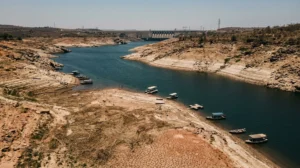
Hydroelectric power generates electricity using the force of water from dammed rivers to move large turbines. Its benefit is the low operational cost, but the main challenge is the socio-environmental impact of dams, including:
Flooding of ecosystems and loss of biodiversity: with the creation of reservoirs, large areas of native vegetation are flooded, destroying terrestrial habitats and altering the natural cycle of aquatic species, such as the interruption of fish migration.
Displacement of traditional communities: the construction of dams often forces the removal of riverside populations, indigenous peoples, and even small farmers from their lands, disrupting their ways of life, cultures, and sources of livelihood.
Due to its high generation capacity, it is used for large-scale supply. It is the basis of the Brazilian energy matrix, powering homes, businesses, and large factories throughout the country.
Data indicates that hydroelectric power represents 44.8% of the installed capacity in the National Interconnected System (SIN).
Biomass energy
Generated by the burning of organic materials, such as agricultural waste and wood, biomass heats water and produces steam to drive turbines. Its benefit is the reuse of waste as an energy source.
The challenge lies in the logistics of transporting and storing the raw material. It is widely used by sugar and alcohol mills and pulp industries to ensure energy self-sufficiency. The advantage is that the surplus produced can be sold.
According to the Ministry of Mines and Energy (MME), biomass is expected to represent, by the end of 2025, 8.5% of the Brazilian energy matrix.
Geothermal energy
The geothermal source harnesses the heat from the Earth’s interior to generate electricity. The hot steam from underground is used to continuously spin turbines, making it a very reliable energy source.
Its advantage is operating 24 hours a day, but its installation is only feasible in locations with specific geological activity. It is used on a large scale to supply power grids or heating systems.
Tidal energy
Tidal energy uses the force of the movement of tides and sea waves to generate electricity. Its great advantage is predictability, as tides are constant and easily calculated.
The biggest challenges are the high cost of implementation and maintenance of equipment in a marine environment. Its application is still restricted to large experimental plants in countries with favorable coastlines.
In the country, even with great potential for generating this type of energy, the participation of the modality is practically nil and there are no large-scale projects in operation.
According to data from BrasilEscola, a plant for generating tidal energy, at the port of Pecém, in Ceará, was installed in 2012, but was halted shortly after, being resumed in 2017.
Nuclear energy
Nuclear energy is generated from the fission, or splitting, of uranium atoms. This process releases a huge amount of heat to boil water and move turbines, without emitting greenhouse gases.
Its main advantage is the immense generation capacity, but the challenges are operational safety and nuclear waste management. It is used in large plants for centralized power grid supply.
This type of energy is expected to represent, at the end of 2025, 0.8% of the installed capacity of the SIN.
Fossil fuel energy
This energy is generated in thermoelectric plants by the burning of non-renewable resources, such as coal, oil, and natural gas. Its advantage is high reliability and the ability to be quickly activated.
The main disadvantage is the high environmental impact in the extraction sites and surroundings, emission of polluting gases, which cause air and water pollution and global warming.
Even with these impacts, energy generated by fossil fuels is used worldwide to ensure the security of the electrical system, serving all types of consumers and demands.
In Brazil, this type of energy is still very present. Data from BrasilEscola indicate that 36% of the Brazilian energy matrix is made up of fossil fuels, such as oil and coal.
Transmission and distribution of electric energy
After generation, the energy has its voltage increased to be carried over long distances in transmission lines, which minimizes losses. Upon reaching urban centers, its voltage is reduced in substations.
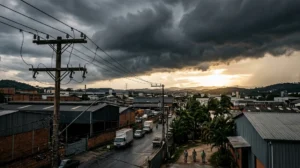
The final stage is distribution, which carries low-voltage energy through poles and cables. This is how electricity safely reaches homes, businesses, and industries for final consumption.
What is the difference between non-renewable and renewable energy sources?
The renewable energy sources use natural resources that regenerate quickly or are inexhaustible. The main examples are the sun (solar), wind (wind), river water (hydroelectric), and biomass.
Non-renewable sources exploit finite resources that do not replenish on a human scale, such as oil, coal, and natural gas. Their use causes greater environmental impacts and depletes natural reserves.
The distinction between renewable and non-renewable sources has been the central point of the debate on energy security and climate change in the 21st century. Globally, non-renewable sources, mainly oil, coal, and natural gas, still account for about 80% of primary energy consumption, also being the main source of greenhouse gas emissions, as shown by the Epe survey. This massive dependence has motivated global agreements like the Paris Agreement, which aims to accelerate the transition to a low-carbon economy.
In this context, Brazil stands out positively. According to the National Energy Balance (BEN), the Brazilian electricity matrix is one of the cleanest in the world, with more than 80% of electricity generated from renewable sources. Hydroelectric power, with giants like the Itaipu plant (one of the largest in the world), is the historical base, but diversification has been rapid.
Northeast Brazil, for example, has become a global wind energy hub, with parks that take advantage of the region’s constant winds. Solar energy is also experiencing exponential expansion, both in large plants and in distributed generation (rooftops of houses and businesses), doubling its installed capacity annually in recent years.
For comparison purposes, China’s electricity matrix, although it is the world leader in renewable investments, still relies on more than 60% coal. In the United States, natural gas and coal account for about 60% of electricity generation, while renewables (including hydroelectric) are around 20%.
A notable example of transition is Germany, which, even with less favorable solar and wind conditions than Brazil, implemented an aggressive policy (“Energiewende”) that raised the share of renewables to more than 50% in its electricity matrix, showing that change is a strategic decision. These data highlight Brazil’s competitive advantage and the global urgency in adopting more sustainable sources.
Advantages and disadvantages of electric energy
The main advantage of electric energy is its versatility, being essential for the functioning of modern society, from industry to domestic comfort. It is the driving force of technological and economic development.
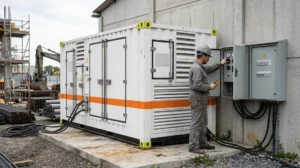
The disadvantage lies in the environmental impact of generation, whether due to pollution from fossil sources or alteration of ecosystems by hydroelectric plants. To ensure continuity, generators are crucial in contingency plans.
What are the common types of electric energy in Brazil?
Brazil’s energy matrix is mostly renewable, led by hydroelectric power, due to the abundance of rivers in the country. In recent years, wind and solar sources have grown exponentially, with new parks and production plants, favored by government incentives and private investments.
While hydroelectric power supplies the entire country through the National Interconnected System (SIN), biomass is strong in the sugarcane sector for self-consumption. Wind and solar energies complement generation, mainly in the Northeast region of the country, which is a leader in the production of renewable energy.
According to 2024 data from the National Electric Energy Agency (Aneel), the Northeast region has the largest installed wind energy capacity in the country, with 93% of the installed projects.
Understand the differences between conventional and incentivized energy
The conventional energy comes from large plants, such as hydroelectric and thermoelectric, being the most common in the captive market. Meanwhile, incentivized energy is generated from renewable sources, such as solar, wind, and biomass.
As a government incentive, incentivized energy receives discounts on network usage tariffs. This policy, regulated by the National Electric Energy Agency (ANEEL), attracts companies to the Free Energy Market, seeking to reduce costs and be more sustainable.
Trends in electric energy worldwide
The main trend is the energy transition global shift to renewable sources, aiming to reduce greenhouse gas emissions. Distributed generation, with solar panels on rooftops, is also on the rise in Brazil and worldwide.
Other important trends are the digitization of networks (smart grids) and the development of storage technologies, such as batteries, to ensure the stability of the electrical system.
Find complete energy solutions for your business at Tecnogera!
To ensure the continuous operation of your business, whether in network failures or to meet demand peaks, a reliable energy partner is essential to maintain your company’s productivity and security.
Tecnogera offers customized solutions with a modern fleet and specialized team to deliver the energy you need. If your company seeks efficiency and a robust contingency plan, we have the solution.
Ensure the power for your growth without interruptions. Count on Tecnogera’s generator rental and avoid losses caused by power outages