

Major wholesale chains require temporary power solutions

The year 2016 was challenging for retail. Historical data from the Monthly Trade Survey by the Brazilian Institute of Geography and Statistics – IBGE, indicated a 6.4% decline from January to November 2016. This downturn affects the entire supplier network in this chain, including temporary power suppliers, which are essential in.
Pre-salt production record boosts temporary power market
At the beginning of March, the National Agency of Petroleum, Natural Gas and Biofuels (ANP) announced that in January, pre-salt production hit a record, totaling over 1.5 million barrels of oil per day. This result meant that production from pre-salt wells accounted for 47% of Brazil’s total output.
Opportunities for Temporary Power in Construction
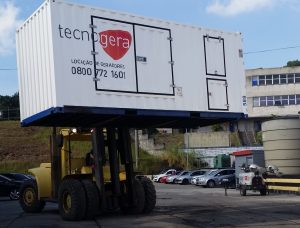
The years 2015 and 2016 were quite challenging for the construction industry. With the country’s recession deepening, high property inventory, and a large number of apartment and house returns to builders, the market experienced a slowdown.
March started with a yellow tariff flag
Due to low reservoir levels, ANEEL set the yellow tariff flag for March, with an extra charge of R$ 2.00 for every 100kWh consumed. Despite heavy rains at the beginning of the year, it was necessary to activate thermal power plants, which have higher operational costs. Since February, the yellow flag rate is R$ 2.00/100kWh, while the red flag level 1 costs R$ 3.00/100kWh and level 2, R$ 3.50/100kWh.
Power for the show to go on
The year 2017 will feature a diverse lineup of shows and musical concerts catering to all tastes. In addition to the two major festivals – Lollapalooza (in March in São Paulo) and Rock in Rio (in September in Rio), concerts by artists like Elton John & James Taylor, Justin Bieber, Bryan Adams, Ed Sheeran, and Sting are already confirmed to take place in major Brazilian capitals.
Different types of power generators and the best fit for your needs
January has begun, bringing with it the season of heavy rains, especially in the southern and southeastern regions of the country. With the rains come sudden power outages, which can cause disruptions and losses. To prevent or minimize these losses, the use of power generators is recommended to maintain the.
Technological Advances and Temporary Power
The supply of power through diesel generators began to strengthen in the 1970s, bolstered by the country’s infrastructure investments at the time. Since then, generators have been key allies in providing power, especially in regions not connected to the National Interconnected System (SIN).
The high cost of electricity and its impact on Brazilian industry
Electricity is essential and strategic for the operation of industries across the country and in various sectors. However, its cost significantly impacts business performance in the country. Data from 2015 by the Federation of Industries of the State of Rio de Janeiro (Firjan) shows that Brazilian energy is the third most expensive in the world.
Opportunities in the Temporary Power Market in Argentina
The election of President Mauricio Macri in Argentina not only signals the potential for improved quality of life for its citizens. The rise of a liberal-leaning politician to the highest executive office in Argentina also suggests a more stable macroeconomic environment. One sector exploring the possibilities is temporary power supply, as the neighboring country faces a significant energy deficit.
Temporary Power and the Drought in the Northeast
The water reservoir situation in Northeast Brazil is critical, with low storage levels affecting power generation. With forecasts of little rain, reservoirs like Sobradinho (6.1%), Três Marias (14.4%), and Itaparica (15.5%) are operating at reduced capacity. The water shortage could halt hydroelectric plants and even impact thermoelectric plants, which rely on water for cooling. Emergency solutions such as reservoir transposition, using power generators to power water pumps, become necessary to ensure supply.