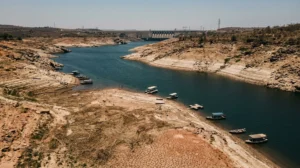
The heavy rains at the beginning of the year, especially in the southeast region, were not enough to keep reservoir levels high and the tariff flag green.
As a result, at the end of February, the National Electric Energy Agency (ANEEL) announced that the flag color would be yellow in March.
The adoption of the yellow flag occurs when conditions for power generation are not entirely favorable, and it is necessary to activate thermal power plants, which are more expensive to operate.
With the change, residential, commercial, or industrial consumers will pay an extra charge of R$ 2.00 for every 100 kilowatt-hours (kWh) consumed.
Still in February, on the 14th, ANEEL had already announced an adjustment in the extra charge for the yellow flag, which increased from R$ 1.50 to R$ 2.00 for every 100 kilowatt-hours (kWh) consumed.
The red flag, level 1, remained at R$ 3.00 for every 100 kWh, and at level 2, it dropped from R$ 4.50 to R$ 3.50 for every 100 kWh.
Created in 2015, the tariff flags were classified as green, yellow, and red.
In green, the conditions for production are most favorable, and there is no need to use thermal plants, so there is no extra charge on the electricity bill.
In yellow, thermal plants are partially activated, and in red, there is greater use of energy from thermal power plants.
Even though the extra charge seems small, the impact is significant for the Brazilian industrial sector, which uses a large amount of energy in its production lines.
The result is higher bills and lower competitiveness.
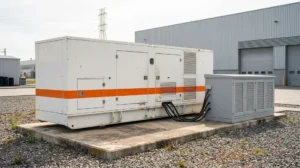
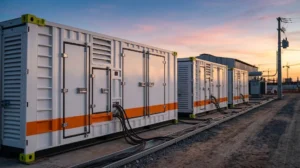
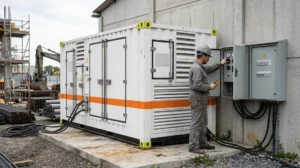
In many cases, the use of temporary energy supplied by power generators can be a great ally.
Tecnogera, with over 10 years of market experience, offers tailored solutions for energy supply to various sectors.