

Technology for more efficient power generators
The use of temporary power through generators began to increase in the 1970s, a time when Brazil heavily invested in infrastructure. Diesel-powered, these engines were noted for their robustness, but at the cost of high fuel consumption and pollutant emissions. With technological advancements, modern generators have become more efficient, economical, and sustainable, meeting current demands for energy efficiency and reduced environmental impact.
The Impact of Power Outages on Brazilian Businesses
Power supply interruptions are a major concern for businesses across Brazil. A recent survey released by the National Confederation of Industry (CNI) revealed that 67% of companies using electricity in their operations suffered losses due to power outages.
Power Outages in Adverse Situations: How to Manage
After a year marked by a water crisis, 2016 began with heavy rains, raising reservoir levels, especially in the South and Southeast regions of the country. The rains improved power generation conditions, minimizing the risks of an energy crisis, but they do not eliminate the risks of isolated outages. Keeping a power generator on standby and creating an emergency plan are essential measures for businesses, hospitals, and other establishments that cannot afford interruptions in power supply.
Load bank for testing diesel turbo generators
The load bank for testing diesel turbo generators is a high-standard system that prevents issues related to the activation of the power generator equipment. This device can be reactive or resistive, capable of performing quality tests on power sources with complete safety and without compromising electrical voltage. The equipment is essential for verifying the safety and performance of turbo generators, conducting precise measurements of power, voltage, current, and other critical parameters.
Using Power Generators as a Strategy for a Flawless Event
São Paulo is considered the event capital. Whether small, large, or mega, events drive the city and attract millions of tourists to the São Paulo capital every year. Perhaps the most delicate task is ensuring the power supply, as the entire lighting, sound, and air conditioning infrastructure must be guaranteed.
The use of temporary power in data centers
Mobile data traffic continues to surge. Market forecasts indicate that by 2018, traffic will reach 1,182.5 exabytes globally. With this volume, the demand for cloud storage strengthens as an irreversible trend, driving the need for data centers. In Brazil, it’s estimated that 30 data centers are operational, a number significantly lower than the approximately 1,500 in the U.S. market, indicating substantial growth potential.
In which situations is it necessary to have a mini power generation plant
In most parts of the country, having electricity at home or in the workplace is taken for granted. No one really thinks about the journey electricity takes before it reaches the switch or the outlets that power electronic devices and appliances. This energy is supplied by utilities, but in many regions of Brazil.
The role of the Independent Power Producer in areas not connected to the SIN
The concept of the Independent Power Producer (IPP) was established in 1995 by law 9.074. The IPP is defined as a “legal entity or companies in consortium that receive a concession or authorization from the granting authority to produce electricity intended for the commercial sale of all or part of the energy produced, at their own risk.” In practice, the IPP is responsible for supplying energy to areas.
What are the differences between a synchronous and asynchronous generator?
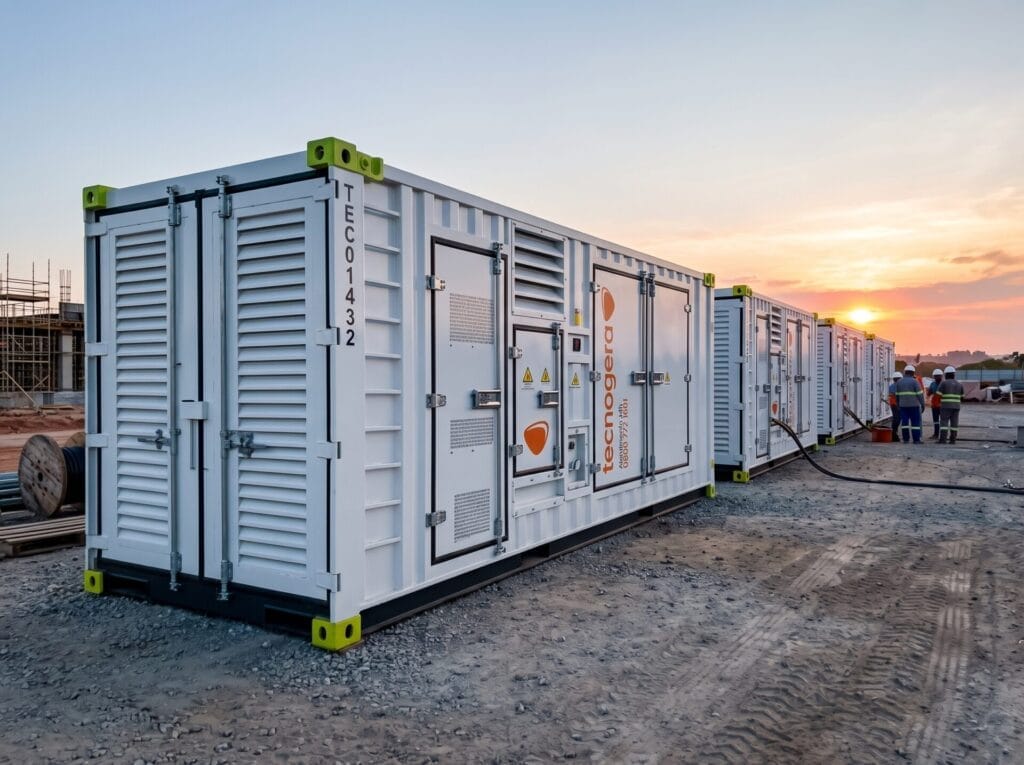
Power generators are classified as synchronous and asynchronous according to their operation. The synchronous generator maintains frequency synchronized with motor rotation, offers fixed frequency regardless of load, and is used in hydroelectric plants, but requires direct current and maintenance of mechanical contacts. The asynchronous generator has a simpler and more robust construction, without mechanical contacts in the rotor, used in wind turbines, but requires reactive power and stops if the load exceeds capacity. Both convert mechanical energy into electrical energy for hospitals, industries, and events.
The challenge of providing temporary power for the oil and gas sector
Oil extraction in Brazilian territory can be divided into before and after the discovery of the pre-salt layer. With the exploration of this new source, oil production increased from an average of 40,000 barrels per day in 2010 to 1 million barrels per day in 2016. One of the major challenges is the use of temporary power. Located far from the mainland, these platforms are not connected to the System.