In most parts of the country, having electricity at home or in the workplace is something natural. No one thinks about the path electricity takes before reaching the switch or the outlets responsible for operating electronic devices and appliances.
This energy comes from utility companies, but many regions in Brazil still do not have distribution networks, and any demand requires a major operation.
An example is when a new industry is going to be established in a small town in the country. The energy consumed by residents, businesses, and public buildings is already guaranteed by the utility company. However, in the face of a new demand for energy, the utility company needs to prepare to meet this demand.
In some cases, the energy that will be consumed by a new factory is greater than that of the entire city. In cases like this, during the factory’s implementation process, it is necessary to have extra and temporary energy.
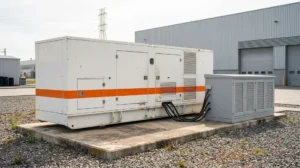
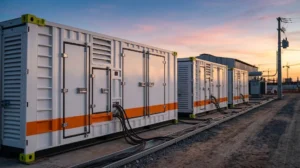
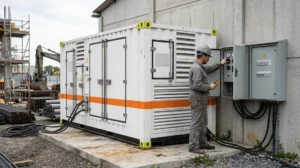
Thus, a mini power plant is set up with temporary power generators, which will be responsible for the extra energy supply. Meanwhile, the utility company works on expanding its network to meet the demands of the new client.
Another example of the need to set up a mini power plant is when a particular client starts to demand a greater amount of energy. This can be motivated by the expansion of facilities, operation of new equipment, or even the opening of a new work shift.
In turn, the temporary energy supplier has the expertise to develop a tailor-made project to meet the client’s needs. This includes the exact amount of energy and generator power, operation time, among others.