Mobile data traffic continues to increase.
Market forecasts show that by 2018, traffic is expected to reach 1,182.5 exabytes worldwide, an amount 11 times higher than the volume recorded in 2013.
With this volume of data, the demand for cloud storage is strengthening as an irreversible trend and is expected to generate a significant increase in the use of data centers.
A good portion of this data will originate from phenomena such as the Internet of Things and Big Data.
In Brazil, it is estimated that 30 data centers are in operation, a number far lower than the approximately 1,500 in the North American market.
Thus, the trend is for new data centers to come into operation in the coming years here, further boosting the segment.
For the temporary energy sector, this is a great opportunity, as data centers demand a large volume of electricity, both during construction and operation.
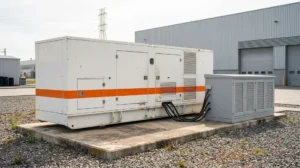
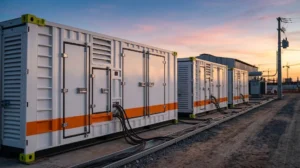
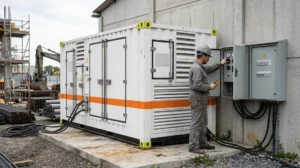
One of the main requirements of companies using data centers is that they have a secondary power source, in this case, provided by generators.
For data centers, temporary energy is essential so that, in the event of a power outage by the utility company, the generators come into operation immediately, not compromising the performance of the clients’ operations.
The Internet of Things is a technological revolution aimed at connecting electronic devices used in daily life (such as household appliances, portable electronics, industrial machines, means of transport, etc.) to the Internet, whose development depends on dynamic technical innovation in fields as important as wireless sensors, artificial intelligence, and nanotechnology.
Source: Wikipedia.