Oil extraction in Brazilian territory can be divided into before and after the discovery of the pre-salt layer. With the exploration of this new source, oil production increased from an average of 40,000 barrels per day in 2010 to 1 million barrels per day in 2016.
To handle the extraction of this large volume of oil, over 100 oil platforms are in operation along the Brazilian coast. In these locations, which are like small cities housing thousands of workers, everything needs to function in an organized manner and be compatible with the available conditions.
One of the major challenges is the use of temporary power. Located far from the mainland, these platforms are not connected to the National Interconnected System – SIN and need to seek other energy sources and suppliers to ensure everything operates smoothly.
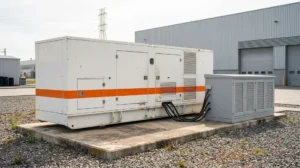
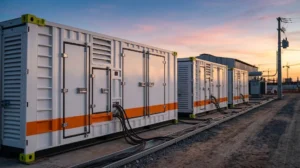
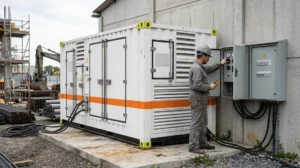
For temporary power suppliers using generators for this service, several challenges need to be overcome. One of them is logistics. Before the generator can be operational on a platform, it must be transported by boat, a time-consuming and costly process. Then it needs to be hoisted onto the platform and finally made operational.
The efficiency of the generators is another essential prerequisite. To serve this market, those responsible for providing temporary power had to invest in developing more functional equipment in line with the needs of the oil and gas sector.
The first step was to develop lighter generators that, besides being cheaper to transport, can be hoisted without the need for disassembly. The result is a simplified and less expensive overall logistics operation.
More compact and modern, these new generators take up less space on the platforms, an essential advantage for this type of operation.
As the pre-salt layer is a source that has only recently begun to be explored, the oil and gas sector presents a good business opportunity for temporary power suppliers.