

The challenge of providing temporary power for the oil and gas sector
Oil extraction in Brazilian territory can be divided into before and after the discovery of the pre-salt layer. With the exploration of this new source, oil production increased from an average of 40,000 barrels per day in 2010 to 1 million barrels per day in 2016. One of the major challenges is the use of temporary power. Located far from the mainland, these platforms are not connected to the System.
Learn how to calculate ripple voltage and its usefulness
Ripple voltage represents minimal variations in DC voltage signals, crucial for sensitive electrical systems that cannot tolerate fluctuations. In a 12V system, variations from 11.99-12.01V (20 millivolts) can cause damage. Measured as a percentage, it detects variations in the millivolt range. The oscilloscope is the most commonly used equipment for measurement, identifying voltage peaks and effective values to pinpoint variations in electrical circuits.
Rainy Season and Power Supply Failures
After the 2015 water crisis, 2016 saw an increase in rainfall. Despite improvements in reservoir levels, some regions, like the Northeast, have accumulated volumes below expectations, and the supply crisis is not averted.
The Importance of Backup Power Generation for Your Business
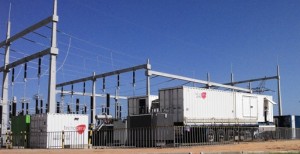
A backup generator is crucial for companies to maintain operations during power outages, preventing production losses and raw material waste. Proper investment requires adequate planning, installation, and maintenance. It’s essential to choose a credible supplier, calculate the necessary load, determine the location, and obtain licenses (Fire Department, environmental, utility company, ART). Monitoring and preventive maintenance ensure operation when…
Large events require temporary power
Major events like the Olympics, World Cup, and Formula 1 grow annually, demanding robust energy infrastructure. The concentration of people creates a high demand for power, often exceeding the capacity of utility providers, making temporary power essential from the planning stage. Suppliers must present compatible projects, have a specialized technical team, and proven experience to ensure safety and reliability, with no room for failures that could compromise broadcasts or sports records.
What do you need to know about tariff flags?
In June 2015, Aneel implemented the tariff flag system with colors indicating power generation conditions. Green means favorable conditions with no extra charge, yellow adds R$ 0.015 per kWh, red level 1 charges R$ 0.030, and level 2 adds R$ 0.045. The system aims to pass on production costs based on reservoir levels and the use of thermal power plants. During 2015, the red flag predominated due to the water crisis, but in 2016, there was variation among the colors depending on rainfall and power generation conditions.
What role does electrical resistivity play in high-voltage generators?
High-voltage generators convert mechanical, chemical, or solar energy into electrical energy to meet power needs. Electrical resistivity measures how much a material opposes the flow of electric current — the higher the resistivity, the harder it is for current to pass through. Resistors in generators control the current passing through components, ensuring the equipment’s performance and safety.
Temporary Power in the Mining Sector
The mining sector continues to hold a prominent position among the most important industries in the nation. In 2015, according to industry data, the export volume of iron ore alone exceeded 340 million tons. Temporary power is a strategic component for enabling the operation of an extraction mine, providing energy for heavy machinery, ventilation systems, security alarms, and lighting in often remote and hard-to-reach areas.
The role of temporary power in meeting Amazonas’ demands
Amazonas faces significant energy challenges, with 57 out of 62 municipalities relying on isolated power generation systems. In March 2016, 159 power generators were delivered to 91 locations, adding 124.8 MW to the existing 380 MW, with an investment of R$ 160 million. The government plans to invest R$ 6 billion by 2018 in improvements including new thermal power plants, integration into the SIN, and network expansion, creating opportunities for the temporary power sector.
Technology for more efficient engines and power generators
Technological advancements in Brazil’s energy sector have enabled the development of more efficient and compact engines. The national industry has invested in research to create technologies that consume less fossil fuel while maintaining the same power generation capacity. These pieces of equipment have become lighter and more compact, enhancing logistics and boosting the competitiveness of the national industry.