

Free Energy Market: Clear All Your Doubts Now
The free energy market allows for the buying and selling of electricity through direct consumer-supplier agreements, offering the freedom to choose your supplier. Two migration categories: companies ≥500kW (renewable sources only: SHP, wind, biomass, solar), companies ≥2,000kW (any power generation source). Organization: ACR (Regulated Contracting Environment 70% of the country’s energy) vs ACL (Free Contracting Environment). Key players: generation (concessionaires, IPPs, self-producers), trading (traders, free/special consumers), distribution (ANEEL concessionaires). Migration process: energy amount assessment, current cost analysis, selection of trading agent, comparative study of proposals, contract termination 6 months in advance. Timeline for limit reduction: 2021 (1,500kW), 2022 (1,000kW), 2023 (500kW). Tecnogera offers a platform to reduce peak energy costs by up to 15%.
Electricity Distribution in Brazil: How It Works
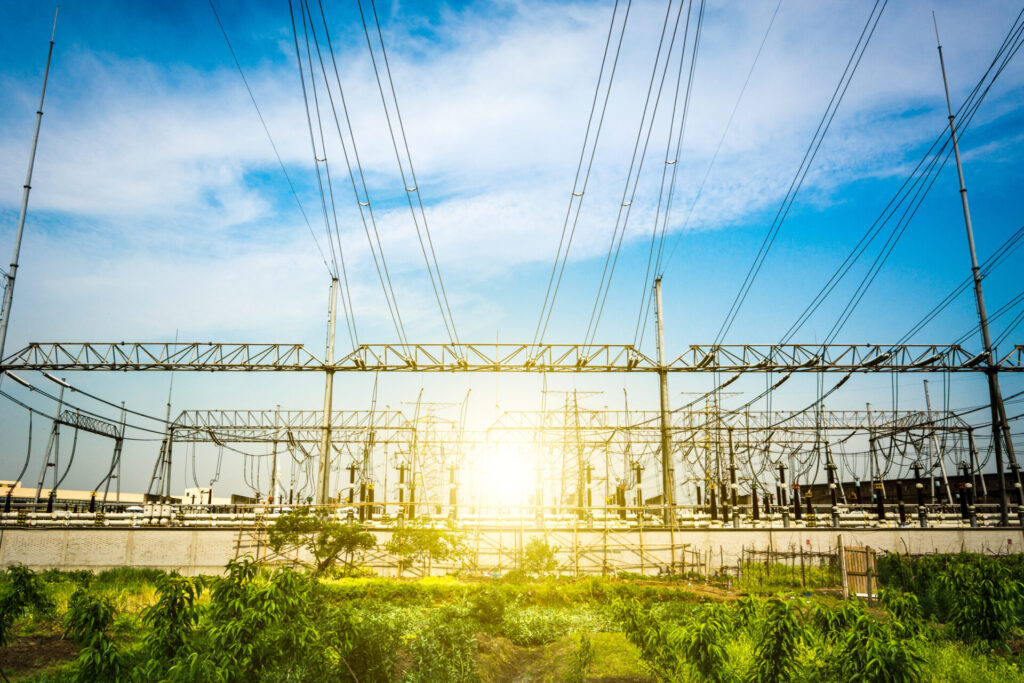
The electricity distribution system in Brazil consists of three main stages: generation (at hydroelectric, wind, thermal power plants, and others), transmission (via high-voltage lines), and distribution (to end consumers). The National Interconnected System (SIN) spans over 100,000 km and covers 98% of the national territory. Although 99.8% of Brazilian households have access to electricity, only 52.97% of distributors provide satisfactory quality, according to IDEC research.
Wind Power to Become the Second Largest Energy Source in 2019
Wind energy is set to become Brazil’s second largest energy source in 2019, reaching 15 GW by March (surpassing biomass at 14.7 GW). The sector boasts 568 wind farms and 7,000 wind turbines across 12 states, with Rio Grande do Norte leading at 3.9 GW. Brazil climbed from 15th in the world in 2012 to 8th in 2017. Power generators and load banks are crucial during commissioning, simulating real-world scenarios to detect instabilities before the commercial operation of the farms.
Renewable Power Generation: How It Works

The renewable power generation market is expanding in Brazil, with wind and solar sources taking the spotlight. The country has 167 wind farms and 74 solar plants under construction, with wind energy expected to become the country’s second-largest source by 2020. Wind generation grew by 61.5% in the first two months of 2017, producing 3,495 average MW. Tecnogera is active in the sector, providing commissioning and load bank supply for plants, ensuring quality and safety in performance testing.
Power technology working for the environment
Essential to our lives and daily routines, power generation impacts nature. Each process has its pros and cons, not only regarding the environment but also in terms of feasibility and costs. Learn more about how technology can be used to reduce environmental damage and discover the most sustainable forms of electricity production. Hydroelectric power is the most common in Brazil: about 80% of Brazilian energy is produced this way.
What is distributed power generation?
Beneficial for both the user and the environment, distributed generation refers to electricity generation by independent consumers. This involves using renewable energy sources or those with high energy efficiency — such as hydropower, solar, wind, or biomass. In addition to producing their own electricity, consumers can supply any excess to their local distribution grid.
Do you know what the energy compensation system is?
The energy compensation system is a method regulated by Aneel since 2012 that allows for exchange between the consumer and the distributor. It applies to hydropower, solar, wind, qualified cogeneration, or biomass energy. When small power generators do not use the energy produced, they return it to the grid. The main benefit is offsetting consumption with a positive balance…
Power Generator – Renewable Source
Tecnogera supplied a 12 MVA diesel power plant for the startup of a biomass renewable energy production plant, including operation and supply management.