The resumption of growth seems to be happening at a faster pace for the wind energy sector. Data from the Brazilian Wind Energy Association (Abeeólica), released in December 2018, indicate that wind-generated energy will be Brazil’s second-largest energy source as early as 2019.
The expectation is to reach 15 gigawatts (GW) next March, surpassing the 14.3 GW achieved in 2018. With this milestone, wind energy will surpass biomass, which stands at 14.7 GW, ranking only behind hydroelectric power, with 97.1 GW.
Impressive dimensions of the sector
In fact, the amount of just over 14 GW of installed wind energy capacity is already the same as the Itaipu plant, the largest hydroelectric plant in the country, and enough for the average consumption of 80 million people or 26 million households.
Currently, Brazil has 568 wind farms and seven thousand wind turbines spread across 12 states. Rio Grande do Norte leads the ranking of producing states, with 146 wind turbines and 3.9 GW of installed capacity, followed by Bahia, with 133 and 3.5 GW, respectively.
Future projections and historical growth
And the optimism doesn’t stop there. With the sector’s recovery, driven by auctions, new wind farm projects, and the resumption of economic growth, the expectation is that the segment will continue to expand rapidly and reach 18.8 GW installed by 2024.
It is worth remembering that in 2011 the installed wind energy capacity in Brazil was 1GW. Such performance made the country jump from the 15th position in installed capacity in 2012 to the 8th position in 2017, according to the Global Wind Energy Council ranking.
Role of temporary energy in the wind sector
With so many positive forecasts, the supply chain also feels the effects and is optimistic, as is the case with Tecnogera, which has a strong presence in the sector.
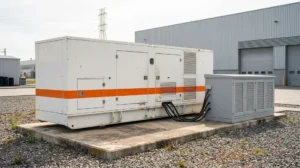
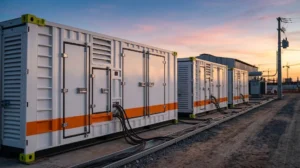
Long before wind farms start producing energy and connecting to transmission networks, the use of generators is already essential at all stages of implementation, that is, from the construction site, energy supply for the entire construction phase, and commissioning of the wind turbines, where load banks also come into play.
Importance of commissioning
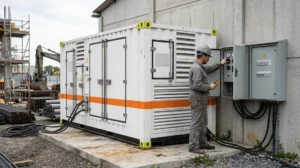
Commissioning is the moment when all tests are carried out to ensure that everything is in full working order: equipment, machinery, and installations in general. At this stage, load banks simulate a real operating scenario of the wind farm and can detect and solve any instability safely and 100% efficiently.
Load banks ensure safe performance of the equipment, preventing losses and keeping the newly installed machinery in perfect condition and with maximum usability.
With these measures, the wind farm begins to generate energy commercially during the commissioning period, contributing to the overall operation’s good performance.
To meet this type of demand, Tecnogera has the newest fleet of generators, load banks, and accessories in the country and invests heavily in the maintenance and renewal of its equipment.