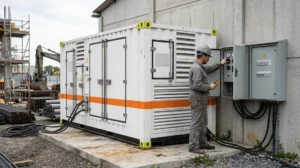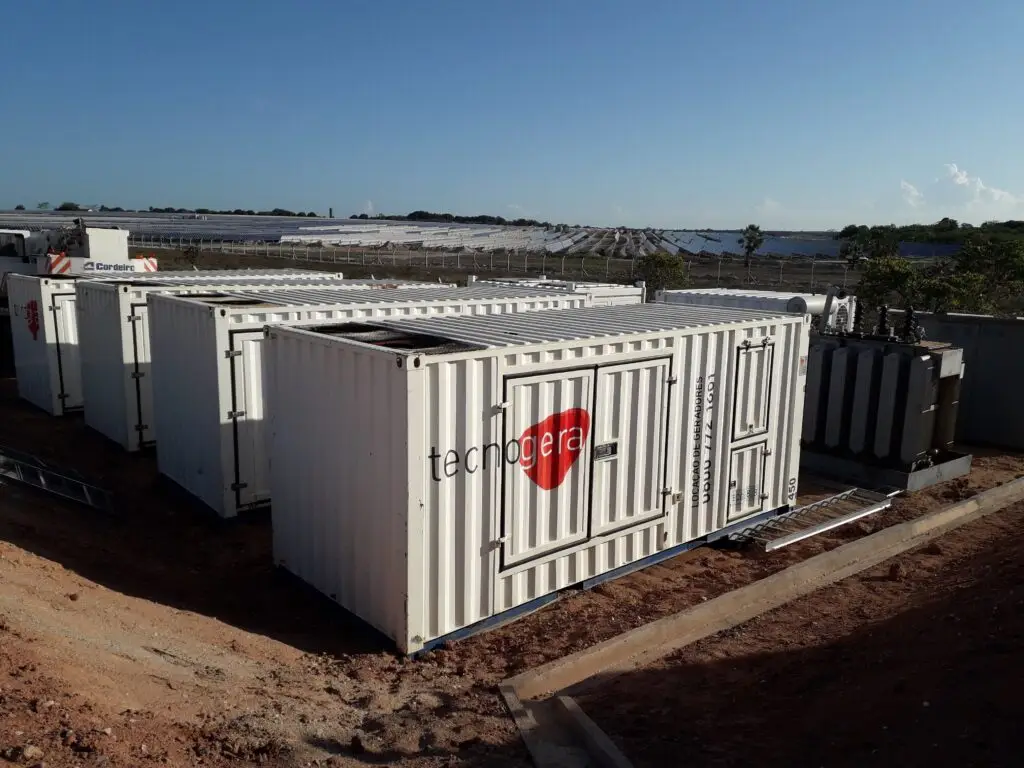
The standby generator is an emergency solution automatically activated in case of power supply failure. The system operates without human intervention, ensuring continuity for critical operations.Companies in sectors such as hospitals, industries, and data centers use this technology in the form of standby generator rental to avoid interruptions, financial losses, and operational risks during blackouts and network fluctuations.
What is a standby generator and how does it work?
The standby generator operates in standby mode until it detects interruptions in the power supply. When a failure occurs, the equipment is automatically activated to power priority loads.Unlike continuous operation, the standby system works only in emergencies and for limited periods. This feature reduces equipment wear and optimizes operational costs.Need a standby generator now?
Tecnogera sizes, installs, and maintains the equipment, with 24-hour technical support at 28 branches across the country. See power ratings, applications, and how standby generator rental works.
How does the Automatic Transfer Switch (ATS) system work?
The Automatic Transfer Switch (ATS) continuously monitors the power grid and identifies failures in seconds. When it detects an interruption, it automatically transfers the load to the generator.After the utility returns, the ATS restores the main power supply without the need for manual intervention. This increases operational safety and reduces downtime risks.Technical differences between standby, prime, and continuous power
Each type of power has specific characteristics related to uptime and load variation supported by the equipment.The correct choice avoids overloads, operational failures, and unnecessary costs due to inadequate sizing.| Type of power | Application | Uptime | Load variation |
| Stand-by | Emergencies | Limited | High variation |
| Prime | Main operation | Unlimited with breaks | Moderate variation |
| Continuous | Constant load | Continuous operation | Low variation |
When is it recommended to use a standby generator?
Projects that rely on uninterrupted power require reliable emergency systems to avoid financial and operational losses.In many sectors, a few minutes without power can compromise equipment, data, and even people’s safety.- Hospitals and clinics;
- Data centers;
- Industries;
- Mining;
- Events;
- Construction;
- Agribusiness;
- Condominiums and commercial buildings.
Why does incorrect sizing cause losses?
An undersized generator can cause shutdowns, overheating, and damage to connected equipment. On the other hand, oversizing increases operational costs and fuel consumption.Besides the financial impact, calculation errors compromise operational reliability during critical moments. Therefore, relying on specialized engineering reduces risks and improves energy efficiency.Technical standards and safety in standby generator installation
The installation must follow technical standards that ensure operational safety, electrical protection, and legal compliance.Among the main regulations are:- NBR 5410 — Low voltage electrical installations;
- NR-10 — Safety in electrical installations;
- NR-12 — Safety in machinery and equipment;
- NBR 14039 — Medium voltage electrical installations;
- NBR 5419 — Protection against lightning strikes.
Why rent a standby generator instead of buying?
The rental of a standby generator reduces initial investments and eliminates costs with corrective maintenance, storage, and technological updates.While purchasing represents a capital investment (Capex), renting turns the cost into an operational expense (Opex), offering greater financial predictability.In addition, Tecnogera also provides with its rental technical support, quick equipment replacement, and emergency service, increasing project reliability.Advantages of renting standby power generators with Tecnogera
Tecnogera offers 24-hour technical support, a modern fleet, and in-house engineering to serve critical operations throughout Brazil. Projects include remote monitoring, preventive maintenance, and customized solutions for different industrial segments.The guarantee of uninterrupted supply protects your operation against financial losses and reputational damage caused by unexpected shutdowns. With Tecnogera, you get operational security and full technical compliance, maintaining maximum productivity even in the most critical scenarios.Preventive maintenance and reliability of generator sets
The reliability of a standby system depends directly on preventive maintenance periodic. Technical inspections reduce the risk of failures during emergencies.Services include operational tests, component analysis, and equipment performance monitoring.Tecnogera performs scheduled maintenance with specialized teams, ensuring greater operational availability.How to rent a standby generator?
Hiring a standby power solution is simple and safe. Our workflow is designed to eliminate undersizing risks and ensure flawless installation, allowing your company to maintain business continuity without worries. Check out the steps:- Request specialized technical service.
- Engineering performs analysis of the project’s loads and needs.
- The appropriate equipment is defined and prepared.
- Installation and testing are performed on-site.
- Technical support remains available throughout the rental period.
What are the main risks of not having a backup generator?
Operational continuity is the foundation of any competitive business, but the numbers show that relying solely on grid stability is a calculated risk. According to data from the Brazilian Electrical and Electronics Industry Association (Abinee), power supply failures and disturbances in the electrical grid are responsible for annual billion-dollar losses in the Brazilian industry.Without a backup generator, your operation is at the mercy of unpredictable external factors, which can trigger a series of critical events, as detailed below:- Loss of industrial production;
- Interruption of critical systems;
- Damage to sensitive equipment;
- Data loss on servers;
- Financial losses due to unplanned shutdowns;
- Risks to operational safety;
- Compromise of hospital processes.