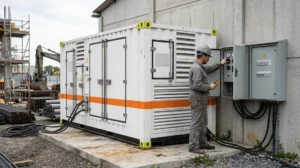
Electrical commissioning is the technical process that ensures the operability, safety, and efficiency of energy systems according to the original design. It involves rigorous testing to ensure the installation functions perfectly before final delivery to the client.
Understanding what electrical commissioning is the first step to ensuring that large infrastructure investments are not lost due to assembly failures. This process acts as a superior technical quality filter.
What is the electrical commissioning process?
Electrical commissioning is a set of technical procedures, tests, and inspections carried out to verify if the system components are installed and operating as planned. It aims to validate the integrity of the entire infrastructure before its definitive service deployment.
This electrical quality control process is important both in new installations and in expansions of existing plants. It ensures that the system meets performance requirements and the client’s operational safety expectations.
It’s a compliance certification that minimizes risks and avoids costly rework in the future.
The effectiveness of a system depends on how it transitions from paper to operational reality, requiring clear methods of technical validation.
The best approach is to integrate commissioning into all your deliveries, conducting the entire process — from planning to final testing — and documenting each step to ensure that temporary or permanent energy solutions operate with maximum availability.
How does commissioning work?
The operation is based on the progressive inspection of electrical systems, starting as follows:
Static verification: initial inspection of components when powered off, meticulously checking wiring, connections, and physical assembly according to single-line diagrams.
Energized tests: verification of equipment with the system under nominal voltage to perform functional and logical tests on components such as circuit breakers, relays, and control systems.
Load validation: final phase using real or simulated load to prove operational stability and ensure the system supports the projected demand in critical scenarios.
It is extremely important to simulate critical scenarios and ensure the system supports the projected demand.
The high performance of an industrial or commercial plant is directly linked to the rigor applied in initial field tests.
The importance of commissioning for safety and performance
The main advantage of electrical commissioning is the guarantee of safety, strictly complying with NR-10, which protects the integrity of employees. A well-commissioned system significantly reduces the risk of short circuits, fires, and equipment failures.
In addition to safety, the electrical performance evaluation ensures that the system operates at its maximum efficiency. This prevents unscheduled downtime and allows equipment manufacturers’ warranties to be preserved through proper startup.
Conducting commissioning is synonymous with offering absolute energy reliability. This process serves as a solid foundation for all future maintenance plans, optimizing the asset lifecycle.
Dividing the process into clear milestones facilitates technical monitoring and identification of any installation bottlenecks.
What are the stages of electrical commissioning?
The stages of electrical commissioning begin with planning and detailed analysis of the executive project to create test protocols. Next, cold commissioning is performed, focusing on visual inspections and insulation tests with de-energized equipment.
The next phase involves hot commissioning, where circuits are energized for functionality and operation sequence tests. It is at this stage that electrical panel tests occur, verifying if the commands respond correctly to system protections.
Finally, field acceptance tests (FAT) are executed, simulating full load to validate overall performance.
Compliance with national and international guidelines is what differentiates an amateur installation from a world-class system.
What standards regulate commissioning?
The Brazilian regulatory scenario requires the process to follow strict guidelines to ensure the protection of people and assets. ABNT standards and international guidelines form the basis for any high-level technical inspection in the energy sector.
The importance of NR-10 in commissioning
NR-10 establishes the minimum safety requirements for those working in electrical installations, being vital during commissioning. It requires complete documentation and compliance with protocols that prevent workplace accidents during energized tests.
NBR Technical Standards and International (IEC)
The NBR 5410 and NBR 14039 standards detail the standards for low and medium voltage, while the IEC (International Electrotechnical Commission) offers global testing parameters.
Following these standards ensures the certification of electrical installations, validating that the project follows current engineering standards.
The accuracy of the results directly depends on the quality of the measuring instruments and the methodology applied by the engineering team.
Tools and equipment necessary for electrical commissioning
For precise execution, instruments such as megohmmeters, earth testers, and high-precision energy analyzers are used. These tools allow for electrical resistance and continuity tests with reliable and auditable technical data.
A distinguishing feature of Tecnogera is the use of state-of-the-art Load Banks to simulate real energy consumption. This equipment is the only one capable of testing the response of generators and UPS systems without putting the client’s real load at risk.
Additionally, thermal cameras are employed to identify excessive heating points in connections and busbars during tests.
This system inspection technology prevents future failures that would be invisible to the naked eye during normal operation.
All the technical rigor of the process is consolidated in an official document that formalizes the delivery of the work to the operational sector.
What is an electrical commissioning report?
The electrical commissioning report is the final technical document that ensures the system has been tested and is ready to operate. It contains all measurement records, photos, calibration certificates of the instruments, and the signature of a responsible engineer.
This document is part of the electrical installations dossier, being required by insurers, regulatory bodies, and quality audits. The report is the documentary proof that the validation of electrical systems was carried out according to safety standards.
At Tecnogera, the report is delivered clearly, providing the client with a complete history of their equipment’s behavior. Having this document in hand is essential to ensure the company’s legal and operational safety.
Although they may seem similar as they involve testing, the purposes of commissioning and maintenance are distinct in the project schedule.
What is the difference between electrical commissioning and predictive maintenance?
Commissioning is a one-time event conducted before operation begins or after major renovations to validate the new system. It focuses on ensuring everything was assembled correctly and that the initial performance meets project parameters.
Predictive maintenance, on the other hand, is a continuous monitoring process during the installation’s normal operational life. While commissioning certifies the installations, predictive aims to anticipate failures due to natural wear through periodic analyses.
Both are essential for energy security, but commissioning is what allows maintenance to start from a reliable base. Tecnogera offers support on both fronts, ensuring high performance from the first day of operation.
Choosing a partner with extensive practical experience in the electrical sector minimizes unforeseen events and accelerates the delivery of large projects.
Tecnogera’s expertise in commissioning energy solutions
Tecnogera has a highly skilled engineering team, specialized in complex environments such as industrial commissioning and large events.
Our approach focuses on risk reduction and strict adherence to schedules, without compromising operational safety.
We apply exclusive methodologies to ensure that each delivered energy solution complies with the most stringent technical standards.
Our differentiator lies in the ability to perform commissioning as part of an integrated energy security solution.
By choosing Tecnogera, the client has the peace of mind that their installation has undergone a rigorous electrical quality control. Our field presence ensures that the transition to definitive operation occurs smoothly and efficiently.
Each component of an electrical infrastructure requires a specific technical look to ensure the whole operates in perfect condition.
In which equipment is electrical commissioning essential?
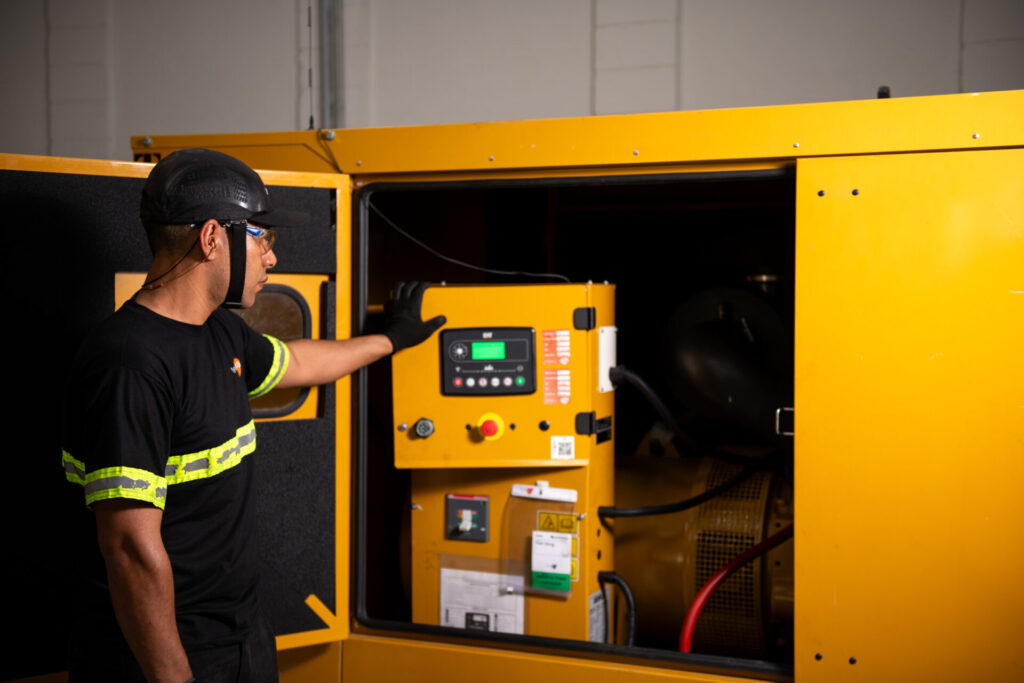
The commissioning process is mandatory for generators, where voltage and frequency stability is verified under different load steps. It is also crucial in substations, ensuring that transformers and protections operate according to the schedule.
Another point of attention is the commissioning of electrical panels and transfer switches, which manage energy distribution in the plant. Testing these components ensures that the backup system activates instantly in case of main grid failure.
Commissioning is a very strategic action for the safety of an operation. Tecnogera is a commissioning specialist, conducting these tests across its entire rental and installation portfolio, including UPS and high voltage systems. This breadth ensures that no weak point compromises the continuity of our clients’ business.
Simulating consumption reality is the only way to ensure that the energy system will not fail at the moment of greatest need.
The importance of Load Banks in electrical commissioning
Load Banks are devices that dissipate electrical energy to simulate the demand of a factory or Data Center. They allow for electrical performance evaluation without relying on the client’s real load, which may be sensitive to testing.
Using this resource enables the identification of failures in generators and cooling systems that would only appear under full load. It is the definitive test for industrial commissioning, ensuring that the infrastructure supports the projected production peak.
In addition to validating power, load banks help clean carbon deposits in diesel engines (wet stacking), extending their lifespan.
It is an investment to ensure the total efficiency and reliability of any energy system.
The security of your business depends on an infrastructure tested by those who understand energy from end to end.
Rely on Tecnogera’s expert engineering for your project
Tecnogera is a national reference in energy solutions, combining cutting-edge technology with a team of specialist engineers. We offer consultative service from sizing to the final execution of electrical commissioning.
Our differentiators include a modern fleet of equipment and the agility needed to handle projects of any size or complexity. We ensure your company has continuous energy, eliminating risks of unexpected shutdowns that cause financial losses.
Whether for a new project or to validate an existing installation, Tecnogera delivers the confidence your market demands. Contact us and discover how our expertise can elevate your company’s performance and safety standards.