You know the damage caused by blackouts. Just a few seconds without power can stop production lines, crash servers, or interrupt sales.
Depending on the structure, a blackout can result in hours of lost work or, worse, damage to machines, data loss, compromised food or supplies.
Companies with critical operations have already understood: you can’t rely solely on the utility company, you need to count on a reliable equipment supplier.
This article is a direct and technical guide to show how efficient operations shield themselves against the impacts of blackouts and maintain their productivity unshaken even in extreme scenarios.
The impact of blackouts on business continuity
It’s not just about “being in the dark.” Blackouts compromise Brazilian companies of all sizes, especially those with uninterrupted processes. Some real examples:
- Food and beverage industries: a failure can render tons of products useless, cause unscheduled shutdowns in chillers and industrial freezers, and lead to logistical waste;
- Distribution centers and logistics warehouses: interruptions affect automated conveyors, WMS systems, and the entire product output flow, compromising SLAs with clients;
- Medium and large retail: power outages crash the POS, hinder real-time inventory control, and cause failures in refrigeration systems;
- Hospitals, laboratories, and surgical centers: failures directly affect life support equipment and can cause fatalities. Backup power needs to operate automatically and without fail;
- Data centers and fintechs: any millisecond of downtime can mean data loss, contract breaches, and failures in financial transactions on a national scale.
That’s why blackouts are so harmful. The impact is financial, operational, and reputational. Prevention requires technical planning and flawless execution.
The checklist for blackout-proof operations
Resilient operations don’t react to blackouts: they are always one step ahead.
Below you will find a complete checklist for companies that cannot stop and know that energy reliability is a strategic asset.
1. Advanced energy diagnosis
In addition to knowing the average consumption and energy demand, it is essential to map load peaks, critical areas and sensitivity levels of each piece of equipment.
This survey defines the generator’s power, the need for redundancy, and the ideal autonomy time.
2. Generator with automatic transfer switch (ATS)
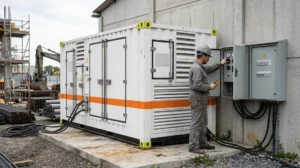
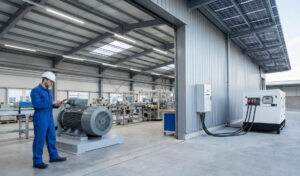
The automatic transfer system (ATS) detects the grid failure and activates the generator in seconds. Critical operations should rely on this technology to avoid idle time between failure and backup.
3. Contingency planning with redundancy (N+1)
Having a single generator can be risky. Efficient models work with redundancy, ensuring that if one piece of equipment fails, another automatically comes into operation without losses.
4. Predictive maintenance with sensors and remote monitoring
In addition to traditional preventive maintenance, high-performance companies invest in 24/7 remote monitoring and sensors that identify vibration, temperature, noise, and consumption, preventing failures before they occur.
5. Periodic testing with load bank
Simulating real operation is the only way to ensure the system is prepared. The load bank allows testing the generator’s capacity under stress, avoiding surprises during a real failure.
6. Integrated temperature control
In many operations (such as data centers, warehouses, and hospitals), temperature is as critical as energy. Backup climate solutions must be in the same contingency plan.
7. Trained technical team + emergency action plan
There’s no point in having a structure if the team doesn’t know what to do in a crisis. It is essential to have operational manuals, periodic training and clear technical responsibilities for each stage.
8. Assisted operation at critical moments
In high-risk operations, efficient companies rely on on-site technicians during demand peaks (e.g., major events, logistical turnovers, heat waves), ensuring agility in any unforeseen situation.
How Tecnogera ensures the energy your operation needs
When it comes to on-demand energy and operational contingency, Tecnogera is the partner that understands the subject best.
With 18 years of experience, we serve the entire national territory with a complete portfolio to keep your operation running regardless of the scenario.
More than 40,000 clients served with intelligent, economical solutions tailored to each need.
Among Tecnogera’s main differentiators are:
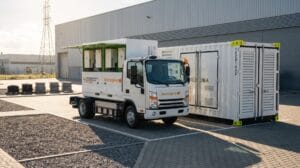
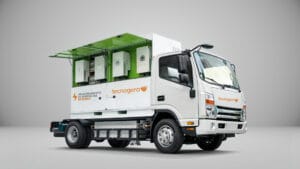
- Tailored temporary energy, with its own fleet and state-of-the-art equipment;
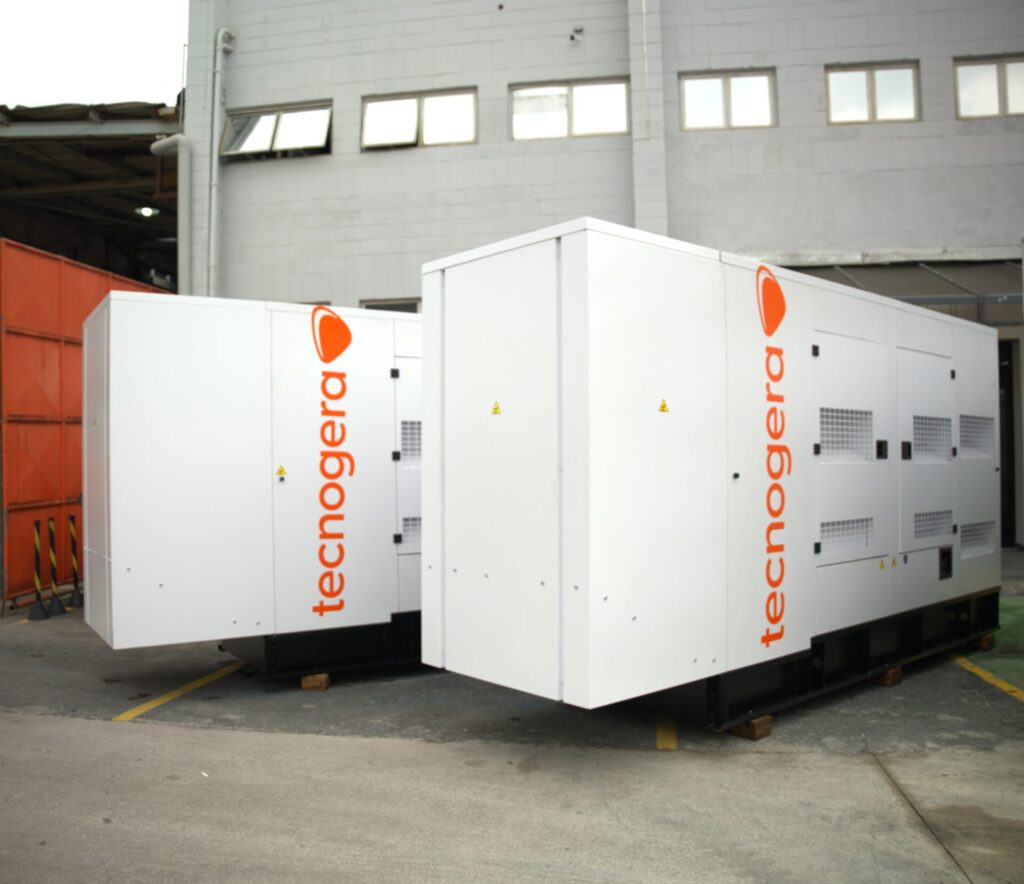
- Generator rental with ATS, assisted operation, and load bank available for technical tests;
- Temperature control with industrial coolers, chillers, and integrated systems;
- Elevating platforms for working at heights;
- Technical team available 24/7;
- Nationwide operation with fast logistics; and
- Commitment to customer safety, performance, and economy
Your operation cannot stop. Contact Tecnogera now and find out how to shield your business against blackouts with the reliability of a company that’s been in the market for almost two decades.