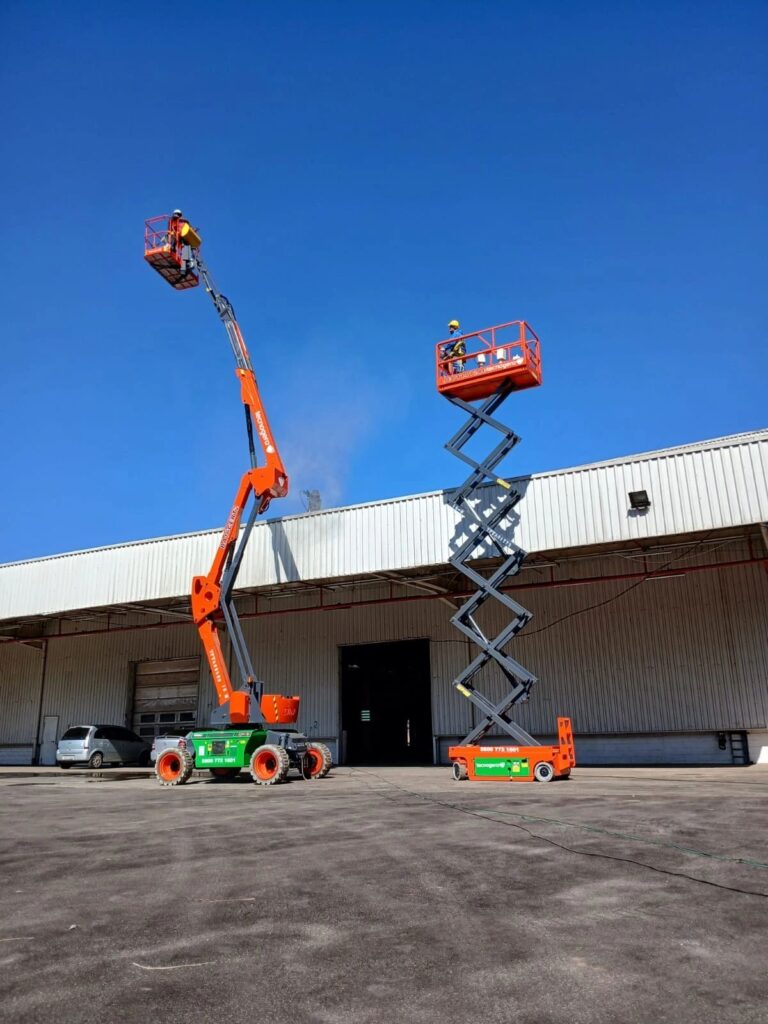
The platform operator is one of the high-demand professions (literally, lol!) in the construction and industrial sectors, especially with the advancement of the sector that requires precision, agility, and safety.
Those who work in this area have the opportunity to work with modern equipment, on challenging projects, and with high technical value, which means having good opportunities in the market.
In addition to the growing demand, working as an aerial platform operator is synonymous with responsibility.
The professional must always be attentive to safety procedures, have a deep understanding of the equipment they operate, and ensure that each step is done carefully, protecting not only their physical integrity but also that of the team and the surrounding structure.
It is a strategic role that requires preparation, constant updating, and a high level of commitment.
What does a platform operator do
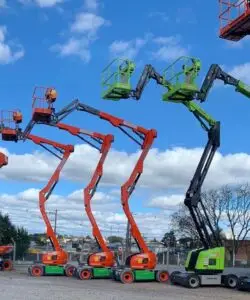
The platform operator is the professional responsible for driving and maneuvering Mobile Elevating Work Platforms (MEWP), ensuring the safe and efficient positioning of the equipment in height work operations.
Their role is essential in construction works, industrial maintenance, structure assembly, and various other sectors.
They work directly in the execution of field activities, operating different models of platforms with technical expertise and attention to safety procedures.
Furthermore, you need to be well aware of the equipment’s operational limits, such as lifting height, load capacity, and maximum allowable tilt.
But how much does a platform operator earn? The average salary in Brazil is around R$ 1,848 to R$ 2,099 per month. The variation depends on factors such as the professional’s experience, the region where they work, and the type of project involved.
Necessary skills and competencies
To work as a platform operator, it’s not enough to just know how to maneuver the equipment. You need a combination of technical knowledge, professional demeanor, and mastery of safety standards.
These competencies are developed over time, with theoretical training, practical training, and field experience. Some standout skills include:
Specific technical knowledge
Knowing how to operate the platforms, understanding the hydraulic system’s operation, comprehending load, height, and tilt capacities, as well as performing technical inspections on the equipment.
Attention to detail
The operator needs to be careful both in checking the platform and observing the surrounding environment. Small details can pose risks if overlooked.
Understanding of Regulatory Standards (NRs)
Mastering the standards, such as:
- NR-11: Transportation, Handling, Storage, and Material Handling
- NR-12: Safety at Work with Machinery and Equipment
- NR-18: Conditions and Work Environment in the Construction Industry
- NR-35: Work at Height
This knowledge is essential to ensure safety and avoid fines or accidents. The operator must apply these standards daily in practice.
Communication with the team
Working with aerial platforms requires integration with other professionals. Therefore, the operator needs to have good communication to coordinate maneuvers, avoid risks, and ensure the smooth progress of the project.
Physical and mental ability
Handling aerial platforms requires physical preparation, but also mental agility to deal with unforeseen events, make quick decisions, and remain calm under pressure.
Required training and certifications
The platform operator needs to be properly trained to perform the function, including completing recognized training with the issuance of valid certificates.
These trainings, in addition to qualifying for machine use, involve safety standards, risk analysis, safe maneuvers, and proper use of Personal Protective Equipment (PPE).
See what is essential for the professional to qualify:
- Aerial Platform Operator Course (PEMT): training with a minimum workload and mandatory practice, according to NR-12 and NR-35.
- Height work training: required by NR-35 for any professional working above 2 meters in height.
- Work safety training: focusing on accident prevention, risk analysis, inspection, and best practices in the work environment.
- Periodic update: recommended to ensure technical proficiency and keep the professional aligned with regulatory updates.
- Certificates recognized by competent bodies: documents that prove the operator’s qualification and allow their legal performance in the area.
Main responsibilities of the position
Being a lift platform operator means taking on a series of technical and operational responsibilities, such as:
- Perform pre-operational inspection before each use;
- Analyze and prepare the work site;
- Ensure the correct use of PPE;
- Operate the equipment with proficiency and responsibility;
- Signal and delimit operation areas;
- Keep the equipment in good condition, ensuring cleanliness and maintenance;
- Act with a focus on accident prevention;
- Communicate with the team to ensure safe maneuvers.
And, to perform all these functions with excellence, it is essential to have modern, safe, and high-performance platforms.
Tecnogera is a reference in the equipment rental and management sector for large enterprises. We offer lift platform solutions that meet the most demanding safety and performance standards:
- Models that reach up to 51 meters high
- Anti-crush sensor
- 4×4 traction and high performance
- Platforms articulated, scissor, telescopic and vertical mast
- Fast delivery and efficient logistics
- Technical support 24 hours a day, 7 days a week
Choosing Tecnogera means ensuring your project will have state-of-the-art equipment and the support of an experienced team committed to safety and efficiency.
Contact us!