Safety is an essential concern at all stages of a construction project, especially when considering electrical risks in civil construction.
Whether in small, medium, or large-scale constructions, employees must always use personal protective equipment (PPE) and act in accordance with the standards established by the Ministry of Labor to ensure worker safety.
To avoid electrical risks in civil construction, in addition to providing PPE and guiding employees on the correct ways to use them, it is the responsibility of those in charge to follow strict safety policies, mainly avoiding the infamous “makeshift solutions.”
As a preventive and mandatory measure, all construction projects must be coordinated by a technical professional specialized in electrical installations.
This person is responsible for supervising the work of the entire team and for implementing the standards established by the Ministry of Labor.
Another valuable tip to avoid electric shocks is to prohibit the use of multiple devices on the same power source, worn-out extensions, and devices with deteriorated wiring.
It is also worth investing in the purchase of quality materials, preferably certified by Inmetro.
Tips to avoid electrical risks in civil construction:
- PPE: personal protective equipment is essential to ensure greater safety for employees. Gloves, masks, boots, safety glasses, helmets, and other PPE are legally required and prevent electrical risks in civil construction.
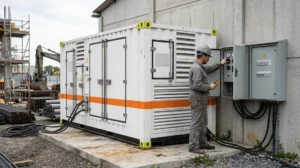
- Electrical equipment safety: ensure that your electrical equipment and power generators have basic safety features, such as an isolated fuel tank and an operational indicator light.
- Organization: one of the main reasons for electrical accidents in civil construction is disorganization within the site. Ensure that electrical wiring is always in elevated locations and that tools are never scattered around the site.
- Materials certified by Inmetro: check the quality of wires, outlets, power boxes, and other materials that will be used within the construction. Products certified by Inmetro should offer lower electrical risk in civil construction and ensure better functioning of the entire electrical part of the project.
- Qualified professionals: whether during the construction of buildings and houses, or even during preventive or corrective maintenance, hiring experienced professionals is essential to avoid accidents and material damage.
- Site signage: mark areas of electrical risk and post warnings whenever maintenance work is being carried out. Activating equipment during maintenance can cause shocks of varying intensities.