Calculating residential electrical energy demand is important to ensure the safe operation of the electrical installation and avoid overloads.
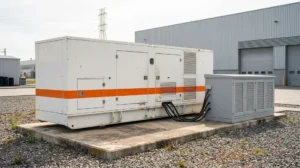
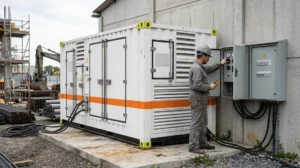
This calculation is also essential for those planning to install a power generator, expand the home’s electrical capacity, or plan the simultaneous use of high-power equipment.
What is residential electrical energy demand?
Electrical energy demand represents the amount of power a home needs at a given moment to power all the equipment operating simultaneously. Unlike energy consumption, measured in kWh over time, demand considers the instantaneous power required by the electrical installation.
Knowing this demand helps correctly size circuits, breakers, electrical panels, and generators, contributing to safer and more efficient operation.
How to calculate residential electrical energy demand?
The residential demand calculation can be done by following a few basic steps:
- Make a list of the home’s electrical equipment, such as shower, air conditioner, electric oven, microwave, refrigerator, washing machine, and lighting.
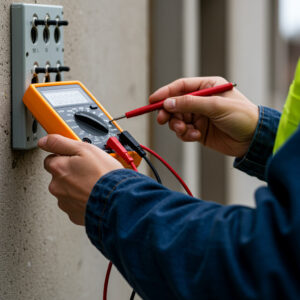
- Check the power of each device, usually indicated in Watts (W) on the manufacturer’s label or manual.
- Identify which devices usually operate simultaneously, as it’s unlikely all will be on at the same time.
- Add up the power of devices that may operate simultaneously to get the approximate demand.
- Consider a safety margin for future expansions or occasional usage peaks.
If necessary to convert the result to kVA, simply consider the power factor of the installation, typically around 0.92 to 1.0 in residential applications.
When is it important to calculate residential energy demand?
Calculating electrical energy demand is recommended whenever there are changes in the installation or an increase in the home’s electrical load. This assessment allows verification if the existing infrastructure is sufficient to meet the home’s needs and aids in planning future expansions.
The calculation is especially important before installing a residential power generator, acquiring high-power equipment like air conditioners and electric vehicle chargers, or during renovations that alter the electrical installation.
This way, it’s possible to avoid overloads, reduce the risk of shutdowns, and ensure more safety and efficiency in energy use.
How does electricity supply work in homes?
The electrical system is composed of networks and substations that form the so-called “distribution grid.” This grid’s function is to provide power to a large number of users, making motors, transformers, inverters, electric lighting, and other devices that depend on electricity work.
What is residential electrical energy demand?
To correctly plan the conservation of capacity to serve all users, it’s necessary to know the maximum usage limit that will be requested. This quantity, called demand and expressed in kilowatts (kW), is obtained by summing the installed loads in each consumer unit in operation.
Application of electrical demand
Electrical energy demand is applied individually to each consumer unit whose voltage level is greater than or equal to 2.3 kV, also known as “Group A.” This concept is also used in formulating the energy supply contract, constituting a commitment from the client regarding their maximum system demand.
What is the difference between demand and energy consumption?
Consumption, on the other hand, is measured in kilowatt x hour (kWh) and indicates the time period during which a certain load is powered by the energy system. Thus, whenever the value of the highest demand measured during a determined billing cycle exceeds the contracted demand value for the period, the consumer will be subject to an extra charge.
Planning to install a power generator in your home? Tecnogera has specialists to size the ideal solution according to your property’s electrical demand, ensuring safety, efficiency, and reliability in energy supply. Contact us!