There are some questions about how chillers work and how they can assist in food production and storage.
Therefore, we will share practical insights into the operation, advantages, and use of these systems in the food industry.
Stay with us until the end and clear all your doubts on this topic.
What is a Chiller and How Does It Work?
Before discussing the use of chillers in food production and storage, it’s important to remember what these systems are and their applications.
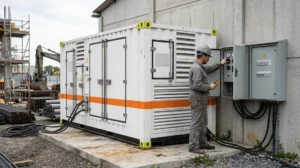
A chiller is a liquid cooling system, most commonly for water. It is used in HVAC systems to cool products, machinery, and even environments by producing chilled water.
Chillers are excellent refrigeration systems for the food industry, as they help in climate control of production areas, both in sectors directly related to production and those focused on storing finished goods.
In What Situations Can Chillers Be Used in the Food Industry?
To understand in which situations chillers can be used in the food industry, consider some of their applications:
- Temporary solutions for increased production: imagine an ice cream factory. With the arrival of summer, production increases, and the chiller acts as a temperature equalizer to boost production capacity without compromising quality.
- Expansion of storage capacity: when the producer needs to increase the physical space to accommodate products at reduced temperatures.
- Climate control of areas requiring cooling: commonly occurs in oven areas, which experience excessive heat.
- Scheduled shutdowns: may occur in environments already using chillers and requiring maintenance. In this case, a temporary replacement is made.
- Contingency plan: using the chiller as an emergency measure in case of failure or breakdown of existing equipment.
Here we list only the situations where chillers are used in the food industry. However, their application extends to other major market segments, such as mining companies.
How the Chiller Refrigeration System Works
With specific applications in the industry, understanding how the chiller refrigeration system works can be challenging.
Here’s how: Water is used as a medium to transport heat or cold to each equipment division in a factory.
The role of the chiller is to help increase the cooling capacity of the water.
When discussing how a chiller works, we refer to it as a large compressor that causes the liquid to act as a refrigerant, flowing from the receiver to the expansion valve.
This same valve introduces fluid into the evaporator, facilitating the exchange of water with heat after passing through the coil.
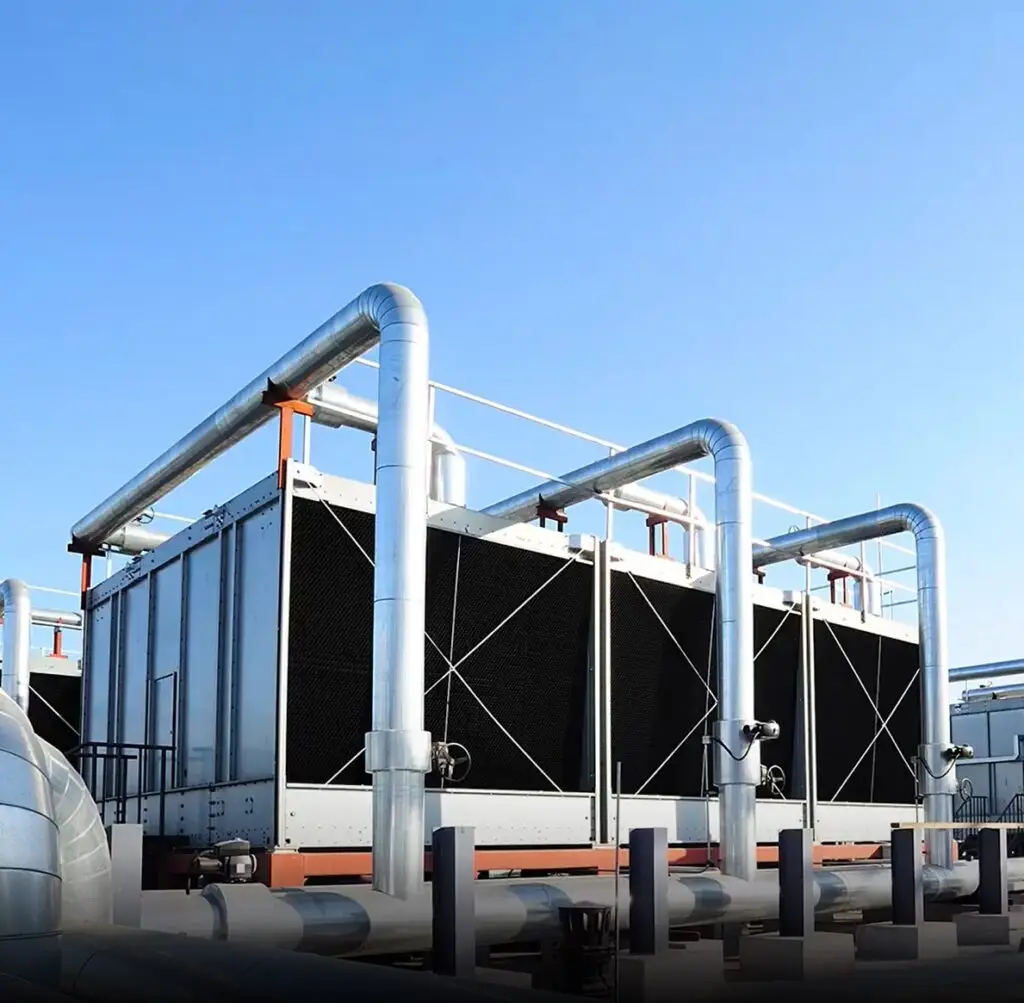
At the end of the process performed by the chiller, the condensation water is pumped to the cooling tower of the equipment whose temperature needs to be reduced.
Advantages of the Chiller Refrigeration System for the Food Industry
When discussing chiller features and benefits, we have some more technical information to share, but it’s essential for understanding the usage parameters in the food industry:
- The chiller’s power is measured in refrigeration tons (RT), and the most commonly used range from 5 to 5,000 RTs.
- Each RT is equivalent to 12,000 BTUs (British Thermal Unit – thermal unit).
- Chiller installations are highly flexible, adapting to a wide variety of environments.
- A significant advantage of chillers is that even with electric operation, their consumption is considerably low.
- Another advantage is the efficiency of the equipment, which enhances its durability.
Chiller Usage and Maintenance
To ensure optimal operation of chillers in the food industry, certain factors must be considered, and preventive measures adopted. Understand what they are:
- Regular maintenance to ensure maximum performance;
- Inspection of filters, fins, coils, motors, pumps, and fans;
- Improvement maintenance aimed at correcting and repairing malfunctions;
- Regular filter replacement;
- Cleaning and lubrication of the refrigeration system fans;
- Suction pressure control to prevent pump erosion;
- Regular cleaning and lubrication of motors.
Chiller: Practical Application in the Food Industry
Now that you’ve seen a detailed explanation of how chillers work and their advantages in the food industry, we want to share a success story with you.
A demand from one of the country’s most traditional chocolate industries, with over 80 years in the market: The company had a scheduled shutdown for maintenance and expansion, along with the need to climate control the storage area of the final product.
Additionally, there was a demand to increase the water supply for production.
In this opportunity, we at Tecnogera structured the refrigeration system for the production process and provided complete climate control of the environment with chillers, pumps, and hydraulic accessories.
The major advantage for the client was gaining energy efficiency in their production and improving system performance, adding even more value to their products.
The good news is that other food industries, as well as companies from other sectors, can also enhance their productivity and ensure maximum product quality.
We can assist, including with customized projects for temperature control solutions.
To receive information and request a proposal, click here.