

Where to Use a 100 kVA Generator
A 100 kVA power generator is compact and efficient, making it ideal for multiple applications. Key uses include: condominiums with up to 20 apartments, construction sites, industries with extended shifts, hospitals, colleges, businesses with perishable goods, and events. Features: low fuel consumption, 100-liter tank, up to 13 hours of autonomy, easy transport, immediate response. It ensures the operation of emergency lights, security cameras, alarms, and electric gates during outages. Tecnogera offers an EaaS model with a modern fleet.
How to plan power backup for maintenance shutdowns?
Maintenance shutdowns require strategic planning to keep critical operations running. The process should be mapped out months in advance, including: detailed schedule, multidisciplinary teams, work orders, risk analysis, and safety measures. During maintenance, utility supply must be interrupted for technician safety. Solution: power generators for backup. Two main scenarios: sector isolation (generator powers a specific area) or total shutdown (generator keeps essential areas running). Generator rental offers flexibility and access to suitable models without large investments. Tecnogera provides diverse options for different maintenance needs.
How to rent a power generator. Find out now how to request yours!
The generator rental process requires a thorough analysis of energy demand, installation site, and technical specifications. Key considerations: accurate load calculation (sum of equipment), appropriate noise level, fuel type (diesel, gasoline, natural gas), sizing to reduce peak hour costs. Tecnogera offers the EaaS model (Energy as a Service): solutions from 25kVA to 1500kVA, thermal plants up to 100MVA, Turnkey option (pay only for energy consumed), 24/7 monitoring, maintenance included, specialized technical support. Advantages of rental vs purchase: no responsibility for maintenance, conservation, accessories, and fuel.
Why is testing power generators in the healthcare sector important?
Load bank testing is crucial for validating critical energy systems in hospitals. It ensures backup generators activate within seconds during grid failures, safeguarding patient safety. Monthly testing with resistive/reactive load banks is recommended. These tests uncover hidden faults, sizing issues, and fuel buildup in exhausts, preventing fire risks.
Energy Contingency Plan in Healthcare

The healthcare sector requires robust energy contingency plans due to the risks of power outages. Ministry of Health Ordinance 400/1977 and ANVISA RDC 50/02 mandate generators with 24-hour autonomy in hospitals with over 100 beds. The plan should include event identification, diagnostic actions, communication procedures, and alternatives like generator rental with strict SLA.
Peak or Seasonal Time-of-Use: Understand What It Is
A specific billing system that links energy consumption to the time of electricity use. Applied to large consumers with high voltage, such as industries and businesses. Two types: THS-Blue (specific demand during peak hours) and THS-Green (distributed generation). Peak hours, usually from 5 PM to 8 PM, have higher rates, justifying the use of power generators as a cost-effective alternative.
Hospitals must prepare for increased demand
The coronavirus pandemic requires hospitals to prepare for increased demand. The Ministry of Mines and Energy recommends measures to ensure the security of the power supply. Hospitals should adapt energy backup systems, monitor equipment usage, and keep power generators well-maintained. Tecnogera offers turnkey solutions with a modern fleet and 24/7 service to ensure operational continuity.
Discover the different forms of power generation
Different types of generators convert various energy sources into electricity through chemical, mechanical, thermal, or solar processes. These include solar generation (photovoltaic panels), thermal (steam turbines), chemical (batteries), wind (wind turbines), and fossil fuels (diesel, gasoline, gas). Mechanical generation is more common, found in hydroelectric plants and alternators. The choice depends on the specific application.
What is a chiller?
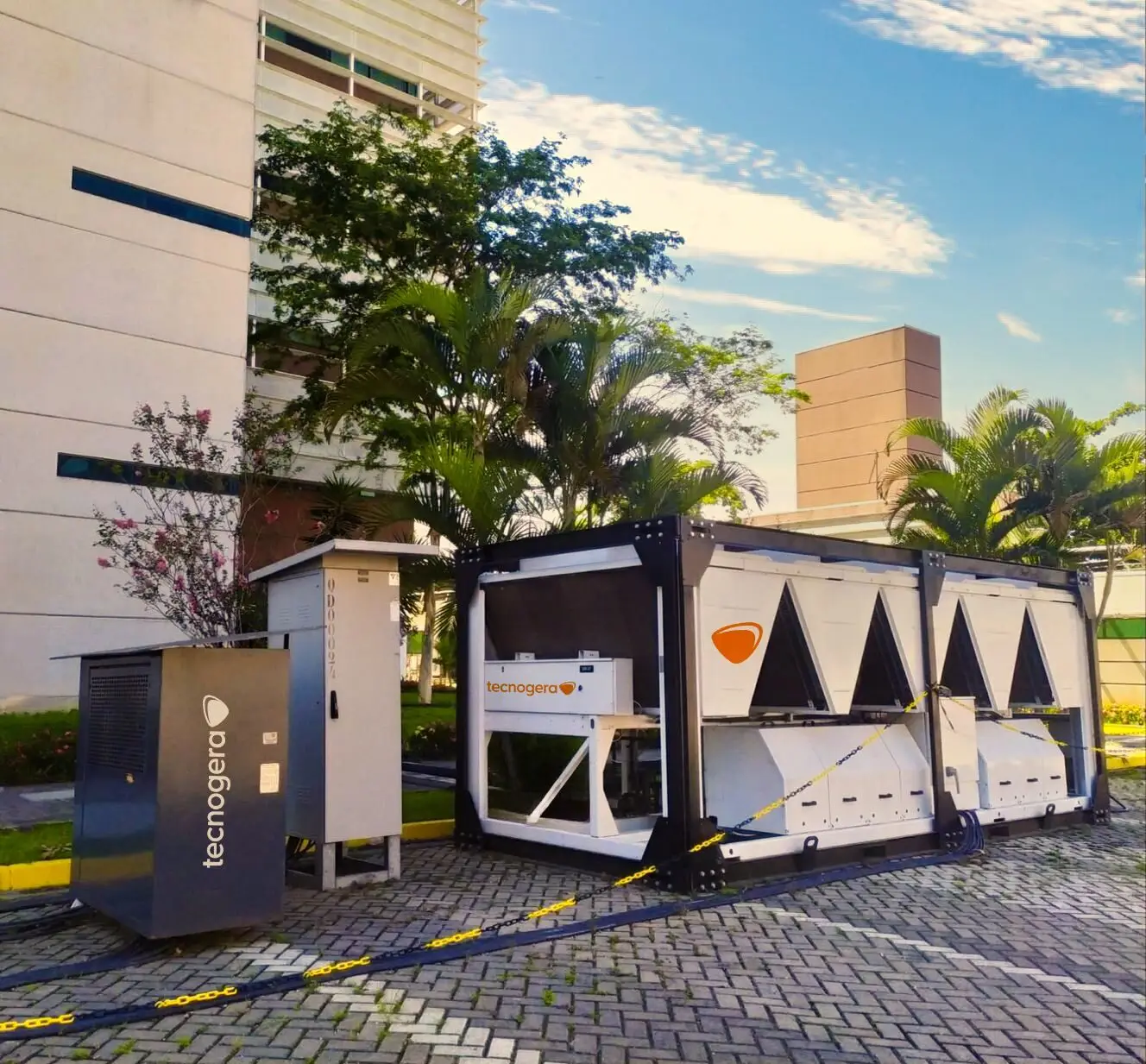
Cooling system with 4 basic components: compressor (increases pressure of refrigerant R-22), condenser (heat exchanger), expansion device (reduces pressure), and evaporator (cools air/water). Main types: water-cooled (centrifugal 300-2000TR, screw 100-600TR) and air-cooled (scroll 12-150TR, screw 100-350TR). Works together with Fan Coil for complete air conditioning.
Retail Construction Material Chain Benefits from Turnkey Emergency Climate Control

A major retail construction materials chain faced issues with their own chillers, over 10 years old, experiencing high rates of corrective maintenance. With temperatures reaching 34°C and long lead times for new equipment, the maintenance supervisor sought an immediate market solution. The first store in Rio de Janeiro had a complete equipment shutdown, requiring urgent action. Tecnogera delivered a 170TR Chiller in Turnkey mode in just 3 days (approved on Wednesday, installed and commissioned by Friday). The solution included freight, loading/unloading, installation, commissioning, de-installation, and complete accessories (hoses, cables, connections, panels). The reliability was such that the contract was extended to 6 months (initially 90 days). The second store in Niterói faced similar conditions, achieving the same success, with the equipment remaining in operation for 1 year…